
The best mandolin cases depend on one trade-off: choose a shaped hard case for maximum impact and climate protection, or a well-padded gig bag for lower weight and easier everyday carrying.
For most players, the right choice is a snugly fitted case with 15–20 mm of padding, a supported neck cradle, reinforced stitching, and enough room for picks, tuner, strings, and a strap without letting accessories press against the instrument. A hard-shell case is the safer default for checked travel, vehicle cargo, and long-term storage; a gig bag is usually better for lessons, rehearsals, and walking between nearby locations.
As an Amazon Associate we earn from qualifying purchases at no extra cost to you.

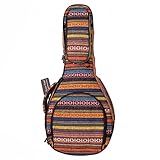


Top 3 picks at a glance
Hard Case vs. Gig Bag: The Practical Difference
| Case type | Typical empty weight | Protection | Weather resistance | Best use |
|---|---|---|---|---|
| Molded hard case | 6–10 lb | Highest against crushing and impacts | Often good with a sealed or overlapping lid | Travel, vehicles, storage, frequent transport |
| Wooden hardshell case | 7–12 lb | Very good, but more vulnerable to moisture | Varies; exterior may absorb water | Home, rehearsals, careful car transport |
| Premium gig bag | 2–4 lb | Good against scratches and light knocks | Usually good rain resistance, not waterproofing | Walking, public transport, lessons |
| Basic padded bag | 1–3 lb | Limited; padding can compress | Usually limited to brief light rain | Low-cost indoor transport |
These weights are useful when calculating the real carrying load. A 2.5 lb mandolin in a 9 lb hard case creates an 11.5 lb package before accessories. The same instrument in a 3 lb gig bag weighs about 5.5 lb. That difference matters if you walk more than a few minutes or carry an amplifier, music stand, and sheet music at the same time.
Best Mandolin Cases by Use Case
Best protection: a molded hard case
A molded case such as the SKB 1SKB-300 is a strong choice when impact resistance, stackability, and repeatable fit matter most. Its rigid shell protects the mandolin from pressure that could compress soft padding, while latches and a molded exterior are better suited to vehicle trunks and crowded storage areas. Look for plush lining, a neck support, and a compartment positioned so that its contents cannot touch the mandolin’s top.
A molded case is also the sensible choice for flying, although no ordinary instrument case should be treated as a guarantee against airline handling damage. For air travel, verify the carrier’s current size and liability rules, loosen string tension slightly if the manufacturer recommends it, and place identification inside and outside the case.
Best traditional option: a wooden hardshell case
The Guardian CG-220 is an example of the conventional wooden mandolin case format: a shaped exterior, plush interior, accessory compartment, and handle designed for routine transport. Wooden cases can offer excellent value and a familiar instrument-fitting design, but they are usually heavier than gig bags and less tolerant of rain or damp storage.
Choose this style when the mandolin normally travels by car or stays at home between rehearsals. Do not store it in a garage, attic, or unheated shed simply because the case is closed. The case slows environmental changes; it does not eliminate humidity risk.
Best lightweight protection: a premium gig bag
The MONO M80 Vertigo Mandolin Case is aimed at players who want a gig bag that behaves more like protective equipment than a thin fabric sleeve. A structured exterior, dense padding, reinforced base, and comfortable backpack system are more important than the advertised number of pockets. The bag should keep the mandolin suspended away from the ground and prevent the headstock from taking a direct hit when the case is set down.
Premium gig bags are excellent for walking to lessons, rehearsals, and local performances. They are not equivalent to a hard case when heavy objects may be placed on top, when luggage may shift against the instrument, or when the mandolin will be checked as baggage.
Best value category: a shaped padded bag or entry-level hard case
For occasional indoor transport, a basic padded mandolin bag can be adequate if it has a close fit, at least 10–15 mm of foam, a full-length zipper, and a reinforced bottom. An entry-level hardshell case may provide better protection per dollar, but inspect the hinges, latches, handle attachment, and interior shape before buying.
General market pricing commonly falls around $40–$100 for basic gig bags, $100–$250 for premium gig bags, $90–$180 for entry-level hardshell cases, and $180–$350 or more for rugged molded or premium cases. Prices vary by construction and availability, so compare the specifications rather than choosing by price alone.
How to Check Interior Fit Before Buying
Mandolins are not all identical. A traditional A-style mandolin has a simpler teardrop outline, while an F-style mandolin has scrolls, points, and an extended headstock area that can conflict with generic padding. Measure the instrument rather than assuming that “mandolin” means universal fit.
-
Measure the overall length. Include the headstock but not a removable strap. Leave a small amount of clearance so the instrument is not forced against the case ends.
-
Measure the widest body point. Compare that measurement with the case’s internal width, not its external width.
-
Check depth at several points. Bridge height, tailpiece shape, and top arching can make a case that fits the outline too shallow.
-
Inspect the neck cradle. The neck should be supported without the case forcing it upward or allowing the headstock to move freely.
-
Test movement. With the lid closed, the mandolin should not slide from side to side. Do not solve excessive space by stuffing clothing around the bridge or tuning machines; compressible material can shift during transport.
For an F-style mandolin, confirm the case specifically lists F-style compatibility. A case made for an A-style body may have enough length but still press against the scroll or lower point.
Decision Matrix: Match the Case to Your Routine
| Your situation | Recommended case | Why | Feature to prioritize |
|---|---|---|---|
| Walking 20–40 minutes to rehearsal | Premium gig bag | Much lower carrying weight | Padded backpack straps and reinforced base |
| Frequent car transport | Molded or wooden hard case | Protects against shifting luggage and compression | Rigid shell, neck support, secure latches |
| Public transport at rush hour | Premium gig bag or compact molded case | Depends on whether weight or crush resistance is the larger risk | Low-profile shape and durable exterior |
| Checked airline baggage | Heavy-duty molded hard case | Soft cases offer insufficient crush protection | Rigid shell, strong hinges, lockable latches |
| Long-term home storage | Hard case | Limits dust and accidental contact | Stable interior support and humidity monitoring |
| Rainy climate and outdoor gigs | Water-resistant gig bag or sealed molded case | Reduces short-term water exposure | Covered zippers or overlapping lid seal |
Storage, Pockets, and Strap Comfort
A useful accessory compartment should hold a tuner, picks, spare strings, a small cloth, and a cable or strap without creating a bulge against the mandolin. Place hard items such as tuners and string packets in the compartment rather than inside the instrument cavity. A case with many pockets is not automatically better if the weight pulls the bag backward or makes it awkward to carry.
For a gig bag, backpack straps should be adjustable independently, padded, and attached with reinforced webbing. The lower anchor points should not rub against the player’s hips or allow the bag to swing. A chest strap can make a noticeable difference on longer walks because it reduces side-to-side movement. If you carry the case by hand, inspect the handle stitching and whether the handle joins the bag through a broad reinforcement patch.
For hard cases, prioritize a balanced handle over a large accessory box. Lift the case by its handle and check whether the mandolin’s weight causes it to tilt sharply. An unbalanced case is tiring and more likely to bump doorframes.
Weather Resistance and Humidity
“Water-resistant” generally means the fabric or shell delays rain penetration; it does not mean the case can be left outdoors. Gig bags are most vulnerable at zippers, seams, and the bottom panel. A rain cover helps, but it should not trap a wet case against the instrument for hours. Open the case and dry it after arriving indoors.
Humidity deserves separate attention. A closed case can reduce rapid changes, but it cannot correct an excessively dry or damp environment. Store the mandolin with a small hygrometer and aim for roughly 40–55% relative humidity. If the reading remains outside that range, use an instrument-appropriate humidity system according to its instructions rather than placing a wet sponge or unprotected water container in the case.
Frequently asked questions
Can one case fit both A-style and F-style mandolins?
Usually, you should not assume that one case fits both styles. A-style mandolins have a simpler teardrop outline, while F-style instruments include scrolls, points, and an extended headstock area. Check the manufacturer’s stated compatibility and compare the case’s internal length, width, and depth with your mandolin. An A-style case may still press against an F-style scroll or lower point.
Should I loosen the strings before putting a mandolin in its case?
You should loosen the strings slightly for air travel if the manufacturer recommends it. The article does not recommend loosening them for ordinary storage or routine transport. For flying, also verify the carrier’s current size and liability rules, use a rigid case, and place identification inside and outside the case. No ordinary instrument case guarantees protection from airline handling damage.
Can I store a mandolin case in a garage or attic?
You should not store a mandolin in a garage, attic, or unheated shed simply because it is inside a closed case. A case slows environmental changes but does not eliminate humidity risk. A hard case can limit dust and accidental contact during home storage, while humidity monitoring remains important because the case cannot correct an excessively dry or damp environment.
What should I keep in the case’s accessory compartment?
Keep a tuner, picks, spare strings, a small cloth, and a cable or strap in the accessory compartment. Hard items such as tuners and string packets should stay in the compartment rather than inside the instrument cavity. Make sure the compartment does not bulge against the mandolin, since accessories should not press against the instrument during transport.
Is a rain cover enough to protect a mandolin case outdoors?
A rain cover helps, but it does not make a case suitable for being left outdoors. Water-resistant fabric or a shell only delays rain penetration, and gig bags remain vulnerable at zippers, seams, and the bottom panel. After arriving indoors, open the case and dry it. Do not trap a wet case against the mandolin for hours.
Final Buying Checklist
- Confirm A-style or F-style compatibility.
- Compare internal measurements with your mandolin, including body depth.
- Look for a supported neck and padding that cannot shift.
- Choose a rigid case for checked travel or crush hazards.
- Choose a premium gig bag when walking weight and strap comfort dominate.
- Check zipper, latch, hinge, handle, and strap reinforcement—not just the padding thickness.
- Keep accessories in a separate compartment so they cannot press into the instrument.
- Use a hygrometer for storage and treat rain resistance as short-term protection.
The best mandolin cases are the ones whose protection matches the actual risks in your routine. If the mandolin spends most of its time in a car or closet, select a fitted hard case. If you carry it on your back several times a week, a structured, well-padded gig bag will usually provide the better balance of safety, weight, and comfort.


