For Marvel’s Spider-Man Remastered, any modern six-core processor meets the publisher’s list with ease, but the game is one of the better-known cases where the processor, not the graphics card, sets the frame-rate ceiling during fast web-swinging, so the best pick for a high-refresh build is a fast eight-core chip with large cache such as the Ryzen 7 7800X3D or Ryzen 7 9800X3D, while a Ryzen 5 7600 or a Core i5 covers most players at 60 to 120 frames per second.
As an Amazon Associate we earn from qualifying purchases at no extra cost to you.




Our Top Picks
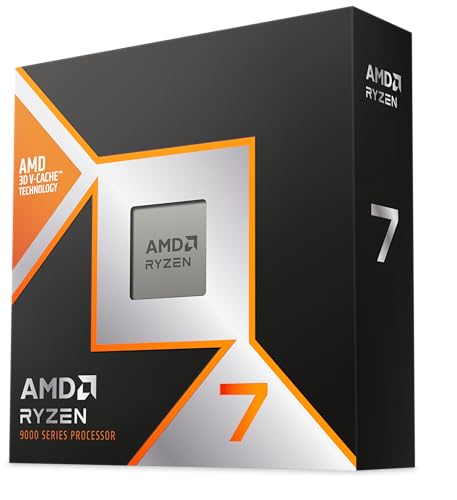

Top 3 picks at a glance
At a glance
| Goal | CPU class | Examples | Why |
|---|---|---|---|
| Solid 60 fps, 1080p to 4K | Entry six-core | Ryzen 5 5600, Ryzen 5 7500F, Core i5-12400 | Well above the publisher’s Core i5-4670 / Ryzen 5 1600 tier |
| High refresh (100 to 144 fps), ray tracing on | Mid-range six to eight core with fast cores | Ryzen 5 7600 / 9600X, Core i5-14600K | Ray tracing and crowds raise processor load |
| Highest frame rates, 1080p or 1440p esports-like smoothness | Cache-heavy eight-core | Ryzen 7 7800X3D, Ryzen 7 9800X3D | Large L3 cache helps in processor-limited scenes |
| Gaming plus video work | High-core Intel or AMD | Core Ultra 7 265K, Ryzen 9 9900X | More threads help the side workload |
| Upgrade on an older AM4 board | X3D drop-in | Ryzen 7 5700X3D | Keeps motherboard and DDR4 |
What the publisher states
The Steam page for the PC version lists a minimum of an Intel Core i3-4160 (3.6 GHz) or an AMD equivalent, 8 GB of RAM, a GeForce GTX 950 or Radeon RX 470, DirectX 12 and 75 GB of storage. The recommended list is an Intel Core i5-4670 (3.4 GHz) or Ryzen 5 1600 (3.2 GHz), 16 GB of RAM, and a GTX 1060 6 GB or RX 580 8 GB. The page mentions ray-traced reflections and upscaling support, but it gives no separate high-refresh or ray tracing processor tier. These lists are modest because they describe playable settings, not a target frame rate. If you want a frame rate well above 60, the stated tiers are not enough to size a build.
Why the processor is a real factor
Reviewers describe the game shifting from graphics-limited to processor-limited as soon as you swing at speed through dense streets, particularly with ray tracing, high traffic density and high crowd density. DSOGaming reported the game remained processor-limited at 1080p and 1440p even above 100 frames per second. TechSpot observed Radeon cards flattening just short of 130 frames per second while GeForce cards reached about 170 in the same scene, a gap it linked to driver overhead on the processor side. That result is useful for a different reason: it shows that raising the graphics card’s power does not always raise the frame rate here, and that the choice of processor and even the graphics driver changes where the ceiling falls.
Nixxes, the studio behind the PC port, advises lowering traffic density, crowd density, ray-tracing object range and level of detail when the processor is the limit. Some Steam users also report that disabling simultaneous multithreading helped on their systems; that is an individual claim from forum posts and not a general rule, and it can reduce performance in other programs, so it should be considered only after the standard options.
Launch-era analyses dominate the published coverage, and patches since then have reduced processor cost for ray tracing and crowd spawning, according to those same outlets. Current exact frame rates for newer processors are not quoted here because no reliable recent benchmark for this game was available for comparison.
Core count, clock speed and cache for this game
Core count
The streaming of the city and the simulation of traffic and pedestrians spread over several threads, but the main thread still decides pace. Six strong cores are enough; eight give room for background tasks. A processor with more than eight cores adds little for this game.
Clock speed and per-core performance
Because a single busy thread tends to be the limit during traversal, per-core performance matters most. Recent chips from both vendors, such as the Ryzen 5 9600X and Core i5-14600K, have strong per-core speed and are the value choices when you want high refresh without paying the premium for a cache-heavy part.
Cache
AMD lists 96 MB of L3 cache on both the Ryzen 7 7800X3D and the Ryzen 7 9800X3D. Reviewers generally report X3D chips leading other processors in games at lower resolutions, where the processor is the limit. No Spider-Man-specific figure comparing X3D to non-X3D chips is quoted here, but the game’s described behavior, a processor-limited traversal at high frame rates, matches the situation where large cache tends to help.
AMD X3D versus Intel
| Option | Strength | Trade-off |
|---|---|---|
| Ryzen 7 9800X3D | Newest X3D, leading gaming results in reviewer comparisons with Core Ultra 9 285K | Premium tier; AM5 and DDR5 required |
| Ryzen 7 7800X3D | Same core and cache layout as 9800X3D in capacity terms, efficient | Being replaced in the line-up, so supply varies |
| Ryzen 5 9600X / 7600 | Low cost of entry, strong per-core speed | Smaller cache than X3D |
| Core i5-14600K / i7-14700K | Strong gaming performance, high clocks | Higher power draw, needs a good cooler |
| Core Ultra 7 265K / Ultra 9 285K | Strong multi-thread results, newer platform | Reviewers report them behind X3D chips in many games |
Pairing with a graphics card
The key rule is to avoid a mismatch in either direction. A modern six-core with a GeForce RTX 5060 or Radeon RX 9060 XT is a balanced 1080p or 1440p build. An X3D eight-core with an RTX 5070 Ti, RTX 5080 or Radeon RX 9070 XT unlocks high-refresh play with ray tracing. At 4K the graphics card is more likely the limit, so you can pair a mid-range processor with a high-end card without losing much. Memory should be at least 16 GB, as the publisher lists for its recommended tier; 32 GB of DDR5 is the common choice on new platforms.
- Budget build: Ryzen 5 5600 or Core i5-12400 with an RTX 5050 or RX 9060 XT class card, 1080p.
- Balanced build: Ryzen 5 7600 or Core i5-14600K with an RTX 5060 Ti or RX 9060 XT 16 GB, 1440p.
- High-refresh build: Ryzen 7 7800X3D or 9800X3D with an RTX 5070 Ti or RX 9070 XT, 1440p high refresh or 4K with upscaling.
Settings that ease the processor load
| Setting | Effect |
|---|---|
| Traffic density | Lowering reduces simulated vehicles, easing the processor |
| Crowd density | Lowering reduces pedestrian simulation |
| Ray-tracing object range | Shorter range reduces processor work for reflections |
| Level of detail | Lower settings reduce draw calls |
| Upscaling | Helps when the card is the limit, much less when the processor is |
These come from the port’s tuning advice as reported by reviewers. They are worth trying before buying new hardware, especially if your frame rate is stuck at a similar level regardless of resolution, which is the usual sign of a processor limit.
Pick this CPU if…
| If you… | Pick |
|---|---|
| Play at 60 fps on a standard monitor | Ryzen 5 5600, Ryzen 5 7500F or Core i5-12400 |
| Want 100 to 144 fps with ray tracing | Ryzen 5 9600X or Core i5-14600K as a minimum, X3D for comfort |
| Want the highest frame rate in busy streets | Ryzen 7 9800X3D or 7800X3D |
| Already own a Ryzen 7 5800X or Core i7-12700K | Keep it; spend on the graphics card or tune density settings |
| Stream or edit while gaming | Core Ultra 7, Core i7 or a Ryzen 9 |
Common mistakes
- Upgrading the graphics card to fix a processor limit. If the frame rate barely changes when you lower the resolution, the processor is the bottleneck.
- Overspending on cores. Beyond eight cores, this game gains little.
- Using a single memory stick. Dual-channel memory matters for processor-limited games.
- Leaving traffic and crowd density at maximum on a weak processor. Those are the first settings Nixxes’ guidance points to.
- Ignoring cooling. Sustained boost clocks depend on it.
Frequently Asked Questions
Is Spider-Man Remastered CPU-intensive?
It can be. Reviewers report it becoming processor-limited during fast traversal, especially with ray tracing and high traffic and crowd settings. At standard 60 fps targets, though, a modern six-core is more than enough.
Do I need an X3D processor?
No. The publisher’s recommended tier is a Core i5-4670 or Ryzen 5 1600. X3D chips are a way to raise the frame-rate ceiling for high-refresh monitors, not a requirement.
Does Intel or AMD run it better?
No Spider-Man-specific head-to-head is quoted here. In general reviewer comparisons across games, AMD’s X3D chips lead at lower resolutions while Intel’s top chips lead in multi-threaded work. Either brand meets the game’s needs.
Will an older Core i5 be enough?
The listed recommended processor is a Core i5-4670, so older chips of that class run the game. For ray tracing and high frame rates, a newer chip is a better fit.
How much RAM should I use?
The publisher lists 8 GB as the minimum and 16 GB for the recommended tier. A new build usually carries 16 GB or 32 GB anyway, which is more than enough.
Should I turn off hyper-threading?
Some Steam users report gains from disabling it, but that is an anecdotal claim and it can hurt other software. Try the density and range settings first and treat this as a last resort.
Related guides
More from Amazon
Programs that pair well with the guide above. Offers and eligibility are set by Amazon and may change.
Free shipping on eligible items, Prime Video and more. Eligible new members can start with a free trial.
Start a Prime free trialAd-free music streaming. Eligible new subscribers can start with a free trial.
Try Music Unlimited freeA Prime membership for ages 18-24 with a trial period. Eligibility is set by Amazon.
See Prime for Young AdultsAudiobooks and podcasts to listen to on the go. Eligible new members can start with a free trial.
Try Audible freeAs an Amazon Associate we earn from qualifying purchases.