
A LiPo pack can look fine from the outside while one cell inside drifts low, and that single weak cell is often the one that shortens the life of the whole pack. The best lipo battery voltage checkers and cell monitors solve that problem in seconds: plug in the balance lead, read every cell, and decide at once whether to fly, drive, charge, or rest the pack. If you fly FPV drones, run RC cars and trucks, or fly RC planes, a small checker belongs in every field bag next to your charger and spare props.


The quick answer is to start with a simple 1S-8S checker with an adjustable low-voltage alarm for everyday field use, and add a larger LCD cell meter when you want capacity estimates, lowest-cell and highest-cell readings, and a clearer view of balance across the pack.
Our Top Picks
Top 3 picks at a glance
Quick Picks
Our Short List of 3
All 4 Picks at a Glance
| Product | Specs | Action |
|---|---|---|
| Aoicrie Lipo Battery Voltage Checker and Alarm, 2 Pack (B07VR4SV8C) | Check price on Amazon | |
| RC Cellmeter 8 Digital Battery Capacity Checker (B0DN1CJ6ZC) | Check price on Amazon | |
 FLY RC 2-in-1 1-8S Lipo Battery Voltage Tester, 5 Pack (B08KPCTTT9) | Check price on Amazon | |
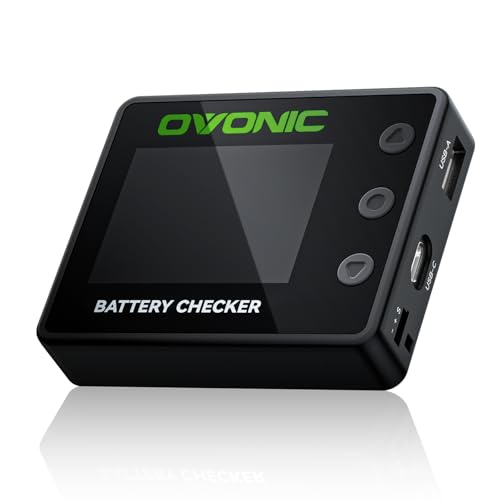 OVONIC C30 Battery Checker with Servo Tester (B0GK61Q3GL) | Check price on Amazon |
How to Choose
Cell Count Range
Cell count is the first filter, because a checker that stops at 6S cannot read a 7S or 8S pack at all. Most RC hobby packs fall between 1S and 6S: tiny whoop batteries at the low end, 3S and 4S packs for many FPV drones and RC cars, and 6S packs for larger quads and high-power cars. A 1S-8S checker covers that whole range with room to spare, and it leaves room to grow if you move to a larger model later. Match it to the largest pack you own now.
Per-Cell Readings and Total Voltage
Total pack voltage alone can hide a problem. A 4S pack reading 15.2V in total could have four healthy cells near 3.8V each, or three cells at 4.0V and one cell at 3.2V, and only a per-cell reading tells you which case you have. Look for a checker that cycles through each cell in turn, then shows the total, the lowest cell, and the highest cell. The gap between the lowest and highest cell matters most: a small gap after charging points to a balanced pack, while a large gap points to a cell that needs a balance charge or retirement.
Accuracy and Display Readability
Accuracy of plus or minus 0.01V per cell is the standard to look for, and it is precise enough to catch a cell drifting away from its neighbours. A difference of 0.05V between cells is worth noting, and a difference of 0.10V or more after a balance charge is a clear warning sign. Display readability matters just as much in the field. A bright LCD with a backlight is easier to read in shade, at dusk, and inside a car, while a small LED display can be harder to read in strong sunlight.
Low-Voltage Alarm and In-Flight Monitoring
A checker with a buzzer and a flashing LED does two jobs. On the bench, it gives an audible warning when a cell falls below the threshold you set. In the air or on the track, a small buzzer unit plugged into the balance lead warns you while you are still flying or driving, when a screen is not visible. A default of 3.3V per cell is a common starting point, and an adjustable range from 2.7V to 3.8V lets you set a more conservative warning for expensive packs. Treat the alarm as one layer of protection alongside a timer and a post-flight check, since wind, distance, and motor noise can make it hard to hear.
Balance Connector Compatibility
Almost every checker in this category reads through the balance lead, usually a JST-XH style connector, and that lead must match your packs. Most hobby LiPo packs use the same balance connector family, but 1S packs, some micro packs, and some older packs use different plugs or no balance lead at all. Before you buy, look at the balance plug on your most-used pack and compare it with the socket on the checker. A checker with a wide socket is more forgiving than one with a narrow or model-specific socket.
Extra Functions: Balancing, Capacity, and Servo Testing
Some cell meters go beyond voltage and add balancing, capacity estimation, or servo and receiver testing. Balancing on the checker can nudge a slightly uneven pack closer together, but it is not a substitute for a proper balance charge on a full charger. Capacity estimation is a rough guide based on voltage, not a measured discharge, so treat it as a guide rather than an exact figure. Servo and PWM testing is handy if you also set up RC cars, planes, and boats. Pay for these extras only if you will use them.
Size, Weight, and Field Durability
A checker lives in a pocket, a transmitter case, or a field box, and it gets knocked around. Weight matters most on small models, where a buzzer unit left plugged in during flight adds grams to the airframe: an 11-gram unit is easy to carry on a larger quad and still noticeable on a tiny whoop. A pocket-sized unit is easy to carry, while a larger LCD unit is easier to read. Look for a solid case and a socket that holds the balance lead firmly.
The Best Best Lipo Battery Voltage Checkers and Cell Monitors Reviewed
Aoicrie Lipo Battery Voltage Checker and Alarm, 2 Pack (B07VR4SV8C)
The Aoicrie 2-pack is the straightforward starting point in this guide, and it is the unit to choose if you want a simple checker with an audible alarm and a spare to keep in a second bag. It works with 1S-8S LiPo, Li-ion, LiMn, and Li-Fe packs, reads individual cell voltages and whole pack voltage, and sounds its buzzer when a cell reaches the low-voltage point you set. The alarm is adjustable between 2.7V and 3.8V per cell in 0.1V steps, with 3.3V as the default. Voltage detection precision is plus or minus 0.01V, the per-cell display range is 0.5V to 4.5V, and the total voltage display range is 0.5V to 36V.
In use, plug the balance lead into the socket with the correct orientation, watch the display cycle through the cells, and read the total. The buzzer and the red LED give a clear warning when voltage falls below the set value, which is useful during flight when a screen is not visible. Keep one unit in your flight bag and one on the charging bench. This checker suits a beginner, a casual FPV pilot, or any hobbyist who wants a fast check before every flight and a warning in the air. It is less suited to a hobbyist who wants capacity estimates or a large backlit screen, because this unit focuses on voltage and alarm, not on detailed pack analysis.
RC Cellmeter 8 Digital Battery Capacity Checker (B0DN1CJ6ZC)
The RC Cellmeter 8 is the larger LCD meter in this roundup, and it is the pick for a hobbyist who wants to see more than a single cycling number. It is an 8-cell digital battery capacity checker and voltage tester for LiPo, LiFe, Li-ion, NiMH, and NiCd packs, with an LCD backlight that keeps the display readable in dim light. It shows battery cell voltages, total voltage, and remaining capacity, and it gives a fuller picture of pack condition than a buzzer-only unit. The minimum operating voltage is 1.2V.
The larger display is the main reason to choose this meter. Instead of squinting at a small LED, you get a clear LCD that presents cell data in a form that is easy to read and easy to compare across packs, and a backlight helps when you are checking packs inside a car, in a garage, or at dusk. The capacity display adds context by translating voltage into a rough guide to how much charge remains. This meter suits a pilot or driver who manages a fleet of packs. It is less suited to a pilot who wants the lightest possible in-flight alarm, because a larger LCD meter is a bench tool first and a flight monitor second.
FLY RC 2-in-1 1-8S Lipo Battery Voltage Tester, 5 Pack (B08KPCTTT9)
The FLY RC 5-pack is the bulk-buy choice in this guide, and it is the best fit for a hobbyist, a club, or a family with several RC models who wants a checker everywhere a pack might need one. Each unit is a 2-in-1 voltage tester and low-voltage buzzer alarm for 1S-8S LiPo, Li-ion, LiMn, and Li-Fe packs. It reads individual cell voltages and total pack voltage, and it sounds its buzzer with a red LED flash when a cell falls below the set threshold. The alarm set value range runs from off through 2.7V to 3.8V, with 3.3V as the preset, and the setting can be changed with the push button on top and saved for the next use.
Each unit weighs 11 grams and measures 40 by 25 by 11 millimetres. Voltage detection precision is plus or minus 0.01V, the per-cell display range is 0.5V to 4.5V, and the total voltage display range is 0.5V to 36V. This 5-pack suits a pilot who flies with friends, a parent who runs several RC cars for children, or a hobbyist with a car, a boat, and a drone who wants one unit per model. It is less suited to a hobbyist who wants a single premium meter with a large screen and capacity analysis, because these units are deliberately simple.
OVONIC C30 Battery Checker with Servo Tester (B0GK61Q3GL)
The OVONIC C30 is the most capable unit in this roundup, and it is the pick for a hobbyist who wants a checker that also handles balancing, servo testing, and power delivery. It is a 1S-8S battery checker for LiPo, LiHV, LiFe, and Li-ion packs, and it displays total voltage and individual cell voltage for fast battery status checks. It adds a built-in cell balancer, PWM measurement, manual and automatic servo testing, and PPM signal output, so it can check a servo or a receiver channel as well as a battery. It also provides USB-C power output and USB-A power output, which lets a LiPo pack act as a power source for other devices in the field.
With the C30, a pilot can check a pack, balance a slightly uneven set of cells, and test a new servo before installing it. Support for LiHV as well as standard LiPo is useful for pilots who run high-voltage packs. This checker suits an experienced hobbyist or a builder who sets up new models regularly. It is less suited to a complete beginner who only needs a fast voltage reading, because the extra functions add size, complexity, and a learning curve. Note the extra functions here: servo testing and USB power output are additions to a battery checker, not a change of product type, and the core job remains per-cell voltage checking and cell monitoring.
What to Check Before You Buy
Start with your packs. Write down the cell counts you own, the balance connector type on each pack, and the chemistry: standard LiPo, LiHV, LiFe, or Li-ion. A checker that covers 1S-8S and the chemistries you own will serve you for years, while a checker that only covers part of your fleet will leave some packs unchecked. Check the connector by looking at the balance lead, not by guessing from the brand.
Next, decide how you will use the checker most often. If the answer is a fast check before every flight, a buzzer unit with an adjustable alarm is the right tool, and a 2-pack or 5-pack gives you spares. If the answer is a detailed bench check of several packs, a larger LCD meter with capacity display is the better tool. If you also build and set up models, a multi-function unit with servo testing and balancing may replace two or three separate tools in your box.
Finally, plan how you will use the readings. Set a personal rule before you fly: a pack with a cell gap above your chosen limit gets a balance charge, not a flight; a pack with a cell below your chosen threshold gets charged or rested, not flown; a pack that keeps showing the same weak cell gets marked and watched, and retired when the gap grows. Safety notes deserve a direct mention: never charge a pack that is swollen, hot, or damaged, never leave a charging pack unattended, and store packs at storage voltage in a safe container away from flammable material.
FAQ
What voltage should each LiPo cell show?
A fully charged LiPo cell reads near 4.2V, a storage cell reads near 3.8V, and a cell near 3.3V is low and needs charging soon. Those figures are guides for standard LiPo chemistry; LiHV cells have a higher full-charge voltage, and LiFe cells have a lower one, so check the chemistry of your pack before judging a reading. The gap between cells is often more useful than the total: a pack where all cells sit close together is in better shape than one with a single cell far below the rest.
Can I use a LiPo checker on Li-ion and LiFe packs?
Many checkers in this guide support LiPo, Li-ion, LiMn, LiFe, and NiMH packs, but support varies by model, so check the listing for your exact chemistry before you buy. A checker that lists LiFe support will read LiFe cells correctly, while a checker built only for LiPo may still show a voltage but may interpret capacity or balance differently. When in doubt, choose a checker that names your chemistry in its specifications.
Do I need a checker if my charger already shows cell voltages?
A charger shows cell voltages while the pack is plugged into the charger, which is useful at home but not at the field, in the car, or at the flying site before a flight. A pocket checker gives you the same information in seconds without mains power, without a charger, and without unpacking your charging setup. It also lets you check a pack you are about to buy second-hand or a pack you find in a box after months in storage.
How do I set the low-voltage alarm?
On most buzzer units, you plug in the pack, press the button on top to cycle through the alarm values, and stop at the value you want, which the unit then saves. The common default is 3.3V per cell, and the adjustable range on the units in this guide runs from 2.7V to 3.8V per cell. A higher setting gives an earlier warning and protects the pack, while a lower setting gives a later warning and risks deeper discharge.
Why does one cell read lower than the others?
A small difference between cells is normal, especially after a flight, because no two cells age at exactly the same rate. A larger gap, or a gap that grows over several flights, points to a cell that is ageing faster, a pack that needs a balance charge, or a pack that has been stored at the wrong voltage. Balance charge the pack and check it again: if the gap closes, the pack may still be usable with care; if the same cell stays low after balancing, mark that pack and plan to replace it.
Bottom Line
The best lipo battery voltage checkers and cell monitors are the ones you will actually use before every flight, and that means matching the tool to your packs and your habits rather than chasing the longest feature list. A simple 1S-8S buzzer checker like the Aoicrie 2-pack or the FLY RC 5-pack covers the core job for most pilots. A larger LCD meter like the RC Cellmeter 8 adds clarity and capacity context for a hobbyist who checks several packs in a row. A multi-function unit like the OVONIC C30 adds balancing, servo testing, and power output for a builder who wants one tool for several bench jobs. Start with the cell count and connector of your largest pack, choose a readable display, set a sensible alarm threshold, and check every pack before you fly and after you land.
Disclosure: As an Amazon Associate, we may earn from qualifying purchases.
Related guides
More from Amazon
Programs that pair well with the guide above. Offers and eligibility are set by Amazon and may change.
Free shipping on eligible items, Prime Video and more. Eligible new members can start with a free trial.
Start a Prime free trialAd-free music streaming. Eligible new subscribers can start with a free trial.
Try Music Unlimited freeA Prime membership for ages 18-24 with a trial period. Eligibility is set by Amazon.
See Prime for Young AdultsAudiobooks and podcasts to listen to on the go. Eligible new members can start with a free trial.
Try Audible freeAs an Amazon Associate we earn from qualifying purchases.


