
The best airbrush spray booths for home studios are the Paasche HSSB-30-16 for a larger, sturdier setup, the Artograph 1530 for a compact professional-style booth, and a folding dual-fan booth for painters who need portability and lower cost.
The right choice depends less on the airbrush itself than on the paint, model size, available ventilation, and how often you can tolerate replacing filters. A small booth can control overspray well for miniatures, but it may struggle with a 1/24 car body or a large scale-model wing. Likewise, a quiet booth with modest airflow may be preferable in a bedroom or shared workspace, while a higher-airflow unit is safer for frequent painting if it vents outdoors correctly.
As an Amazon Associate we earn from qualifying purchases at no extra cost to you.


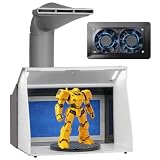
Top 3 picks at a glance
Best airbrush spray booths compared
| Booth or type | Best for | Typical airflow | Noise expectation | Portability | Typical market range |
|---|---|---|---|---|---|
| Paasche HSSB-30-16 | Frequent model and miniature painting | About 100–150 CFM, depending on configuration | Moderate fan noise | Bench-portable, not truly compact | Usually $250–$400 |
| Artograph 1530 | Artists wanting a rigid, enclosed booth | Roughly 100 CFM class | Moderate | Portable with effort | Usually $300–$500 |
| Folding dual-fan booth | Occasional miniatures and small models | Approximately 100–200 CFM claimed | Moderate to loud at maximum speed | Excellent; folds into a case | Usually $80–$180 |
| Single-fan tabletop booth | Small parts, nails, crafts, and light water-based use | Approximately 50–100 CFM claimed | Usually the quietest class | Very good | Usually $60–$130 |
| Rigid custom or professional booth | Large models and regular studio work | 200–400+ CFM, correctly ducted | Can be quiet with a large, slow fan | Permanently installed | Often $500–$1,500 or more |
Airflow figures are often measured without the final filter, duct, or bends attached. Treat them as comparisons rather than guaranteed performance at the nozzle. A booth that still pulls a visible tissue toward the rear filter after the filter is installed is more useful than one with a larger number on the box.
1. Paasche HSSB-30-16: the best all-round rigid booth
The Paasche HSSB-30-16 is a strong choice for a dedicated home studio because its larger working area accommodates more than a single miniature. It is better suited to vehicles, terrain pieces, aircraft parts, and batches of figures than the smallest folding booths. Its rigid enclosure also helps prevent overspray from escaping around the sides.
Choose it when you paint several times per week and have room for a permanent or semi-permanent bench position. The main disadvantages are bulk, fan noise, and the recurring cost of filters. A rigid booth is also less convenient if your studio doubles as a dining table, office, or bedroom.
Best use case
- Water-based acrylics and hobby paints.
- Models up to medium vehicle or aircraft size.
- Users who value enclosure and overspray control over easy storage.
2. Artograph 1530: best for a tidy, enclosed workspace
The Artograph 1530 is designed around a more finished, studio-oriented form factor than many inexpensive folding booths. Its enclosed work area helps contain paint mist, and the rigid construction is useful when you want a booth that stays aligned instead of being unfolded and packed away repeatedly.
It makes sense for an artist who wants a compact booth but does not want the fabric-sided feel of a portable unit. Check the replacement-filter price and availability before buying: a booth is only practical if its filter media can be replaced at a reasonable cost. The Artograph is not a substitute for a properly exhausted spray-finishing system when using hazardous solvent products.
3. Folding dual-fan booths: best portable value
A folding booth with two rear fans, LED lighting, a replaceable filter, and a turntable is usually the best value for occasional miniature painters. It can be stored in a closet, transported to a gaming table, and assembled in seconds. The expanded side panels provide useful overspray protection for small objects.
These booths vary substantially even when their product photographs look similar. Prioritize a model with a rigid rear filter frame, a replaceable filter sheet, a real exhaust hose, and a stable turntable. Some use two small fans that sound louder than one larger fan while delivering less useful suction through the filter.
Portable booths are most effective for figures, terrain accessories, props, and parts smaller than the booth opening. They become less convincing for large surfaces because the object must sit close to the rear filter, leaving less room for the airflow to capture paint mist.
How much airflow do you actually need?
For hobby airbrushing, the useful target is not simply maximum CFM. You need enough air to move the mist away from your breathing zone across the whole opening. A practical starting point is approximately 100–150 CFM for a small booth and 150–250 CFM for a wider booth, provided the fan can maintain that airflow through the filter.
Here is a simple sizing calculation. Suppose the booth opening is 24 inches wide and 18 inches high:
Opening area: 24 × 18 ÷ 144 = 3 square feet.
At a modest capture velocity of 75 feet per minute, the theoretical airflow is:
3 square feet × 75 feet per minute = 225 CFM.
That does not mean a portable 225-CFM claim will deliver 225 CFM in practice. The filter, hose, grille, and bends create resistance. It does show why a large booth with a tiny fan can allow overspray to roll out of the opening. For a small 16-by-12-inch opening, the same calculation produces about 100 CFM, which is much more realistic for a compact booth.
Decision matrix: match the booth to your studio
| Your situation | Recommended class | Why | What to avoid |
|---|---|---|---|
| Painting a few miniatures monthly | Single-fan or folding booth | Low cost and easy storage | Oversized permanent booth |
| Painting weekly in a small room | Folding dual-fan or compact rigid booth | Better capture without consuming the entire desk | Booth with no replacement filter |
| Painting vehicles, aircraft, or terrain | Paasche HSSB-30-16, Artograph 1530, or larger rigid booth | More depth and better side containment | Small booth where the model blocks the filter |
| Need to pack away after every session | Folding booth with carry case | Fast setup and storage | Heavy rigid booth |
| Using solvent-based lacquer or enamel | Purpose-built, appropriately rated exhaust system | Reduces ignition and exposure risks | Unrated consumer booth venting into the room |
Filter cost and overspray control
Filter replacement is the hidden ownership cost. A typical hobby booth filter may cost around $5–$20, while proprietary rigid-booth filters can cost more. If you paint weekly, plan to inspect the filter every four to eight sessions. Replace it when the surface becomes visibly loaded, airflow drops, or paint begins collecting around the edges instead of being drawn evenly backward.
Do not place a second dense household filter in front of the booth unless the fan is designed to handle the added resistance. A cheap pre-filter can catch larger particles and extend the main filter’s life, but excessive restriction reduces capture velocity. A useful setup is a thin, inexpensive filter layer followed by the manufacturer’s normal filter, with the fan pulling through both.
Keep the object at least several inches from the rear filter. Spraying directly into the filter saturates one small area and can cause mist to bounce back. Use the lowest air pressure that produces a clean spray—often around 15–25 PSI for miniature acrylic work—and move the airbrush continuously rather than flooding one spot.
Noise, ventilation, and safe placement
Fan noise usually comes from small high-speed motors and vibration against the desk. A rubber mat beneath the booth can reduce resonance. If noise matters, a larger booth with a slower fan may sound less harsh than a compact dual-fan design, even if its total airflow is similar.
A recirculating booth with a filter is not the same as outdoor ventilation. For water-based hobby acrylics, it can reduce airborne pigment and overspray, but it does not make the room immune to vapors or eliminate the need for ventilation. Open a window or use room ventilation when practical, and wear a properly fitted respirator appropriate for the paint and solvent.
Never assume a hobby booth is explosion-proof. Solvent-based lacquers, enamels, alcohol-heavy products, and flammable cleaners can create vapors that ordinary fan motors and switches may ignite. For those materials, use a spray system specifically rated for flammable vapors and duct it outdoors according to local building and fire-safety requirements. Do not vent hazardous fumes into an attic, hallway, or another occupied room.
What to check before buying
- Filter availability: Confirm that replacements are sold separately and calculate their annual cost.
- Actual working opening: Compare the usable opening, not the folded or external dimensions.
- Exhaust options: A hose connection is useful, but only if the fan can maintain airflow through the hose.
- Lighting: Bright, even LED lighting is more valuable than decorative color-changing lights.
- Turntable stability: A slipping turntable can spread wet paint and force you to work closer to the filter.
- Cleaning access: Smooth interior panels are easier to wipe than deep fabric folds.
- Electrical compatibility: Check the voltage, plug type, and whether the adapter is suitable for your region.
Frequently asked questions
Can an airbrush spray booth remove all paint fumes from a room?
No, a hobby spray booth does not make a room immune to vapors or eliminate the need for ventilation. A recirculating booth with a filter can reduce airborne pigment and overspray from water-based hobby acrylics, but it is not the same as outdoor ventilation. Open a window or use room ventilation when practical, and wear a properly fitted respirator appropriate for the paint and solvent.
Where should the model sit inside the spray booth?
Keep the object at least several inches from the rear filter rather than spraying directly into it. Direct spraying can saturate one small area and cause mist to bounce back. Large objects can also reduce capture because they must sit close to the rear filter, leaving less room for airflow to collect overspray effectively.
What air pressure is suitable for miniature acrylic painting?
For miniature acrylic work, use the lowest air pressure that produces a clean spray, often around 15–25 PSI. Move the airbrush continuously instead of flooding one spot. This approach works alongside good booth placement: keep the object several inches from the rear filter so paint mist is drawn backward rather than concentrated in one saturated area.
Can I add another household filter to improve overspray control?
Do not place a second dense household filter in front of the booth unless the fan is designed to handle the added resistance. A cheap pre-filter can catch larger particles and extend the main filter’s life, but excessive restriction reduces capture velocity. If used, a thin filter layer should come before the manufacturer’s normal filter, with the fan pulling through both.
Bottom line
Choose the Paasche HSSB-30-16 if you want a durable, larger booth for regular model work; choose the Artograph 1530 for a tidy enclosed studio setup; and choose a folding dual-fan booth if storage and price matter most. Whichever model you select, judge it by airflow through the installed filter, replacement-filter cost, usable opening, and safe ventilation plan—not by the advertised fan number alone.


