
The best digital coin scales for weighing coins at home are 100g to 500g capacity scales with 0.01g readability for general collecting and silver stacking, and 20g to 50g capacity scales with 0.001g readability for gold coins, jewelry-grade authentication, and error variety diagnostics where a 0.05g difference matters.
As an Amazon Associate we earn from qualifying purchases at no extra cost to you.


Our Top Picks
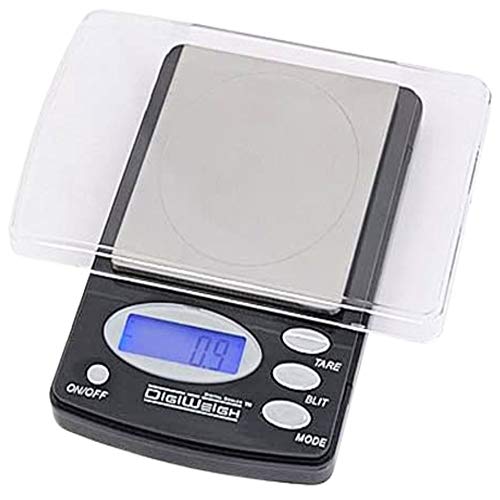


Top 3 picks at a glance
Quick Comparison: The 3 Scale Classes Coin Collectors Actually Need
Most collectors overbuy capacity and underbuy resolution. A 3000g kitchen scale that reads to 0.1g cannot tell a copper 1982 Lincoln cent (3.11g) from a zinc 1982 cent (2.5g). A 20g x 0.001g lab scale can, but it will overload on a roll of Morgan dollars. Use this breakdown to narrow your choice before looking at brands.
| Scale Class | Capacity | Readability | Typical Repeatability | Calibration Type | Best For | General Market Range |
|---|---|---|---|---|---|---|
| Pocket Coin Scale | 100g – 500g | 0.01g | ±0.02g | External 50g / 100g / 200g weight | U.S. type sets, silver dollars, bulk wheat cents, world coins | usually $15–$40 |
| Precision Jewelry Scale | 20g – 50g | 0.001g (1mg) | ±0.003g | External 10g / 20g / 50g weight | Gold fractional coins, error coin diagnostics, authenticity checks | usually $30–$80 |
| Compact Bench Scale | 600g – 1000g | 0.01g – 0.1g | ±0.05g | External 500g weight | Weighing rolls, bags, and larger lots of coins | usually $40–$90 |
If you can only buy one scale for coin collecting, get a 200g or 300g x 0.01g pocket scale. If you handle gold or need to spot altered or counterfeit coins by weight, add a second 20g x 0.001g scale rather than trying to find one scale that does both perfectly.
5 Decision Criteria That Determine Accuracy for Coins
1. Readability vs. Actual Accuracy
Readability is what the display shows (0.01g or 0.001g). Accuracy is how close that reading is to the true weight. For coins, you need readability that is one decimal place finer than the tolerance you are trying to detect.
U.S. Mint tolerances are tight: a Roosevelt dime is specified at 2.268g with a tolerance of ±0.091g, while a pre-1982 Lincoln cent is 3.11g ±0.13g. To confidently see if a coin is within or outside that window, a 0.01g scale is sufficient. To detect a gold-plated tungsten counterfeit where a 1/10 oz Gold Eagle should be 3.393g but a fake may be 3.31g, you need 0.001g readability. A scale that only reads to 0.1g will round both to 3.3g and hide the difference entirely.
2. Capacity and Overload Protection
Capacity determines what you can weigh without damaging the load cell. For single coins, even a 50g capacity is enough. For a 20-coin roll of silver halves (about 250g) or a full 50-coin roll of cents (125g-155g), you need at least 300g. Look for scales that warn for overload at 100% + 10g and have physical overload protection. Compact bench scales in the 600g-1000g range handle rolls and small lots without maxing out, while 100g pocket scales will show an “O-Ld” error on a single roll of dollars.
3. Resolution and Linearity
Resolution affects consistency across the weighing range. A low-cost 0.01g scale may be accurate near its calibration weight (e.g., 100g) but drift by 0.03g-0.05g at the low end where coins sit (2g-15g). This is called non-linearity. Scales with a smaller capacity and a single, low calibration weight (like 20g for a 20g scale) tend to be more linear in the 0-20g range where most coins fall. If your primary use is 2g-10g coins, a 100g or 200g capacity scale will be more linear than a 500g capacity scale with the same 0.01g readability.
4. Calibration: External Weight vs. Auto-Calibration
All accurate coin scales require external calibration with a certified weight, not just a “tare” or “zero” button. Do not confuse internal auto-zero tracking with true calibration.
- External calibration with included weight: The scale prompts you to place a specific weight (e.g., 100.00g). This is essential. Choose a scale that calibrates at 50g, 100g, or 200g for pocket scales. For 0.001g scales, a 10g or 20g calibration weight is better because it calibrates closer to coin weights.
- Temperature drift: Load cells drift with temperature. If you store scales in a garage and bring them into a 72°F room, let the scale warm up for 2-3 minutes, then recalibrate. A 10°F change can shift a 0.01g scale by 0.02g-0.04g.
- Calibration frequency: Calibrate once at unboxing, then once a month with regular use, or whenever you move the scale or change batteries. Keep the calibration weight in its case, never handle it with bare fingers.
5. Weighing Trays, Platforms, and Draft Protection
Coins should never be weighed directly on a small stainless platform without protection. A good coin scale includes at least one of these:
- Expanded plastic tray / weighing pan: Prevents coins from scratching the platform and stops edge-rolled coins from sliding off. Essential for silver dollars (38.1mm) that overhang a 2-inch platform.
- Concave coin tray or scoop: Useful for pouring and weighing multiple small coins like dimes or cents without them scattering. Look for a tray that tares to zero cleanly and does not exceed 10g itself.
- Draft shield / lid that doubles as tray: Critical for 0.001g scales. Even air from an HVAC vent can make a 0.001g reading flutter by ±0.005g. A clear plastic cover that sits over the platform stabilizes readings in under 3 seconds. Without it, a 0.001g scale is nearly unusable for coins.
Avoid scales with a tiny 1-inch platform and no tray. Large coins will not sit flat, leading to off-center errors of 0.02g-0.05g.
Decision Matrix: Which Scale Should You Choose?
Match your situation to the right class instead of chasing the highest specs.
| If You Collect… | Choose This | Why |
|---|---|---|
| Circulated U.S. coins, Lincoln cents, Jefferson nickels, state quarters, bulk lots | 200g – 500g x 0.01g Pocket Scale | 0.6g difference between copper and zinc cents is obvious at 0.01g; large capacity handles handfuls |
| Silver dollars, silver halves, world crown-sized coins (20g-31g) | 100g – 300g x 0.01g with large tray | Platform must fit 38mm+ coins flat; 0.01g is enough for ±0.4g tolerance on 26.73g silver dollars |
| Gold coins, 1/10 to 1 oz bullion, sovereigns, authentication | 20g – 50g x 0.001g with draft shield | Need to detect 0.02g-0.08g underweight fakes; draft shield is non-negotiable |
| Error coins, wrong planchet, clipped planchet, transitional varieties | 20g x 0.001g as primary | A dime struck on a cent planchet weighs ~3.11g vs. 2.268g; a 1943 steel cent weighs 2.7g vs. 3.11g copper — 0.001g confirms attribution |
| Weighing rolls, bags, 90% silver lots for melt calculations | 600g – 1000g x 0.01g Bench Scale | High capacity with 0.01g still accurate enough for lot weight; avoid 0.1g for this task |
How to Set Up and Calibrate for Repeatable Results
Follow these steps in order. Each step removes a specific source of error.
- 1. Place on a level, vibration-free surface. Use a solid desk, not a wobbly folding table. Vibration adds ±0.01g jitter. Activate the bubble level if your scale has one.
- 2. Warm up for 60-120 seconds. Turn the scale on and let it sit. This stabilizes the load cell and the zero point after power-on.
- 3. Calibrate with the correct weight. Enter calibration mode, wait for the flashing value (e.g., “100.00”), place the certified weight in the center of the platform, wait for “PASS” or “END”. If you use a generic weight like coins, calibration will be off. Use only a proper OIML M2 or ASTM Class 6 calibration mass.
- 4. Tare with the tray on. Place your weighing tray on the platform, press TARE/TARE to zero it. Verify it reads 0.00g or 0.000g before adding the coin.
- 5. Weigh with draft protection. For 0.001g scales, close the draft shield. Wait 2-3 seconds for the reading to stabilize — the small “o” or triangle stability indicator should stop flashing. Record the stable number, not the fluctuating one.
- 6. Check repeatability. Weigh the same coin three times (remove and replace). If readings vary by more than ±0.02g on a 0.01g scale or ±0.003g on a 0.001g scale, recalibrate or change the surface.
Worked Example: Is Your Coin Within Mint Tolerance?
A spec sheet never tells you how to apply tolerance. Here is how a collector uses a reading in practice.
Example: 1964 Washington Quarter. Official spec is 6.25g, U.S. Mint tolerance ±0.194g. That means any authentic coin should weigh between 6.056g and 6.444g when uncirculated and uncleaned. Wear removes metal, so a circulated coin will be slightly light.
You weigh the coin on a 200g x 0.01g scale and get 6.18g after taring. Calculation: 6.18g is inside the 6.056g–6.444g window, so it passes the weight check. If you weighed a suspected counterfeit and got 5.82g, it is 0.236g below the lower limit (6.056 – 5.82 = 0.236g). At 0.01g readability, that 0.23g deficit is 23 display increments — easily detectable. On a 0.1g scale, 5.8g vs. 6.3g still looks different, but a coin that is only 0.15g off would round to the same value and be missed.
Battery runtime note for collectors: A typical pocket scale draws about 10mA during weighing. With two AAA batteries (about 1000mAh usable), estimated runtime is 1000mAh / 10mA = 100 hours of active weighing, or several months of intermittent use. Low battery causes under-reading first, so replace batteries when the low-battery icon appears rather than after it dies — accuracy degrades before the scale shuts off.
What to Avoid When Buying
- Avoid any scale that advertises only “0.1g” accuracy. It cannot separate copper from zinc cents, silver from clad, or detect a drained gold coin.
- Avoid scales with no calibration mode. “Zero/tare” is not calibration. Without an external weight, long-term drift is uncorrectable.
- Avoid 0.001g scales without a draft shield if you plan to weigh coins in a normal room. Air currents will make the last digit meaningless.
- Avoid ultra-cheap platforms with no overload warning. A single overload event can permanently shift the load cell by 0.05g.
FAQ
Do I need a 0.001g scale for coin collecting?
Not for most U.S. collecting. A 0.01g scale covers 95% of needs, including separating copper and zinc cents, checking for silver vs. clad, and weighing dollars. You need 0.001g only for gold authentication, wrong-planchet errors, and high-end variety attribution where tolerances are under 0.1g.
Can I use a kitchen food scale for coins?
Only if it reads to 0.01g or 0.001g. Most kitchen scales read to 1g or 0.1g, which is ten times too coarse. A dime that should be 2.268g and a worn dime at 2.15g will both show as “2g” on a 1g scale.
Why do my coin weights vary by 0.02g each time I weigh?
Common causes are off-center placement, air drafts, low batteries, or needing recalibration. Center the coin on the tray, close any draft cover, replace batteries, and recalibrate with the proper weight. If variation persists, the surface may be vibrating or not level.
What calibration weight size is best for coins?
Choose a weight close to your typical coin weight. For a 0.01g pocket scale, 100g is a good general weight. For a 0.001g jewelry scale used for gold, a 20g calibration mass gives better linearity around 3g-15g coins than a 50g mass.


