
The best food processors under $100, $200, and $300 balance bowl capacity against motor power, blade options, and cleanup time, so the right choice depends on whether you chop small batches daily or prep large batches weekly.
For solo cooks and small kitchens, a 3 to 4-cup mini chopper with a 250-400W motor is usually enough. For families and meal preppers, an 8 to 14-cup full-size processor with 500-720W and multiple discs saves hours. This guide breaks down how to match capacity, power, attachments, footprint, and cleanup to your actual cooking habits without overspending.
As an Amazon Associate we earn from qualifying purchases at no extra cost to you.


Our Top Picks
 Hamilton Beach Food Processor & Vegetable Chopper for10 Cups - Bowl Scraper8.5 x 10 x 16 inches6.2 PoundsCheck on Amazon
 Ninja PrecisionPro Food Processor & Dough Mixer8.07 in L x 7.87 W x 16.02 in H8.07 x 7.87 x 16.02 inchesCheck on Amazon
Top 3 picks at a glance
How to Choose the Right Food Processor: 5 Decision Criteria
Don’t shop by wattage or cup size alone. A food processor is a system: motor + bowl + blades + lid design. A powerful motor with a poorly sealed bowl still leaks, and a huge bowl with weak torque stalls on dough.
1. Bowl Capacity: Match It to Batch Size, Not Family Size
Usable capacity is always less than listed capacity. Manufacturers list brim-full volume, but the working capacity for liquids is about 1/3 to 1/2 less, and for dry chopping you should only fill to 2/3 to avoid uneven cuts.
- 3-5 cup (mini / compact): Best for sauces, pesto, chopping one onion, grinding nuts. Fits in a drawer. Struggles with slicing a full potato or kneading dough.
- 7-9 cup (mid-size): The sweet spot for 1-3 person households. Handles a full batch of salsa, shreds 2-3 cups of cheese, kneads 1 loaf of dough. Still compact enough for most counters.
- 11-14 cup (full-size): Built for meal prep, large families, and batch cooking. Slices 4-5 potatoes at once, kneads double dough batches, shreds a full block of cheese. Requires dedicated counter or cabinet space.
If you primarily cook for two but batch-cook soups on Sunday, skip the mini and go 8-cup. If you only make dips and chop herbs, a 14-cup bowl will waste counter space and make small batches rattle around the blade.
2. Motor Power and Torque: Watts Are Not Everything
Most food processors list 400W to 720W. Wattage indicates power draw, not sustained torque. What matters is whether the motor can maintain RPM under load without overheating or stalling.
- 250-400W: Adequate for soft foods, herbs, cooked vegetables, and small nut batches. Will stall on raw carrots, dense dough, or large cheese blocks.
- 450-600W: The versatile range for most home cooks. Handles raw vegetables, shredding, and single-batch pastry dough without bogging down.
- 600-720W: Needed for frequent dough kneading, double batches, and continuous shredding/slicing. Look for models with induction or direct-drive motors if you knead weekly; they run cooler and quieter.
Check for thermal protection and pulse control rather than chasing the highest wattage. A well-geared 550W processor will outperform a cheap 700W unit that relies on speed alone.
3. Blades and Discs: What You Actually Get
A base processor always includes an S-shaped multipurpose blade (chopping, mixing, pureeing). Value comes from the discs.
- Reversible slice/shred disc: Essential. One side slices, the other shreds. Look for 2mm to 4mm thickness. Medium (2-3mm) covers most recipes.
- Dough blade (plastic): Useful only if you make bread or pizza dough at least monthly. Otherwise it duplicates what the metal blade can do for pastry.
- Dicing kit / adjustable slicing disc: Found on higher-end 11-14 cup models. Dicing adds prep speed for soups and salads but increases cleanup and storage needs. Adjustable thickness (1-6mm) is more practical than a fixed disc if you like thin potato chips or thick tomato slices.
Storage matters. Processors that store discs inside the bowl or in a dedicated case prevent nicks and save drawer space. Loose discs stored separately often go unused.
4. Counter Footprint and Height
Full-size processors are wide and tall with the feed tube. Measure before you buy.
- Compact 3.5-cup models: Usually around 7-8 inches wide, 10-12 inches tall. Fit under standard 18-inch upper cabinets.
- Mid-size 8-cup models: About 8-9.5 inches wide, 14-15 inches tall. The best compromise for apartments.
- Full-size 12-14 cup models: 10-11.5 inches wide, 16-18 inches tall with pusher. Often too tall to fit under cabinets with the pusher inserted. Plan to store the pusher separately or keep it on the counter.
Weight also affects usability. A 6-7 lb compact model is easy to pull out daily. A 15-18 lb full-size model tends to stay on the counter. If you won’t leave it out, a lighter mid-size model will get used more.
5. Cleanup: Where Time Is Really Saved or Lost
Cleanup determines whether your processor saves time or creates work. Look for these features:
- Sealed bowl with locking lid: Prevents leaks into the base. Bowls with fewer crevices and a smooth pour spout rinse faster.
- Dishwasher-safe parts: Most bowls, lids, and blades are dishwasher-safe on the top rack, but bases never are. Check if discs are dishwasher-safe; some dicing discs require hand washing.
- Feed tube design: Wide-mouth feed tubes (over 2.5 inches) let you drop in whole potatoes or cheese blocks, reducing pre-cutting, but they have more parts to clean. A narrow tube is simpler but requires more trimming.
Worked Example: How Much Capacity and Power Do You Actually Need?
Use your typical recipe to calculate required working capacity. This prevents buying too small and having to run two batches, or buying too large and getting poor results on small batches.
Example: Weekly meal prep of soup for 4. You want to slice 800g of potatoes and shred 400g of carrots in one go.
- 800g sliced potatoes = roughly 6-7 cups volume. You need at least a 9-cup bowl to slice this without stopping to empty (working capacity is ~60% of listed capacity).
- 400g carrots = roughly 3 cups shredded. Total volume in bowl during processing will peak at ~10 cups if you add everything at once.
- Power check: Slicing dense raw potatoes continuously for 60-90 seconds puts sustained load on the motor. A 450W+ motor with pulse and low speed will handle this without overheating. A 300W mini chopper would need to be run in 3-4 batches with cooling breaks.
Rule of thumb: Take your largest single-recipe volume in cups, divide by 0.6, and that is your minimum listed bowl size. If you knead dough, add 100-150W to your power requirement for every additional 500g of flour.
Best Food Processors Under Different Budgets: A Situation-to-Choice Matrix
Instead of ranking one winner, use this matrix to map your kitchen situation to the right spec class.
| Situation | Recommended Class | Bowl Size | Motor Range | Key Attachments | Footprint |
|---|---|---|---|---|---|
| Small kitchen, 1-2 people, dips and chopping | Compact Chopper | 3 to 4 cup | 250-400W | S-blade only | 7.5 x 10 in |
| Apartment, daily cooking for 2-3 | Mid-Size Everyday | 7 to 9 cup | 450-550W | S-blade + reversible slice/shred | 8.5 x 14.5 in |
| Family of 4+, batch cooking | Full-Size Standard | 12 to 14 cup | 550-650W | S-blade + reversible disc + dough blade | 10.5 x 17 in |
| Baker / dough kneader, weekly bread | High-Torque Full-Size | 14 cup | 650-720W | S-blade + adjustable slice + dough blade + dicing | 11 x 17.5 in |
| Minimalist, wants one machine for everything | Mid-Size Plus | 8 to 9 cup | 500-600W | S-blade + adjustable slice/shred | 9 x 15 in |
Real Models to Consider in 2026 (By Spec Class)
These are established product lines widely available in 2026. Specs vary slightly by sub-model and year, but the class characteristics hold.
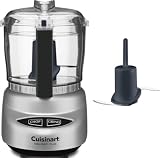
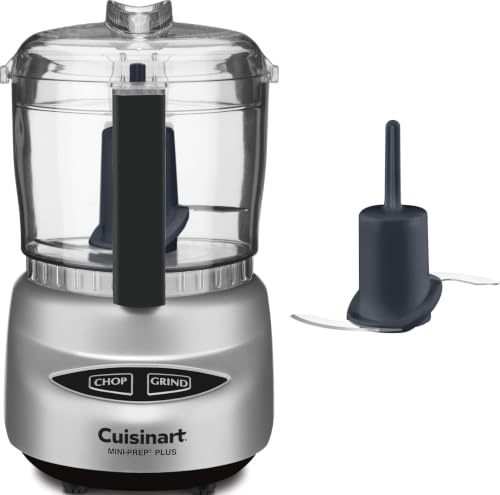
- Compact 3-4 Cup Class: Cuisinart Mini-Prep Plus DLC-2A, KitchenAid 3.5-Cup Food Chopper. Usually $40-$80. Best for herbs, nuts, and small sauce batches. One-speed plus pulse, minimal storage needs.
- Mid-Size 8-Cup Class: Cuisinart FP-8SV, KitchenAid 7-Cup and 8-Cup Food Processors, Hamilton Beach 8-Cup models. Usually $80-$150. The best value for most buyers; includes slice/shred disc and covers 90% of tasks.
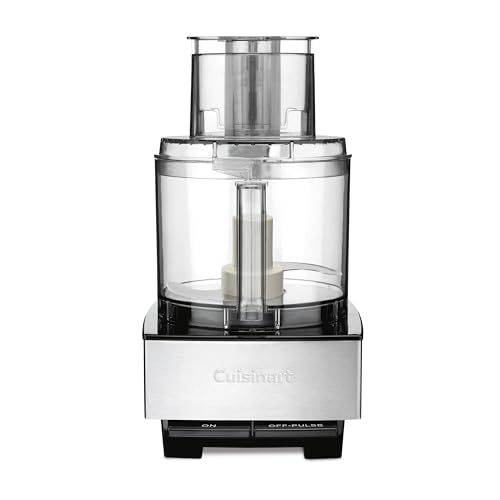
- Full-Size 12-14 Cup Class: Cuisinart Custom 14 DFP-14BCNY, KitchenAid 13-Cup and 14-Cup Food Processors, Breville Sous Chef 12-Cup and 16-Cup. Usually $150-$300. Choose these for continuous feed slicing, large shredding jobs, and dough. Breville and KitchenAid models in this tier often include adjustable slicing discs and dicing kits.
- High-Torque / Specialty: Breville Sous Chef 16 Cup, Magimix by Robot-Coupe 14-Cup and 16-Cup. Usually $250-$400. Induction motors, quieter operation, and heaviest build. Worth it only if you process daily or knead stiff doughs.
Avoid paying for a 14-cup dicing model if you dice by hand twice a year. Put that budget toward a mid-size with a better seal and easier cleanup instead.
Common Buying Mistakes to Avoid
- Buying too big for small batches: A 14-cup bowl needs a minimum volume to work properly. A single garlic clove or 1/2 cup of herbs will not contact the blade efficiently and will give uneven results.
- Ignoring lid and pusher design: A three-part pusher lets you drizzle oil for emulsifying dressings. A single solid pusher makes mayonnaise and vinaigrettes harder.
- Overvaluing speed settings: Most tasks need only two speeds: low for shredding/slicing (to avoid bruising) and high/pulse for chopping. Ten speeds add little practical benefit.
- Forgetting storage: If you have no place for discs, you will stop using them. Prioritize in-bowl storage or a compact case.
FAQ: Real Follow-Up Questions
Can a food processor replace a blender?
For chopping, slicing, shredding, and dough, yes. For smooth purees, smoothies, and liquids, no. Food processor bowls leak if filled above the liquid max line and blades are not designed to vortex liquids. If you make smoothies daily, keep a blender as well.
Is a higher wattage always better for dough?
Not always. Torque and bowl design matter more than peak watts. A processor rated for dough will have a specific dough capacity listed, usually 500g to 900g of flour depending on bowl size. Exceeding that, even with a 700W motor, risks stalling or cracking the bowl.
How do I prevent uneven slicing?
Use low speed, apply steady light pressure on the pusher, and pack the feed tube firmly so food does not tip. Chill soft cheese for 15 minutes before shredding and use the shredding disc on low to prevent gumming.
Are mini choppers worth it if I already have a large processor?
Yes, if you do small daily tasks. A large bowl is inefficient for chopping one onion or making 1/2 cup of pesto. A compact chopper saves cleanup time and yields more even results for sub-2-cup batches.


