Top 3 picks at a glance
Best Google Nest Cameras in 2026
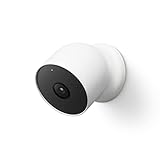
The best Google Nest camera for most homes is the second-generation Nest Cam (wired) indoors or the Nest Cam (battery) outdoors; choose the Nest Cam with floodlight for a fixed, hardwired driveway or yard. Your best pick depends less on resolution alone than on where the camera can get power, whether you need recorded history without a subscription, and how much control you want when the internet is down.
Choose by placement and power
| Camera | Best fit | Video and power | What to know about recording |
|---|---|---|---|
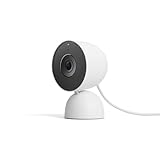
| Nest Cam (wired, 2nd gen) | Indoor rooms with a nearby outlet | 1080p HDR; continuous wired power | Event history and familiar-face features depend on plan and region; no built-in local video archive |
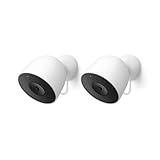
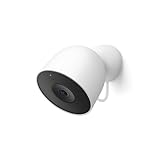
| Nest Cam (battery) | Indoor or outdoor spots without convenient wiring | 1080p HDR; rechargeable battery, or optional wired power | Battery mode records events rather than continuous video; wired operation enables continuous recording only with an eligible subscription |
| Nest Cam with floodlight | Driveways and yards with existing electrical wiring | 1080p HDR; wired camera with motion-activated floodlights | Requires installation at a suitable power point; recording features still depend on the Nest subscription plan |
These cameras are 1080p, not 2K or 4K. That is enough to identify activity in a doorway or room, but it gives you less room to crop a distant face or number plate. If fine detail across a large yard is your priority, compare cameras outside the Nest range before buying.
As an Amazon Associate we earn from qualifying purchases at no extra cost to you.
How to choose: a situation-to-camera guide
| Your situation | Recommended choice | Reason |
|---|---|---|
| You have an outlet near an indoor entry or living area | Nest Cam (wired, 2nd gen) | No battery charging, and its compact design suits everyday indoor monitoring. |
| You need outdoor coverage but cannot run a cable | Nest Cam (battery) | Flexible mounting and rechargeable power make placement easier. |
| You already have suitable wiring and want light as well as video | Nest Cam with floodlight | Combines motion-triggered illumination with camera coverage at a fixed location. |
| You need continuous footage from a battery camera | Nest Cam (battery), connected to power, plus an eligible plan | Battery-only operation is designed around event clips, not nonstop recording. |
| You need footage stored locally during internet outages | Consider a camera system with local recording | Nest cameras do not provide a user-accessible microSD or local network video recorder archive. |
Video quality, detection, and the subscription trade-off
All three picks prioritize useful, accessible home monitoring over maximum resolution. HDR helps balance bright windows and shadowed rooms, while night vision supports low-light viewing. Placement matters: avoid aiming directly at a window or a bright security light, and mount outdoor cameras where the view is not blocked by eaves, plants, or passing traffic.
Without a paid Google Home or Nest Aware plan, supported cameras can provide live viewing and a limited history of event clips. The exact free history and features vary by camera generation, region, and current Google plan. A subscription adds longer event video history and, on supported devices and plans, features such as familiar-face detection. Check the plan shown in your Google Home app for your country before purchasing; names, limits, and availability can change.
For a battery camera, the subscription question is also a power question. Event-based recording helps conserve battery, but frequent motion, cold weather, and poor Wi-Fi can increase charging needs. A busy sidewalk in the camera’s view may produce far more activity than a quiet backyard, so narrow activity zones and reduce unnecessary notifications before judging battery life.
Power planning: a practical battery estimate
Google’s battery-life figures are estimates, not a guaranteed runtime. To plan charging, use your own daily event count rather than assuming the longest advertised interval. For example, if a camera produces 20 motion events per day and each event averages 30 seconds, that is 10 minutes of recorded activity daily. At 60 events per day, it becomes 30 minutes—a threefold increase in event footage, before accounting for colder weather, live viewing, or weak Wi-Fi.
This calculation does not translate directly into a precise number of battery days because camera wake-ups and transmission also consume power. It does show why a camera pointed at a busy street can need charging much sooner than the same model overlooking a fenced garden. If frequent charging would be inconvenient, use a compatible power connection or choose a wired model.
Local controls, smart-home fit, and privacy
Nest cameras are managed through Google Home, with live views and compatible smart-home controls available through Google’s ecosystem. They can work well with Google Assistant-enabled displays and speakers, but they are not the best match for someone who wants a camera that stores recordings on a local hub or offers broad, platform-independent control. Do not assume that a Google Home camera will provide every feature through Apple Home, Alexa, or a third-party recorder; check the exact integration you need before buying.
Local controls are useful but limited. You can manage cameras and settings in the app, and some functions may remain available over a local network, but cloud-connected features and remote access rely on internet service. There is no removable memory card to recover footage after a network failure. If local recording, internet-independent playback, or ownership of an offline archive is essential, choose a camera system designed around a local base station or recorder instead.
For privacy, Google Home provides camera controls, activity zones, and options to turn cameras off or pause monitoring, depending on model and app version. Set activity zones to exclude public walkways and neighboring windows, use a visible indicator where appropriate, and establish household rules for recording shared spaces. A camera aimed at a bedroom or other sensitive area should be easy to disable physically or in the app when it is not needed.
Buying verdict
- Best indoor pick: Nest Cam (wired, 2nd gen) for reliable, always-powered monitoring in a room with an outlet.
- Best flexible outdoor pick: Nest Cam (battery) when mounting freedom matters more than continuous recording.
- Best wired outdoor upgrade: Nest Cam with floodlight for a fixed area that needs both illumination and camera coverage.
- Best alternative for local recording: Look beyond Nest for a system with local storage, since subscription-free local archives are not its strength.
Before you buy, confirm the camera’s placement, power source, Wi-Fi coverage, and the recording history included with your region’s plan. Those four checks are more likely to determine whether a Nest setup suits your home than a small difference in camera specifications.
Frequently asked questions
Can I use a Nest Cam battery camera indoors?
Yes. The Nest Cam (battery) can be used indoors or outdoors, and its rechargeable power makes it suitable for places without convenient wiring. If you connect it to power, continuous recording is available only with an eligible subscription; in battery-only mode, it records events rather than continuously.
Will Nest cameras keep recording if my internet goes down?
Nest cameras do not provide a user-accessible local video archive, such as a microSD card or network video recorder. Some functions may remain available over a local network, but cloud-connected features and remote access rely on internet service. For footage stored locally during outages, consider a system designed around a local base station or recorder.
Can a Nest camera identify a face or license plate at a distance?
Nest cameras in the article record 1080p HDR video, which can help identify activity in a doorway or room but offers less room to crop a distant face or number plate. If fine detail across a large yard is important, compare cameras outside the Nest range before choosing.
What can I do to reduce unnecessary battery-camera activity?
Narrow activity zones and reduce unnecessary notifications. A busy sidewalk in the camera’s view can create far more motion events than a quiet backyard, increasing recorded activity and charging needs. Frequent motion, cold weather, and poor Wi-Fi can also increase how often the battery needs charging.
Can I view and control Nest cameras through other smart-home platforms?
Nest cameras are managed through Google Home and can work with Google Assistant-enabled displays and speakers. The article cautions against assuming every feature will work through Apple Home, Alexa, or a third-party recorder. Check the exact integration you need before buying.