
The best survival knives for reliable outdoor use are the Morakniv Garberg for an all-purpose stainless tool, the ESEE-6 for a simple field knife with excellent edge maintenance, and the KA-BAR Becker BK2 for demanding chopping and batoning where a thick, heavy blade matters.
As an Amazon Associate we earn from qualifying purchases at no extra cost to you.


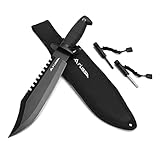
Top 3 picks at a glance
What makes a survival knife dependable?
A survival knife has to do more than look rugged. It should cut cordage, prepare food, carve wood, make shavings, process small branches, and perform controlled batoning without becoming difficult to carry. The strongest choices usually share six characteristics:
- Full-tang construction: the steel extends through the handle rather than ending at the guard.
- A practical blade length: roughly 4–6 inches is versatile without becoming unwieldy.
- Useful edge geometry: a moderately thin cutting edge performs better than an unnecessarily thick wedge.
- Predictable blade steel: toughness, corrosion resistance, and sharpenability matter as much as maximum edge retention.
- A secure handle: grip texture, shape, and resistance to hot spots affect safety during wet or repetitive work.
- A secure sheath: retention, drainage, belt attachment, and one-handed access are practical equipment concerns.
No steel is best at everything. A very hard stainless steel may retain an edge longer, while a tougher carbon steel can tolerate impact and be sharpened quickly in the field. The right choice depends on whether your priority is wet-weather reliability, wood processing, low maintenance, or easy repair.
Best survival knives compared
| Knife | Blade steel | Blade length | Blade thickness | Approximate market range | Best suited to |
|---|---|---|---|---|---|
| Morakniv Garberg | 14C28N stainless | 4.3 in / 109 mm | 0.126 in / 3.2 mm | Usually $70–$120 | General camp use and wet climates |
| ESEE-6 | 1095 carbon steel | 6.0 in / 152 mm | 0.25 in / 6.4 mm | Usually $120–$180 | Hard use, carving, and field repairability |
| KA-BAR Becker BK2 | 1095 Cro-Van carbon steel | 5.25 in / 133 mm | 0.25 in / 6.4 mm | Usually $120–$180 | Heavy-duty chopping and batoning |
| Cold Steel SRK | SK-5 carbon steel in the standard version | 6.0 in / 152 mm | About 0.18 in / 4.6 mm | Usually $60–$110 | Large general-purpose field work |
| Gerber StrongArm | 420HC stainless steel | 4.8 in / 122 mm | About 0.19 in / 4.8 mm | Usually $70–$120 | Simple carry, utility work, and corrosion resistance |
| Fallkniven A1x | Laminated cobalt-alloy steel | About 6.3 in / 160 mm | About 0.24 in / 6 mm | Usually $250–$400 | Premium wet-weather and hard-use carry |
Dimensions and included sheath configurations can vary by production version. Treat the table as a buying guide rather than a substitute for checking the exact configuration being offered.
1. Morakniv Garberg: best balanced choice
The Morakniv Garberg is one of the easiest recommendations for people who want one reliable outdoor knife without excessive weight. Its 14C28N stainless blade offers useful corrosion resistance, good toughness for ordinary camp work, and straightforward sharpening. It is not designed to replace a hatchet, but its thinner geometry cuts food, cordage, and wood more efficiently than many thick “survival” blades.
The full tang is exposed at the pommel, and the textured polymer handle remains controllable in rain when held correctly. Available sheath systems differ, so inspect whether the version includes the belt attachment and mounting options you need. The Garberg is particularly appealing for coastal trips, humid climates, and users who may not remember to oil a carbon-steel blade after every outing.
Limitations
Its 4.3-inch blade is compact, and the relatively thin profile is optimized for cutting rather than aggressive prying or repeated heavy batoning. Use it as a knife, not as a substitute for a splitting tool.
2. ESEE-6: best for field serviceability
The ESEE-6 uses 1095 carbon steel and a thick full-tang design. 1095 is not stainless, so it needs a thin protective coating and occasional oiling, especially around the edge and exposed tang. In return, it is tough, easy to sharpen with basic equipment, and simple to maintain in remote conditions.
The broad six-inch blade gives more reach for carving and processing small branches than the Garberg. ESEE’s straightforward construction is valuable when the knife will be used hard: removable handle scales can be replaced, and the design does not depend on delicate mechanisms. The standard molded sheath generally provides solid retention, but belt orientation and mounting comfort should be checked before a long hike.
Limitations
The thick stock and broad edge can feel more like a wedge than a slicer when preparing food. It is also heavier than compact Scandinavian-style knives. A small sharpening stone and corrosion-protection cloth belong in the kit.
3. KA-BAR Becker BK2: best for heavy-duty impact work
The Becker BK2 is built around a thick 1095 Cro-Van blade and a substantial full tang. Its weight and thickness provide confidence for batoning and processing moderately sized branches. The handle is large enough for gloved use, and the removable scales make cleaning and replacement practical.
That strength comes with a cost. The BK2 is less nimble for fine carving and less efficient for slicing food than a thinner blade. It is also heavy for a minimalist loadout. Choose it when wood processing is central to your trip and you prefer a compact, robust tool over maximum cutting efficiency.
Safe use note
Baton only through sound, straight-grained wood, keep the knife aligned with the grain, and stop if the blade binds or the handle shifts. Never use the knife as a pry bar. A knife can tolerate some impact through appropriate technique, but no full-tang design makes abuse risk-free.
4. Cold Steel SRK: best value for a large field knife
The standard Cold Steel SRK is a practical six-inch option with a grippy synthetic handle and a secure polymer sheath. Its blade size works well for camp chores, light chopping, and outdoor utility tasks without reaching the bulk of a machete or large chopper. The SK-5 carbon-steel version offers good toughness and easy maintenance, while other SRK variants may use different steels and coatings.
Handle texture is one of its strengths: the grip is designed to remain secure during wet work, but users with smaller hands should confirm that the handle does not force an awkward grip. The sheath’s retention is useful for active movement, though the carry setup may be less refined than premium modular systems.
5. Gerber StrongArm: best for simple, low-maintenance carry
The Gerber StrongArm combines a full tang, a 420HC stainless blade, a rubberized handle, and a versatile sheath system. 420HC generally gives up some edge retention compared with more advanced steels, but it is forgiving, corrosion-resistant, and uncomplicated to sharpen. That makes the StrongArm a sensible choice for vehicle kits, wet environments, and users who prioritize easy ownership over maximum cutting performance.
The handle offers confident retention, and the sheath can support several carry orientations. The blade is thick enough for normal field work but remains manageable for utility cuts. For frequent wood carving, however, a thinner-edged knife will usually feel more efficient.
6. Fallkniven A1x: premium option for demanding weather
The Fallkniven A1x is a premium, relatively large knife intended for users who want strong corrosion resistance and high edge performance in a hard-use format. Its laminated cobalt-alloy blade is built for durability, and the rubberized handle provides a secure grip in cold or wet conditions.
The A1x is expensive and heavier than many practical alternatives. Its sheath configuration also deserves close attention because carry comfort can vary depending on the included system. It makes the most sense for extended outdoor use where material quality, weather resistance, and long-term edge performance justify the higher market range.
Choose by situation, not by steel name
| Your situation | Recommended direction | Why | What to compromise on |
|---|---|---|---|
| Frequent rain, coastal trips, or poor maintenance habits | Morakniv Garberg or Fallkniven A1x | Stainless or corrosion-resistant construction reduces upkeep | Premium stainless options cost more; the Garberg is less suited to heavy impact |
| Remote trips with basic sharpening equipment | ESEE-6 or KA-BAR Becker BK2 | Carbon steels are practical to resharpen and field-repair | They require rust prevention |
| Mostly food preparation, carving, and cordage | Morakniv Garberg | Moderate blade length and efficient cutting geometry | Less suitable for heavy splitting |
| Frequent batoning and branch processing | KA-BAR Becker BK2 or ESEE-6 | Thick blades and robust tangs tolerate demanding use better | More weight and poorer slicing performance |
| Vehicle kit or general utility carry | Gerber StrongArm or Cold Steel SRK | Simple handling, secure grips, and accessible price ranges | Steel and sheath refinement may be below premium options |
How to inspect a knife before buying
- Confirm the tang: look for a documented full-tang design, not merely a handle that feels solid.
- Match blade thickness to work: around 3 mm favors cutting efficiency; 4.5–6 mm favors impact resistance but adds weight.
- Check the edge profile: a usable outdoor edge should cut cleanly without excessive wedging.
- Grip it with wet hands: look for secure indexing, no sharp hotspots, and enough room for controlled cuts.
- Test the sheath retention: invert it carefully, check for movement, and verify that the belt loop does not interfere with walking or a pack hip belt.
- Plan maintenance: carbon steel needs drying and oil; stainless steel still benefits from cleaning, particularly after saltwater exposure.
Frequently asked questions
Which knife is easiest to maintain in wet or humid conditions?
The Morakniv Garberg is the simplest choice for wet or humid conditions because its 14C28N stainless blade offers useful corrosion resistance and its handle remains controllable in rain. The Gerber StrongArm is another low-maintenance option because its 420HC stainless blade is corrosion-resistant and straightforward to sharpen. Both reduce upkeep compared with the carbon-steel alternatives, which need rust prevention.
Can any of these knives replace a hatchet or large chopper?
No. The article presents these knives as tools for cutting, carving, processing small branches, and controlled batoning, not as complete replacements for larger splitting or chopping tools. The Morakniv Garberg is specifically optimized for cutting rather than aggressive impact work. The KA-BAR Becker BK2 and Cold Steel SRK are better suited to heavier wood processing, but neither should be used as a pry bar.
Which knife is best for preparing food and carving?
The Morakniv Garberg is the strongest fit for food preparation, carving, and cordage because its relatively thin geometry cuts efficiently. The ESEE-6 and KA-BAR Becker BK2 can handle these tasks, but their thick stock and broad edges may feel more like wedges than slicers. The Gerber StrongArm is suitable for utility cuts, though a thinner-edged knife is usually more efficient for frequent wood carving.
What should I carry with a carbon-steel survival knife?
Carry a small sharpening stone and a corrosion-protection cloth with a carbon-steel knife such as the ESEE-6. Carbon steel is tough and easy to sharpen with basic equipment, but it is not stainless and needs a thin protective coating plus occasional oiling. Pay particular attention to the edge and exposed tang, especially after use in wet conditions.
How should I check whether a knife sheath will work for me?
Check sheath retention, drainage, belt attachment, mounting options, carry orientation, and one-handed access before buying. Sheath systems and included configurations can differ by production version, and carry comfort may vary between systems. The article also recommends confirming that the sheath fits your intended belt or mounting setup before taking the knife on a long hike.
Final recommendation
For most people, the Morakniv Garberg is the best survival knife because it balances cutting ability, full-tang strength, corrosion resistance, grip, and manageable weight. Choose the ESEE-6 when repairability and hard use matter more than rust resistance, the Becker BK2 when heavy batoning is a priority, and the Fallkniven A1x when premium performance in wet conditions justifies the cost. Whatever model you select, pair it with a reliable sharpener, a suitable sheath, and the discipline to use a knife for cutting rather than prying.


