
The best budget phones under $300 in 2026 are the Samsung Galaxy A15 5G and Galaxy A25 5G for the best overall displays, the Motorola Moto G Power 5G (2024) for maximum battery life, the OnePlus Nord N30 5G for the most storage and fastest charging, and the CMF Phone 1 by Nothing for the best gaming performance per dollar — your choice depends on whether you prioritize battery, screen, or storage, because no phone under $300 gets all three right.
As an Amazon Associate we earn from qualifying purchases at no extra cost to you.

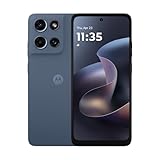


Top 3 picks at a glance
How to Choose Under $300: The Three-Way Trade-Off
Every phone in this price bracket makes a compromise. Understanding the compromise helps you avoid buying a phone that looks good on paper but frustrates you daily.
- Battery-first phones use a 5,000mAh battery paired with a less demanding LCD and a mid-range efficiency chip. You get two days of use, but the display won’t be as bright or colorful as AMOLED and the cameras are basic.
- Display-first phones give you a 6.5-inch Super AMOLED with 90Hz or 120Hz and 800-1000 nits brightness. That vivid screen costs battery life and often forces a cut to storage speed or charging wattage.
- Storage-first phones offer 128GB or 256GB with expandable microSD. They often use a faster UFS storage chip and 45W+ charging, but they usually pair it with a weaker image processor or a plastic frame to hit the price.
If you keep your phone for 2-3 years, prioritize storage and display. If you are often away from a charger or use your phone as a hotspot, prioritize battery. If you play games daily, prioritize the processor over all three.
Best Budget Phones Under $300 Ranked by Use Case
1. Best Overall Display: Samsung Galaxy A25 5G and Galaxy A15 5G
For anyone who watches video, browses, or reads outside, the Galaxy A25 5G (usually $230-$290) and its cheaper sibling the Galaxy A15 5G (usually $170-$220) are the safest picks. Both offer a 6.5-inch Super AMOLED display with 90Hz refresh on the A15 and 120Hz on the A25, with brightness around 800 nits in high-brightness mode. That is the only display technology under $300 that stays readable in direct sunlight without washing out colors.
Both ship with 128GB storage expandable via microSD up to 1TB, and Samsung promises 4 years of OS updates, which is unmatched in this class and matters if you plan to keep the phone past 2027. The trade-off is charging speed: 25W wired only, which takes about 85 minutes for a full charge, and the MediaTek Dimensity 6100+ (A15) and Exynos 1280 (A25) are adequate for casual games like Clash Royale or Call of Duty Mobile on low-medium settings, but will stutter in demanding titles like Genshin Impact above 30fps.
2. Best for Battery Life: Motorola Moto G Power 5G (2024)
The Moto G Power 5G (2024) (usually $200-$250) is the endurance pick. It pairs a 5,000mAh battery with a 6.7-inch 120Hz IPS LCD and a Snapdragon 6 Gen 1-class efficient platform. Motorola also keeps the software close to stock Android, which reduces background drain.
In practice this is a two-day phone for moderate users and a guaranteed one-day phone for heavy users even with hotspot tethering and navigation. It includes 128GB storage with microSD expansion and 30W TurboPower charging. The downside is the display: LCD contrast and blacks are noticeably weaker than AMOLED, and video looks flat compared to the Samsung A-series. Cameras are also average with slower shutter processing in low light.
3. Best for Storage and Charging: OnePlus Nord N30 5G
If you install a lot of apps, save offline music, or record video, the OnePlus Nord N30 5G (usually $220-$280) solves the storage anxiety. It comes standard with 256GB UFS storage and 8GB RAM in its base configuration under $300, plus microSD support and 50W SUPERVOOC charging that can fill the 5,000mAh battery to about 80% in 30 minutes.
The Nord N30 also uses a 6.72-inch 120Hz LCD with a Snapdragon 695 chipset. That chip is older but still faster than most Dimensity 6100-class phones in sustained CPU tasks. You sacrifice AMOLED and long-term updates — OnePlus offers fewer years of support than Samsung — but if you want to carry your entire library locally without relying on cloud storage, this is the value leader.
4. Best for Budget Gaming: CMF Phone 1 by Nothing
For gamers who can find it in the $190-$250 range, the CMF Phone 1 is the performance outlier under $300. It uses a MediaTek Dimensity 7300 with a Mali-G615 GPU, which benchmarks about 35-40% higher than the Snapdragon 695 and Dimensity 6100+ found in most other budget phones. It also has a 6.67-inch 120Hz AMOLED display and a 5,000mAh battery with 33W charging.
The modular back and clean Nothing OS are bonuses, but the real advantage is thermal stability: it holds 40-50fps in Call of Duty Mobile on high settings where other budget phones drop to the low 30s. The compromise is cameras — the 50MP main sensor is usable in daylight but no match for Samsung’s processing — and no official IP water resistance rating beyond splash resistance.
Head-to-Head Spec Comparison
| Model | Battery | Display | Chipset | Base Storage / RAM | Peak Charging |
|---|---|---|---|---|---|
| Samsung Galaxy A15 5G | 5,000mAh | 6.5″ Super AMOLED, 90Hz, ~800 nits | Dimensity 6100+ | 128GB / 4GB (microSD) | 25W |
| Samsung Galaxy A25 5G | 5,000mAh | 6.5″ Super AMOLED, 120Hz, ~1000 nits | Exynos 1280 | 128GB / 6GB (microSD) | 25W |
| Motorola Moto G Power 5G (2024) | 5,000mAh | 6.7″ IPS LCD, 120Hz, ~600 nits | Snapdragon 6 Gen 1 class | 128GB / 8GB (microSD) | 30W |
| OnePlus Nord N30 5G | 5,000mAh | 6.72″ IPS LCD, 120Hz, ~680 nits | Snapdragon 695 | 256GB / 8GB (microSD) | 50W |
| CMF Phone 1 | 5,000mAh | 6.67″ AMOLED, 120Hz, ~2000 nits peak | Dimensity 7300 | 128GB / 8GB (microSD) | 33W |
Decision Matrix: Which Trade-Off Fits You?
Use this matrix to map your daily habits to the right compromise instead of just picking the highest spec.
| If You Do This Most | Prioritize | Best Pick | Why |
|---|---|---|---|
| Watch YouTube/TikTok, browse outdoors, keep phone 3+ years | Display + Updates | Galaxy A25 5G | AMOLED contrast and long OS support matter more than raw speed |
| Work on the go, hotspot, navigation, long shifts without charger | Battery | Moto G Power 5G (2024) | Largest effective runtime due to efficient SoC and LCD tuning |
| Store offline games, videos, photos; hate “storage full” warnings | Storage + Charging | OnePlus Nord N30 5G | 256GB base avoids cloud dependency, 50W reduces downtime |
| Play COD Mobile, PUBG, or emulators 45+ minutes daily | Processor + Display | CMF Phone 1 | Dimensity 7300 GPU sustains higher frame rates with less throttling |
| Light use, cheapest reliable phone for calls and camera | Price-to-Reliability | Galaxy A15 5G | Lowest price that still gets AMOLED and Samsung update policy |
Worked Calculation: Why 5000mAh Does Not Mean the Same Battery Life
Two phones with the same 5,000mAh battery can differ by 4-6 hours of actual use because display and chip efficiency determine power draw. Here is a simplified power budget to explain the gap:
Battery energy = 5,000mAh x 3.87V nominal = 19.35Wh.
Estimated average power draw while scrolling and gaming mix:
- AMOLED 120Hz at 400 nits: ~0.9W – 1.2W for the display alone
- IPS LCD 120Hz at 400 nits: ~1.1W – 1.4W for the backlight
- Dimensity 7300 under gaming load: ~3.2W – 3.8W SoC package
- Dimensity 6100+ under same load: ~2.4W – 2.8W but at lower frame rate
- Idle radio + background: ~0.4W on 5G standby
Total system draw for a typical gaming scenario on CMF Phone 1: ~4.8W (AMOLED 1.0W + SoC 3.4W + radio 0.4W) = 19.35Wh / 4.8W = ~4.0 hours of continuous gaming. On Moto G Power 5G with its LCD and more efficient but slower chip: ~3.9W total = 19.35Wh / 3.9W = ~4.9 hours. That is almost a 25% difference despite identical battery capacity.
For mixed use (1 hour gaming + 4 hours video/scrolling + 15 hours standby), divide 19.35Wh by a weighted average draw of ~1.1W and you get ~17.5 hours active before hitting battery saver, which aligns with why the Motorola lasts a full day longer for non-gamers while the CMF Phone 1 drains faster but delivers smoother gameplay.
The takeaway: If your priority is screen-on time away from a charger, a slightly dimmer LCD with an efficiency-tuned chip will outlast a brighter AMOLED with a faster chip, even with the same mAh number.
Optimal Settings for Gaming on Budget Phones Under $300
Budget chipsets throttle when heat builds past 42-43C. These settings keep frame time stable without overheating and save battery:
- Set refresh rate to 60Hz for non-gamers, 90Hz for gamers. 120Hz looks smoother but adds ~15% display power draw. On Snapdragon 695 and Dimensity 6100+ phones, 90Hz reduces stutter because the GPU is not pushed to render 120fps it cannot sustain.
- In Call of Duty Mobile / PUBG Mobile: Use Graphics: Low/Medium, Frame Rate: Max (or 60fps), Shadows: Off, Anti-aliasing: Off. This shifts load from GPU to CPU where budget chips are less bottlenecked, and it lowers VRAM use to about 800-1100MB. High textures on a 4GB RAM device will trigger memory compression and micro-stutters.
- Enable performance/gaming mode and turn off adaptive brightness during games. Adaptive brightness constantly adjusts the light sensor and backlight, adding CPU wakeups. Lock brightness to 55-65% indoors.
- Limit background apps to 3-4 before launching a demanding game. On 4GB RAM models like the base Galaxy A15 5G, Android will kill and reload games if more than 6-7 apps sit in memory. On 8GB models like the CMF Phone 1 and Nord N30, you can be less strict.
- Charge to 80-85% for daily use if you plan to keep the phone 2+ years. Lithium-ion degradation is fastest above 4.35V per cell. Staying below 85% can double the number of cycles before capacity drops below 80% health.
Storage Reality Check
128GB sounds large until you account for system use. Out of the box, Android 14/15 plus preinstalled apps consume 18-24GB on Samsung and Motorola. That leaves ~104-110GB usable. A single 60fps 1080p minute of video takes ~120-150MB, Call of Duty Mobile is ~2.2GB plus cache, and offline Spotify at Very High quality is ~15GB for 2,000 songs. Without a microSD card, a 128GB phone fills in 10-14 months for an average user. That is why the OnePlus Nord N30’s 256GB base or any phone with microSD expansion has hidden long-term value — you avoid paying for cloud storage or constantly deleting apps.
If you choose a 128GB model, buy a 128GB or 256GB microSD card (usually $12-$22) and set your camera to save photos/video directly to the card in Camera Settings > Storage location. Keep apps on internal storage, since running apps from microSD is slower and causes launch lag.
FAQ
Is 4GB RAM enough in 2026 under $300?
For calls, messaging, and light games, yes. For multitasking with Chrome with 8+ tabs, Maps, and a game, 4GB will reload apps frequently. If you switch apps often, choose an 8GB variant like the Moto G Power 5G (2024), Nord N30, or CMF Phone 1.
Do any budget phones under $300 have wireless charging or water resistance?
No reliable models in this price range offer wireless charging. Official IP67/IP68 water resistance is also rare — the Galaxy A25 5G and Nord N30 offer limited splash resistance only. Use a case and avoid submersion.
Should I buy a 5G budget phone or save with a 4G model?
In 2026, choose 5G even if your plan is 4G-limited. Carriers are refarming spectrum to 5G mid-band, and all the phones listed here are 5G by default with no price penalty. There is no meaningful battery saving by choosing 4G-only anymore.


