
Top 3 picks at a glance
Best Commercial Hot Dog Rollers for Food Service
The best commercial hot dog roller is the one whose usable roller space, independent heating zones, and recovery rate match your busiest service period—not simply the model with the most rollers. For a small stand, a compact unit with roughly 5–7 rollers and separate front and rear controls is often easier to operate and clean; high-volume counters generally need 11– roller units, stronger electrical capacity, and enough space to separate raw, cooking, and ready-to-serve product.
There is no single best fit for every operation. Before choosing, estimate how many hot dogs you need ready at peak, check the appliance’s electrical requirements against the outlet you can actually use, and inspect how the rollers and drip tray come apart for cleaning.
As an Amazon Associate we earn from qualifying purchases at no extra cost to you.
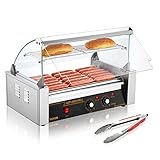


Compare the right size to your service
| Service type | Useful capacity class | Typical electrical class | Best fit |
|---|---|---|---|
| Occasional service or small kiosk | 5–7 rollers; roughly 8–14 hot dogs, depending on product diameter and spacing | About 600–900 W; commonly 120 V | Short queues, limited counter space, modest holding needs |
| Busy stand or café counter | 9–11 rollers; roughly 15–22 hot dogs | About 1,000–1,500 W; verify voltage and outlet | Lunch rushes and steady service throughout the day |
| High-volume concession or food-service line | 11– roller or multi-unit setup; capacity varies by roller length and dog size | Often 1,500 W or more; may require a dedicated circuit or different supply | Long queues, frequent replenishment, and continuous operation |
Capacity figures are planning estimates, not guaranteed serving rates. A roller’s advertised dog count may assume narrow products packed closely together. Larger sausages, spacing for tongs, and a desire to keep cooked product moving through the unit all reduce practical capacity.
Choose by peak demand, not by the number on the carton
Estimate your peak requirement in servings per hour, then account for how long a batch takes to heat and how much product you want ready before a rush. As a simple example, a stand serving 36 hot dogs during a 30-minute event window needs to average 72 per hour. If it starts with 16 ready-to-serve dogs and takes 12 minutes to replenish a batch, the first batch covers only part of the rush. The operator needs enough cooking space and a replenishment routine to keep the next batch moving while those first dogs sell.
That calculation is more useful than treating roller count as hourly output: cooking time depends on the starting temperature, sausage size, load, and appliance. Ask the manufacturer for recovery or cooking guidance, and avoid assuming that a full load will heat as quickly as a few test pieces.
- Low, uneven demand: A smaller unit limits counter footprint and makes it easier to avoid cooking more than you can sell.
- Sharp rushes: Favor a larger capacity class and independent zones so one area can replenish while another holds ready product.
- Long service windows: Consider whether the appliance can run continuously at your site’s electrical supply, and plan a rotation that prevents dogs from sitting too long.
Heating zones: the practical advantage of front and rear controls
Many commercial rollers divide the cooking surface into two independently controlled zones, often front and rear. This lets staff cook or reheat product in one area while holding ready-to-serve product in the other. It can reduce overcooking during slow periods and help the operator keep a working buffer during a rush.
For example, use the rear zone for incoming product and the front for finished product, then rotate batches forward as they reach the required food-safe temperature. The arrangement works only if the operator labels or consistently follows the zones; moving uncooked product into the serving area defeats the separation. Follow the appliance and local food-safety instructions for temperatures and holding time—roller controls are not a substitute for checking food temperature with an appropriate thermometer.
A single-zone model can suit a low-volume stand with a simple, continuous flow. It is less flexible when demand changes: lowering the setting to protect a few finished dogs may slow the next batch, while keeping the setting high can dry out product left on the rollers.
Construction and cleaning affect daily labor
Look for food-contact rollers made from stainless steel or another clearly specified, food-safe material. Stainless steel is durable and generally straightforward to wipe down, but the whole appliance is not automatically dishwasher-safe. A stainless-steel housing can also be easier to maintain than a painted exterior in a busy service area; check the manual for approved cleaners and surface-care instructions.
The details that save time are mechanical: rollers that can be removed without tools, a drip tray that slides out smoothly, accessible end plates, and few crevices where grease collects. Ask whether the rollers are removable and whether the manual permits immersion or dishwasher cleaning. Never assume it is safe to wash electrical components or submerge a roller assembly.
- Switch off, unplug, and allow the unit to cool before cleaning.
- Remove and empty the drip tray; discard residue according to your food-waste procedure.
- Clean removable parts using the manufacturer’s specified method, then dry them fully before reassembly.
- Wipe the housing and control area with an appropriate cloth, keeping liquid away from electrical connections.
- Check rollers for residue or damage before the next service period.
Include cleaning time in your comparison. A cheaper unit that requires awkward disassembly can cost more in staff time over a season than a model with a practical removable tray and accessible rollers.
Match the appliance to your site
| Your situation | Priority | What to look for |
|---|---|---|
| Pop-up stand with limited counter space | Compact footprint and uncomplicated cleanup | 5–7-roller class, removable drip tray, straightforward controls |
| Lunch counter with changing demand | Flexible holding and replenishment | Two independently controlled zones and enough space for a working buffer |
| Busy concession with sustained queues | Throughput and electrical compatibility | Larger roller capacity, documented operating requirements, and a suitable dedicated circuit if required |
| Shared kitchen with strict close-down routines | Predictable cleaning | Clear disassembly instructions, accessible grease collection, and manufacturer-approved cleaning methods |
Check power before comparing features
Read the nameplate for voltage, wattage, and current, then compare it with the actual circuit and other equipment sharing that circuit. For a basic estimate, current in amps equals watts divided by volts: a 1,200 W roller on a 120 V supply draws about 10 A (1,200 ÷ 120). A 1,500 W unit on the same supply draws about 12.5 A. Those figures are estimates, not a circuit-sizing recommendation; startup behavior, local electrical rules, and other connected appliances matter. Have a qualified electrician confirm suitability when needed.
A higher-wattage model may recover heat faster under load, but it is not useful if your location cannot safely supply it. Conversely, choosing the lowest-wattage option without considering rush demand can leave the rollers struggling to keep up with frequent replenishment.
Shortlist by operating requirements
When comparing models, prioritize documented specifications over vague claims about “commercial” performance. Confirm the roller count and usable length, total wattage, required voltage, number of independent zones, construction of food-contact parts, warranty terms, and replacement-part availability. A countertop hot dog roller is not a substitute for a dedicated high-output cooking line; if your peak demand is beyond what a roller can replenish, consider using it for holding and finishing alongside a separate cooking method that complies with your food-safety plan.
For a small stand, choose the compact class if its capacity covers the normal rush and the cleaning routine is simple. For variable or steady mid-volume service, two-zone control is often the most useful upgrade. For high volume, prioritize capacity and circuit compatibility first, then verify that staff can replenish, rotate, and clean the unit without interrupting service.
Frequently asked questions
Can a hot dog roller cook raw product and hold finished product at the same time?
Yes, a model with two independently controlled zones can cook or reheat product in one area while holding ready-to-serve product in the other. Operators can use the rear zone for incoming product and the front for finished product, then rotate batches forward. Staff should consistently follow that arrangement, because moving uncooked product into the serving area defeats the separation.
How should I interpret a roller’s advertised hot dog capacity?
Treat the advertised capacity as a planning estimate rather than a guaranteed serving rate. The stated count may assume narrow products packed closely together. Larger sausages, space for tongs, and keeping cooked product moving through the unit reduce practical capacity. Starting temperature, sausage size, load, and the appliance also affect how quickly product heats and replenishes.
What should I check before cleaning a commercial hot dog roller?
Switch off, unplug, and let the unit cool before cleaning. Remove and empty the drip tray, then clean removable parts using the manufacturer’s specified method and dry them fully before reassembly. Wipe the housing and control area while keeping liquid away from electrical connections. Do not assume electrical components or roller assemblies are safe to wash or submerge.
Does a higher-wattage roller always make the better choice?
No. Higher wattage may help an appliance recover heat faster under load, but the unit is unsuitable if the site cannot safely supply it. Check the nameplate’s voltage, wattage, and current, along with other equipment sharing the circuit. A qualified electrician should confirm suitability when needed, because local rules and connected appliances also matter.
When is a single-zone hot dog roller appropriate?
A single-zone model can suit a low-volume stand with a simple, continuous flow. It is less flexible when demand changes because lowering the setting to protect a few finished dogs may slow the next batch, while keeping the setting high can dry out product left on the rollers. A two-zone model offers more flexibility for changing demand and replenishment.


