
The best dusk to dawn outdoor lights for most homes are 1200-2000 lumen integrated LED wall packs or lanterns with a built-in photocell on top of the fixture, IP65 weather resistance, and a 3000K-4000K color temperature — choose a wall lantern for entrances, a low-glare bollard or post light for paths, and a higher-output flood or barn light for yards.
As an Amazon Associate we earn from qualifying purchases at no extra cost to you.


Our Top Picks
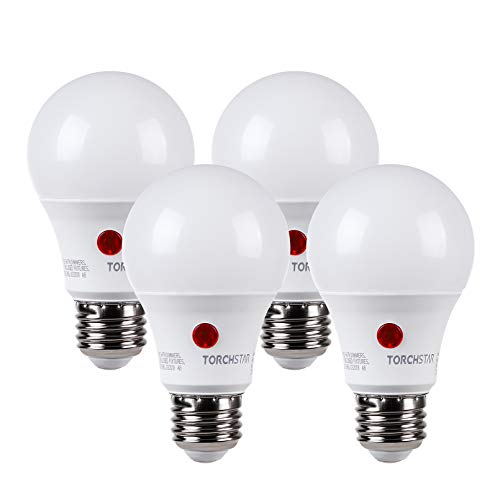 TORCHSTAR 4-Pack Dusk to Dawn LED Light Bulb4 Count (Pack of 1)2.36 x 2.36 x 4.25 inches0.12 PoundsCheck on Amazon


Top 3 picks at a glance
How to Choose: The 5 Decision Criteria
Not all dusk-to-dawn lights work the same way. The right choice depends on where you mount it and what you need it to do. Use these five factors to narrow it down before you look at styles.
1. Brightness: Match Lumens to the Area
Brightness should fit the space, not just be as high as possible. Too dim leaves dark spots, too bright creates glare for neighbors and washes out security cameras.
- Entrances and doorways (80-150 sq ft): 800-1500 lumens is enough. You want to see faces and locks clearly without blinding visitors.
- Paths, sidewalks, and driveways: 400-800 lumens per fixture, spaced 8-12 feet apart. Lower, diffused light prevents the runway effect and keeps light out of eyes.
- Yards, back patios, and garages: 1800-3000+ lumens for flood, barn, or wall pack styles. This covers 300-600 sq ft per fixture when mounted 8-10 feet high.
For reference, a traditional 60W incandescent bulb is about 800 lumens, a 100W bulb is about 1600 lumens. Most modern integrated LED dusk-to-dawn fixtures produce 100-130 lumens per watt, so a 15W LED lantern at 1500 lumens replaces a 100W incandescent while using 85% less energy.
2. Sensor Placement: Where the Photocell Lives Matters
The photocell is the small eye that turns the light on at dusk and off at dawn. Its position determines reliability.
- Integrated top-mounted photocell: Most common on wall lanterns and barn lights. Works well when the fixture is in open air. Avoid mounting under a deep eave or porch roof where the sensor stays in shadow — it can trigger too early and stay on during the day.
- Bottom-mounted or remote photocell: Better for soffit-mounted lights or locations under overhangs. Some fixtures have a detachable 180-degree eyelet sensor on a short wire so you can face it toward open sky.
- Photocell + motion sensor combo (dual mode): The light stays at low level (20-30%) from dusk to dawn, then jumps to full brightness when motion is detected. Ideal for driveways and backyards where you want all-night visibility without full glare all night. If you choose this, look for adjustable motion sensitivity and time delay (30 seconds to 5 minutes).
If your light stays on during the day, the cause is almost always a shaded or dirty photocell, not a faulty bulb. Clean the lens and ensure it has a clear view of ambient sky light, not reflected light from a white wall.
3. Bulb Type: Integrated LED vs. Socketed Bulb
This choice affects lifespan, maintenance, and future flexibility.
- Integrated LED fixture: The LEDs are built into the housing. Lifespan is usually 30,000-50,000 hours (about 10-15 years of dusk-to-dawn use), no bulb changes, better sealing against water and insects, and higher efficacy. The downside is that when the LED board eventually fails, you replace the whole fixture.
- E26/E27 socket fixture with dusk-to-dawn bulb: Uses a standard screw-in bulb that has its own photocell on the bulb itself. Cheaper upfront (usually $25-$55 for the fixture plus $10-$20 per bulb), and you can change color temperature or brightness later. Less durable — the bulb seal is weaker, and a bulb-mounted sensor can be blocked by decorative glass or shades.
- Color temperature: For residential curb appeal, 2700K-3000K (warm white) looks inviting at entrances. For security and yards, 4000K-5000K (neutral to daylight) provides better contrast for cameras and peripheral vision.
4. Weather Resistance: What IP and Build Actually Mean
Outdoor lights need to handle rain, dust, heat, and freeze-thaw cycles. Check two ratings:
- IP rating: IP65 (dust-tight and protected against water jets) is the minimum to target for exposed walls and posts. IP44 is only splash-resistant and is better for covered porches. For coastal or very wet climates, look for IP66 and a housing listed for wet locations.
- Housing material: Die-cast aluminum with a powder-coated finish resists rust far better than stamped steel. Polycarbonate lenses yellow less than acrylic in UV. Fixtures with silicone gaskets around the lens and base last longer than those with foam gaskets.
- Operating temperature: Quality LED fixtures are rated -40F to 113F (-40C to 45C). If you winter in northern climates, avoid fixtures that only list 32F minimum, as the driver can fail to start in cold.
5. Mounting Options: Height and Location Change Everything
- Wall mount (lanterns, sconces, wall packs): Best for entrances, garages, and perimeters. Mount 66-72 inches high beside a door, or 8-10 feet high for garage walls to widen the spread. Look for a fixture with a 120-270 degree beam for walls.
- Post / pier mount: Best for paths, driveway entries, and patios. Standard post height is 60-84 inches. Use a flat-top or pier-mount adapter if mounting on a stone column.
- Ceiling / soffit mount: For covered porches. Requires a fixture rated for ceiling use and a photocell that is not blocked by the roof. A remote photocell model is preferred here.
- Arm mount (barn light, gooseneck): Best for yards, barns, and over garage doors. The extended arm throws light out and down, covering a wider circle (often 20-30 feet diameter).
Comparison Table: Which Fixture Class Fits Your Space
| Fixture Class | Typical Lumens | Power Draw | Best For | Photocell Type | Weather Rating to Target |
|---|---|---|---|---|---|
| Decorative Wall Lantern (Integrated LED) | 800 – 1500 | 10 – 18W | Front door, porch, side entrance | Top-mounted integrated | IP65, wet location listed |
| Wall Pack / Security Flood | 1800 – 3000 | 18 – 30W | Garage, backyard, alley | Integrated + optional motion | IP65 – IP66, aluminum housing |
| Barn / Gooseneck Light | 1500 – 2500 | 15 – 24W | Yard, driveway, farmhouse entry | Integrated top eye | IP65 |
| Post Top / Bollard Light | 400 – 900 | 6 – 12W | Paths, walkways, patio perimeter | Integrated or separate pole sensor | IP65 |
| Socketed Fixture + Dusk-to-Dawn Bulb | 800 – 1600 (per bulb) | 9 – 15W (per bulb) | Budget retrofit, rental homes | Photocell on bulb | IP44+ (fixture dependent) |
Worked Calculation: Power Budget and Operating Cost
Integrated LED makes energy cost easy to estimate. Dusk-to-dawn runtime averages about 11 hours per night in most of the US (longer in winter, shorter in summer), or roughly 4,015 hours per year.
Example for a typical setup with four fixtures:
- 2x entrance lanterns at 14W each = 28W
- 1x garage wall pack at 24W = 24W
- 1x barn light over yard at 20W = 20W
- Total connected load = 72W
Annual energy use: 72W x 4,015 hours = 289,080 Wh = 289 kWh per year
Annual cost at around $0 per kWh: 289 x 0.16 = around $46 per year, or about $3 per month to light all four areas all night.
For comparison, the same brightness with incandescent (four 100W bulbs = 400W) would cost about $257 per year. If you are replacing existing fixtures, the payback on LED is usually under two years even before accounting for bulb replacement savings. Use this same formula — Watts x 4,015 / 1000 x your kWh rate — to estimate any combination you plan before you buy.
Decision Matrix: Match Your Situation to the Right Light
Use this to avoid the most common mistakes, like putting a high-glare flood where a soft lantern belongs.
| Your Situation | Recommended Choice | Why |
|---|---|---|
| Small front porch, light under 12-inch overhang | Socketed lantern with separate photocell adapter or integrated fixture with remote eyelet sensor | Top-mounted sensor would stay shaded; remote sensor can face open sky |
| Dark side yard or back gate needing security | 1500-2500 lumen wall pack with photocell + motion boost (30% low / 100% on motion) | Provides all-night orientation light, full brightness only when needed, saves energy and reduces light trespass |
| Long walkway (30+ feet) to front door | 3-4 low bollards or post lights at 500-700 lumens, 2700K-3000K | Even, low-glare pools of light; avoids blinding with a single bright flood |
| Large open yard or workshop area | Barn light or flood on 10-foot arm, 2200-3000 lumens, 4000K | Throws light 25-35 feet out; neutral white improves camera clarity |
| Rental or you want to keep existing fixture | Keep fixture, add E26 dusk-to-dawn LED bulb (800-1100 lumens) | Lowest cost, no wiring; just ensure glass is clear and sensor is not blocked |
| Coastal, snowy, or dusty region | Die-cast aluminum integrated LED, IP65+, silicone gaskets, -40F rated driver | Prevents corrosion, water intrusion, and cold-start failures |
Installation and Settings That Prevent Common Problems
A good light installed poorly will flicker, cycle, or stay on all day. Follow these settings:
- Aim the photocell away from artificial light. If the sensor sees its own light or a streetlight, it can cycle on and off. Face it north if possible, and keep at least 2 feet from another light source.
- Turn off the wall switch. Dusk-to-dawn fixtures need constant power. If they are on a switched circuit, leave the switch on and let the photocell control them. If you need manual override, use a fixture with a built-in override (usually off-on-off-on within 3 seconds forces it on until dawn).
- Set motion controls correctly if equipped: Sensitivity to 60-75% for residential lots (higher causes false triggers from small animals), time delay to 1-2 minutes, lux dial to the moon icon so motion only triggers after dark.
- Seal the wall plate. Apply silicone around the top and sides of the mounting base, but leave the bottom unsealed so any condensation can weep out instead of pooling inside.
- Check local codes: Dark-sky ordinances in many counties now require fully shielded fixtures (light directed downward) under 3000K for new installs. A flat-lens wall pack or shielded barn light with 2700K-3000K meets this without losing security.
What to Expect to Spend in 2026
For integrated LED dusk-to-dawn fixtures, general market ranges are: decorative lanterns usually $40-$90 each, wall packs and floods usually $55-$130, barn and gooseneck lights usually $70-$150, and post-top sets with pole usually $90-$200. Socketed dusk-to-dawn LED bulbs are usually $10-$20 each. Higher price typically reflects better driver components, aluminum construction, and longer warranty (3-5 years) rather than just brightness.
FAQ
Can I make a regular outdoor light dusk-to-dawn?
Yes. You have two options without rewiring: screw in a dusk-to-dawn LED bulb with a built-in photocell, or screw a photocell adapter between the socket and a standard LED bulb. For hardwired fixtures, a plug-in photocell that wires to the fixture’s black wire also works. The integrated-bulb solution is easiest, but a dedicated fixture with a top-mounted photocell is more reliable long-term.
Why does my dusk-to-dawn light stay on in daylight?
The photocell is shaded, dirty, or facing artificial light. Clean the small round lens on top of the fixture, trim any plant blocking it, and ensure it does not face a reflective white wall or soffit. If the problem started after painting or adding a cover, the sensor is now blocked and needs to be relocated or replaced with a remote eyelet type.
Do dusk-to-dawn lights use a lot of electricity?
No, with LED they are inexpensive to run all night. A single 15W fixture running 11 hours nightly uses about 60 kWh per year, which is roughly $9-$10 annually at average US rates. The calculation in the power budget section above shows a four-fixture system typically costs under $50 per year.


