
The best home energy management systems with real-time monitoring in 2026 are the Span Smart Panel for whole-home circuit-level control, the Tesla Powerwall 3 ecosystem for solar-plus-storage automation, the Enphase IQ System for modular solar and battery management, and the Emporia Vue 3 and Sense Flex for accurate retrofit monitoring without a full electrical panel replacement.
Choosing between them comes down to whether you need to monitor, automate, or both, and whether you already have solar. Accuracy, installation depth, and scalability are very different across these classes of system.
As an Amazon Associate we earn from qualifying purchases at no extra cost to you.
How Real-Time Monitoring Accuracy Actually Compares
Not all “real-time” claims mean the same thing. Energy monitors differ in sampling rate, sensor type, and whether they use device detection or direct circuit measurement.
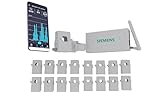
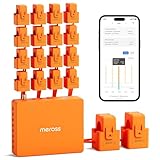
- Direct CT clamp measurement (Emporia Vue 3, Span Panel, Schneider Wiser Energy): Uses current transformers on each circuit or main. Accuracy is typically +/- 1-2% for total usage and per-circuit data is deterministic. Data updates every 1-2 seconds in the app. This is the most reliable for knowing exactly what your HVAC, dryer, or EV charger is drawing right now.
- Machine-learning disaggregation (Sense Flex / Sense Solar): Uses 2 main CTs plus high-frequency sampling (MHz-range) to identify device signatures on the electrical waveform. Whole-home accuracy is also +/- 1-2%, but device-level detection is probabilistic. Common loads like fridges and AC compressors are identified well; variable-speed electronics, LED lighting, and modern inverters are often lumped as “Other” or “Always On” until the model learns them.
- Hybrid inverter-based monitoring (Tesla Powerwall 3, Enphase IQ Gateway): Pulls data directly from the inverter, meter collar, and battery BMS. Accuracy is utility-grade (+/- 0.5-1%) for solar production and battery state-of-charge, but per-appliance breakdown requires additional CTs or integration with a Span or Emporia system.
For a gaming PC setup or home lab where you want to know the exact draw of a dedicated 20A circuit, a direct CT system is superior. For solar self-consumption and export tracking, an inverter-native system is more accurate than any add-on monitor.
Comparison Table: Top Systems for 2026
| System | Monitoring Type | Update Interval | Solar Integration | Battery Integration | Installation | Typical Cost Range (Hardware) |
|---|---|---|---|---|---|---|
| Span Smart Panel | 32 individual circuits, +/- 1% | 1 second | Native – Solar, Tesla, Enphase, SMA | Native – Tesla Powerwall, Enphase IQ Battery, LG, others | Full panel replacement, licensed electrician required | usually $3,500–$4,500 for panel + $0 installation extra |
| Tesla Powerwall 3 + Gateway 2 | Whole-home + solar + battery, +/- 0.5% | 1-5 seconds | Integrated 11.5 kW inverter built-in | Native 13.5 kWh per unit, up to 4 stacked | Requires Tesla Certified Installer, permit | usually $7,500–$9,000 per Powerwall 3 unit |
| Enphase IQ System (IQ Gateway + IQ Battery 5P) | Per-microinverter + whole-home via CTs, +/- 1% | 15 seconds to 5 min (Enlighten app) | Native Enphase IQ8 microinverters | Native IQ Battery 5P (5 kWh modular) | Enphase Installer, modular add-on | usually $1,200–$2,000 for Gateway/metering + $5,000–$6,500 per 5P battery |
| Emporia Vue 3 | 16 circuits + 3 mains, +/- 2% | 1 second | Solar monitoring with 2 extra CTs | Monitors battery flow, does not control battery | Panel mount, electrician recommended (60-90 min) | usually $200–$400 |
| Sense Flex with Solar | Whole-home disaggregation + 2 flex sensors, +/- 2% | 0.5 second waveform | Dedicated solar CTs, net metering view | Monitors flow, no direct control | Panel mount, similar to Emporia | usually $250–$350 |
| Schneider Electric Wiser Energy (Square D) | Whole-home + AI device detection | 1-2 seconds | Solar CT option | Monitors Square D Energy Center compatible batteries | Panel mount or factory-installed in Square D QO panel | usually $250–$450 |
Solar and Battery Integration: What Works With What
Integration is not just “compatible” – it determines whether the system can automate charging, island during outages, and prioritize loads.
1. Closed Ecosystems That Automate Everything
Tesla Powerwall 3 and Enphase IQ are the most automated. Powerwall 3 has a built-in solar inverter, so DC from panels goes directly to the battery without a separate solar inverter. The Tesla app handles Storm Watch, Time-Based Control, and off-grid islanding with no manual input. Enphase uses AC-coupled microinverters (IQ8 series) on each panel plus IQ Battery 5P units that scale in 5 kWh increments. Its Enlighten app can set self-consumption, backup-only, or AI-optimized economic modes based on utility rates.
Both can operate without a Span panel, but they only control the home at the total-load level. They will not individually shed your EV charger or second AC unless you add a smart panel.
2. Open Monitoring Systems That Add Intelligence
Emporia Vue 3, Sense, and Schneider Wiser do not control batteries themselves but give you the data to make better decisions. Emporia shines if you pair a third-party battery like FranklinWH aPower or EcoFlow Delta Pro Ultra – you can see charge/discharge in real time and set automations via Emporia’s smart plugs and EV charger. Wiser Energy integrates deeply if you have a Square D Energy Center panel.
3. The Smart Panel Bridge
Span is the only system that is both a code-compliant electrical panel and an energy manager. It does not generate or store energy, but it sits between all of the above. You can tell Span that the 30A dryer and 50A EV circuit are “non-essential” and it will automatically shed them when on battery backup to extend runtime. No other retrofit monitor can physically turn off a 240V circuit on command.
Installation Requirements Tells You Which Tier You Are In
- No panel modification (30-60 minutes, main breaker off): Emporia Vue 3, Sense Flex, Schneider Wiser. An electrician clamps CTs around mains and up to 16 branch circuits inside your existing panel. No permit needed in most jurisdictions. Ideal for renters who own a home or apartments where panel replacement is not allowed.
- Critical loads subpanel + permit: Tesla Powerwall 3, Enphase IQ Battery 5P. Requires wall or floor mount, dedicated disconnects, and utility interconnection application. Install is typically 1-2 days. You must have or add a backup gateway/battery controller.
- Full panel replacement (4-8 hours, utility shutdown): Span Smart Panel. Replaces your 200A main panel. Requires utility coordination, permit, and inspection. Best done during solar/battery install or major service upgrade. Not practical as a standalone retrofit if your current panel is new and code-compliant.
If your home still has a 100A panel or a 20+ year old panel with no spare breaker spaces, Span solves two problems at once. If you have a modern 200A panel from 2015 or later, a Vue 3 or Sense gives you 90% of the monitoring value for less than one-tenth the hardware cost.
App Dashboards and Automation That Actually Matters
All apps show real-time watts and daily kWh, but useful dashboards differ:
- Tesla App: Best for hands-off backup. Shows Power Flow animation, grid import/export, and Time-of-Use arbitrage. Minimal per-device detail unless paired with Span or Tesla Energy Meter.
- Enphase Enlighten: Best for per-panel diagnostics. You can see each IQ8 microinverter’s production, spot a panel covered by leaves, and view battery reserve down to 1%. Energy independence score and rate plan optimizer are built in.
- Span Home App: Best for circuit control. Every breaker is a toggle with real-time draw, historical usage, and priority ranking for outages. You can remotely reset a tripped circuit and get alerts when a circuit exceeds a threshold.
- Emporia Energy App: Best for budget and notifications. 1-second graphs, cost per day at your kWh rate, and push alerts if Always On rises or a circuit exceeds a watt limit. Also integrates Emporia EV Charger load management to avoid main panel overload.
- Sense App: Best for device discovery. Timeline bubbles show devices turning on/off in real time, plus Always On vs. Active vs. Idle breakdown. Less useful for precise peak shaving.
For whole-home scalability, check for local API or Matter support. Emporia and Enphase offer local data options for Home Assistant; Tesla has an unofficial local API via the Gateway; Span has a local API for real-time circuit data without cloud latency.
Decision Matrix: Match Your Home to the System
| Your Situation | Best Fit | Why |
|---|---|---|
| You have no solar/battery and want to cut bills | Emporia Vue 3 or Schneider Wiser | Cheapest circuit-level insight to find Always On loads and oversized HVAC runtime without construction |
| You have / plan Enphase solar | Enphase IQ System + Vue 3 if you want circuit detail | Keeps everything on one warranty and per-panel monitoring; battery is modular |
| You want whole-home backup and EV charging during outage | Tesla Powerwall 3 + Span Panel | Powerwall provides islanding; Span stretches runtime by shedding large loads |
| You build new or need a panel upgrade | Span Smart Panel + any solar/battery | Get monitoring and control while paying for panel anyway |
| You rent or cannot modify panel | Sense Flex or Emporia Vue Utility Connect | Utility meter collar option avoids panel work where allowed |
Worked Calculation: Sizing Monitoring and Battery Runtime
A spec sheet will not tell you if a single 13.5 kWh Powerwall or 10 kWh Enphase stack will actually run your home overnight. Do this calculation before you choose monitoring vs. management:
Step 1: Find your critical load. Check your new monitor’s Always On + essential circuits. Example home: refrigerator 150W, freezer 100W, lights + Wi-Fi + routers 250W, furnace blower 400W = 900W continuous. Intermittent: well pump 1000W for 15 min/hour, gaming PC + monitors 550W for 4 hours.
Step 2: Calculate nightly energy need. 900W x 12 hours overnight = 10,800 Wh. Add gaming PC: 550W x 4h = 2,200 Wh. Add pump: 1000W x 0.25h x 12 = 3,000 Wh. Total = 16,000 Wh (16 kWh).
Step 3: Convert to battery runtime. Usable capacity of one Tesla Powerwall 3 is about 13.5 kWh (100% to 0%), Enphase IQ Battery 5P is 5 kWh usable each. With Span shedding the gaming PC and dryer, your load drops to 900W continuous. Runtime = 13,500 Wh / 900W = 15 hours. Without shedding, runtime = 13,500 Wh / 1,350W average = 10 hours. That difference is why a controllable panel matters more than a larger battery for many homes.
If you only install Emporia Vue 3 with no battery, the same calculation shows you where to save: that 250W Always On = 6 kWh per day, or about 180 kWh per month – often $27–$45 per month depending on rate – usually from older DVRs, second fridges, and network gear you can put on smart plugs.
Whole-Home Scalability Checklist
Think three years ahead. A good system should scale without replacing hardware:
- CT channels: 16 channels covers most 200A homes; 32 (Span) covers every circuit in large homes without combining circuits.
- Solar expansion: Enphase scales per panel; Tesla Powerwall 3 solar input max is 11.5 kW; Span and Emporia scale regardless of solar brand.
- Battery stacking: Enphase scales in 5 kWh increments (up to 40 kWh), Tesla in 13.5 kWh increments. If you need 20 kWh, Enphase is more granular.
- EV charger coordination: Emporia and Span can throttle an Emporia or WallBox charger when mains approach 80% to prevent service overload – crucial if you have 100A service and a 48A EV charger.
- Local control during internet outage: Confirm the system records locally. Span, Tesla Gateway, and Enphase IQ Gateway all log locally and sync later; Sense and early Wiser rely on cloud.
Bottom line: If you want data, start with Emporia Vue 3. If you want backup and solar intelligence, choose Tesla or Enphase based on your inverter brand. If you want to control every circuit and maximize any battery you buy, make Span the foundation and add the others on top.
FAQ
Do I need a home energy monitor if I already have solar monitoring?
Solar monitoring only shows production and net import/export. It does not show which circuits use that solar. A whole-home monitor reveals whether solar is offsetting your AC or being exported for pennies, which determines if a battery will pay back.
Can these systems reduce my electric bill without solar or batteries?
Yes. Real-time alerts for Always On loads, peak-hour EV charging, and HVAC short-cycling typically identify 10-15% savings from behavior changes and smart plug automation alone.
Will a monitoring system work with a generator?
Direct CT systems like Emporia Vue 3 and Span can monitor generator input if CTs are placed on the generator feed, but only Span and a transfer switch can automatically prioritize generator loads. Tesla and Enphase batteries island separately from generators and usually require manual switching.


