Vintage digital cameras are a style choice before they are a technology choice. People who want one usually are chasing a look: soft color, a little grain, a flash that flattens faces, and the feeling of shooting a camera that belongs to another decade. The decision is whether you want a camera that is genuinely old, with the repair and battery headaches that implies, or a new camera dressed in a retro body and filters. The listings here are all the second kind, so the keyword really means retro-styled cameras sold today.
This guide is for people who want a fun carry-around camera for parties, trips, and social posts, and for gift buyers shopping for a teen or a friend who misses the point-and-shoot era. The five listings below range from a screenless disposable-style camera to a waist-level viewfinder model and a dual-lens retro body. Because you are buying in 2026 for an audience used to sharp, heavily processed phone photos, the useful question is what each title says about the shooting experience rather than how many megapixels it claims. A retro camera earns its place by being fun to hold, quick to use, and distinctive in the pictures it makes, and everything else is secondary. If you only want sharp, faithful images, a modern phone will usually do better than any of these.
Our Top Picks
Top 3 picks at a glance
Quick Picks
As an Amazon Associate we earn from qualifying purchases at no extra cost to you.


| Product | Best for | Key spec from the title |
|---|---|---|
| EJXHKNF Vintage Digital Camera | Waist-level, retro shooting style | 2″ IPS waist-level screen, 16X zoom, 16GB card |
| Klik Screen-Free Digital Camera | Staying present at events | 3 film-style filters, 500 shots per charge |
| Maxmango D53 Vintage Camera | Disposable-camera feel | 12MP, screenless, 8GB SD card |
| Minolta MND70 Retro Camera | Brand-name retro styling | Dual lens, Wi-Fi, 48MP label |
| Unbranded 2.7K Retro Camera | Beginners wanting autofocus | 2.7K, 56MP, 2″ IPS waist-level screen |
How to Choose
Screen or screen-free
The biggest split is whether you want to see your photo right away. Waist-level screens, as on the EJXHKNF and the unbranded 2.7K model, let you review shots and delete misses. Screenless designs such as the Klik and Maxmango push you to shoot first and look later, in the spirit of a disposable camera. Screenless cameras are charming but unforgiving, so expect some blurry or badly framed frames. If you want to share instantly, pick a model with a screen or Wi-Fi. Think about who will use the camera: a teenager who posts everything will want quick transfer, while a guest at a dinner party may only want a fun object to pass around the table.
Megapixel claims versus real image quality
Labels like 64MP or 48MP on small, inexpensive cameras describe processing output, not what the sensor can capture. A 12MP camera such as the Maxmango can produce a photo with a similar look, and the retro appeal is mostly about color and softness. Do not pay extra for the biggest number. Instead, favor a camera whose description focuses on filters, flash, and ease of use, since those shape the vintage look. A built-in flash, a simple fixed lens, and a limited set of modes often produce a more convincing retro result than a menu full of options that mimic a modern camera.
Battery, storage, and connectivity
Check battery claims, such as the 500 shots per charge listed for the Klik, and how the camera charges. USB-C is convenient because it matches modern chargers. For storage, confirm whether a card is included: the EJXHKNF lists a 16GB TF card and the Maxmango an 8GB SD card, which hold limited photos at high resolution. Wi-Fi, as on the Minolta, can speed up sharing but adds a setup step. USB transfer to a computer is the dependable fallback, so confirm that a cable is included and that the camera works with your computer or phone.
What to ignore, and where budget models cut corners
Ignore stacked claims about 5K or 8K video on a camera meant for snapshots. Budget retro cameras tend to cut corners on low-light quality, lens sharpness, and build materials, and flash photos can look harsh. That is part of the style for some buyers, but it should not be a surprise. Look for clear listings of included cards, batteries, and cables, and treat zoom numbers as digital rather than optical unless stated. Finally, remember that a camera with a bright, glossy exterior is as much an accessory as a tool, so choose the color and shape you will actually enjoy carrying.
The 5 Best Options
EJXHKNF Vintage Digital Camera
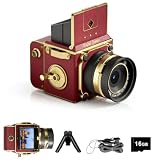
This mini retro point-and-shoot lists a 64MP, 2.7K sensor label, autofocus, a 2 inch IPS waist-level screen, a 16GB TF card, and 16X zoom. The waist-level screen is the standout, since it gives you a quick look at each frame while keeping the old-school feel. It suits people who want a small camera for travel and street snapshots without carrying a larger body. Retro point-and-shoots in this class are usually easy to slip into a jacket pocket, and the 16X zoom figure gives a little extra reach for casual use, though it is digital rather than optical.
- Strength: a card is included, so it is ready to shoot out of the box.
- Strength: autofocus and a waist-level screen make framing easy for beginners.
- Trade-off: the big megapixel and zoom figures should not be read as optical performance.
Skip it if you want a screen-free, more tactile shooting experience, or a recognized brand name on the body.
Klik Screen-Free Digital Camera
The Klik is built around being present at an event instead of checking a display. The title lists three vintage film-style filters, 500 shots per charge, a built-in flash, and USB-C. It suits party and wedding guests, teens, and anyone who wants retro photos without stopping to review each one. The film-style filters are the core of the look, applied as the photo is taken, so you do not need an editing app afterward. Because the title promises roughly 500 shots per charge, it is also a good fit for travel days when you cannot stop to recharge.
- Strength: three built-in filters give a consistent vintage style.
- Strength: 500 shots per charge and USB-C make it practical for a long weekend.
- Trade-off: with no screen, you cannot confirm that a shot came out well.
Skip it if you need instant feedback on framing, or want to share images immediately from the camera.
Maxmango D53 Vintage Camera
The D53 is positioned as a replacement for disposable cameras. The title lists a 12MP, screenless design, an 8GB SD card, and a green body. It appeals to people who like the disposable-camera ritual of shooting blind and seeing results later, while keeping the camera reusable. The lower megapixel count is in line with that casual style, and the green body adds a playful look that suits parties, camping trips, and gift bags. Think of it as a reusable stand-in for the single-use cameras that people used to leave on tables at weddings.
- Strength: a simple, screenless design encourages relaxed, spontaneous shooting.
- Strength: an 8GB card is included, so it is ready to use.
- Trade-off: no screen means no previewing or deleting on the camera.
Skip it if you like to review and retake shots, or want video-oriented features. It is also not the choice for anyone who needs to check that a group shot caught everyone with their eyes open.
Minolta MND70 Retro Camera
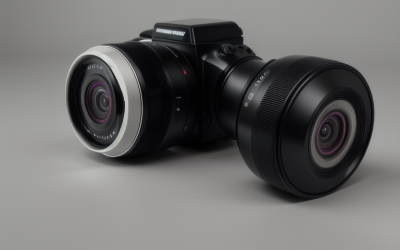
This gold and brown retro camera carries a well-known name and lists 48MP, Wi-Fi, 5K Ultra HD, and a dual-lens design. The dual lens suggests a selfie-friendly layout, and Wi-Fi supports easy transfer to a phone. It suits buyers who want brand recognition and a gift-ready look, and who plan to share from the camera to a phone. The 5K and 48MP labels are marketing figures, so judge it mostly on styling and convenience features rather than the numbers, and check the listing for what is included in the box.
- Strength: a familiar brand name and a polished two-tone body.
- Strength: Wi-Fi and a dual-lens design help with selfies and sharing.
- Trade-off: the title does not state whether a memory card is included.
Skip it if you want a screen-free, minimalist camera or a bundle with a card.
Unbranded 2.7K Retro Camera
This listing targets beginners with a 2.7K, 56MP retro point-and-shoot that has a 2 inch IPS HD waist-level screen and autofocus. It overlaps with the EJXHKNF in layout but is pitched as an easy entry-level option. It is suited to first-time buyers and younger users who want to shoot, review, and try again. Because autofocus handles the focusing for you, it is a forgiving option for kids and teens, and the compact size makes it easy to toss in a backpack for school trips or weekend outings.
- Strength: autofocus and a screen keep the learning curve short.
- Strength: the retro waist-level design stays portable.
- Trade-off: no brand name appears in the visible title, so support details are unclear.
Skip it if you prefer a named brand or want to compare closely with a similar model.
Which One Fits Your Situation
Wedding or party gift
The Klik Screen-Free Digital Camera keeps guests in the moment, with filters that give pictures a consistent look. Handing out a screenless camera at a table tends to start conversations, since nobody can peek at the result.
Travel and street snapshots
The EJXHKNF Vintage Digital Camera includes a card and a screen, so you can shoot and review as you walk. The waist-level screen also lets you shoot discreetly without raising the camera to your face.
Disposable-camera nostalgia
The Maxmango D53 recreates the shoot-and-wait experience without the film cost.
Gift for a brand-conscious friend
The Minolta MND70 Retro Camera has a familiar name and Wi-Fi for sharing; the Unbranded 2.7K Retro Camera is the budget-minded alternative with autofocus.
Common Mistakes
- Paying extra for megapixel claims that small sensors cannot deliver.
- Choosing a screen-free camera when you actually want instant feedback.
- Assuming a memory card is included without reading the listing.
- Expecting a retro camera to match a phone in dim light.
- Skipping a spare charge or cable before a long trip.
Related guides
- When I Turn On Record Game In Background On Gamebar. Gamebar Crashes, What Do I Do?
- How To Reduce Background Noise On A Streaming Microphone
- Poly Computer Accessories Company Streaming Evaluation
Frequently Asked Questions
Are these real vintage cameras?
No. They are new cameras with retro styling and filters. That means current battery and charging standards, but the image quality is closer to a basic compact than a classic body.
Why would anyone pick a screen-free camera?
Not seeing the result keeps you focused on the moment and adds surprise when you view photos later. The trade-off is less control over each frame.
Do I need a memory card?
Yes, unless the camera has built-in storage. Some listings include a small card, but confirm the capacity and consider a larger one for trips.
How should I choose between the models?
Start with whether you want a screen, then check what is included in the box. After that, pick the style and brand that suit the person who will use it.