
For a gaming PC that stays cool and quiet, the Ryzen 7 9700X (65 W default TDP) is the most common recommendation among reviewers, while the Intel Core Ultra 7 265T and Core Ultra 5 235T (35 W base power) fit small cases and tightly cooled builds, and the Ryzen 7 8700G is the choice when there is no separate graphics card. The important caveat is that a TDP number is a rating for cooler design, not a promise about real power draw. Several chips below can draw far more than their rating under boost.
As an Amazon Associate we earn from qualifying purchases at no extra cost to you.

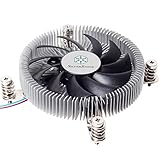


Our Top Picks
- Silverstone Technology SST-NT07-115X-USA LGA1150/1151/1155/1156/1200 CPU Cooler Low ProfileCheck on Amazon
Top 3 picks at a glance
What TDP Does and Does Not Tell You
AMD’s TDP and Intel’s base power describe the heat a cooler should handle at sustained load under defined conditions. Boost behavior can exceed them. Intel lists a separate maximum turbo power: for example, Intel’s ARK lists 112 W for the Core Ultra 7 265T and 114 W for the Core Ultra 5 235T, even though both carry a 35 W base power. One reviewer reports sustained multi-core draw of about 88 W on the 9700X despite its 65 W label. So for noise and heat, look at both the rating and the reported real-world draw, and make sure your motherboard BIOS settings follow the power limits you want.
Low-Power Chips at a Glance
| CPU | Cores and threads | Stated power | Best for | Limits |
|---|---|---|---|---|
| AMD Ryzen 7 9700X | 8 cores, 16 threads, up to 5.5 GHz | 65 W default TDP (AMD); BIOS option for 105 W | Efficient gaming on AM5 | No integrated-graphics focus; real draw can exceed 65 W |
| AMD Ryzen 5 9600X | 6 cores, 12 threads, up to 5.4 GHz | 65 W (TweakTown table) | Compact, cool gaming builds | Fewer cores |
| AMD Ryzen 5 7600 | 6 cores, 12 threads, up to 5.1 GHz | 65 W TDP, 88 W maximum boost power (as listed) | Lower-cost AM5 entry | Previous generation |
| Intel Core Ultra 7 265T | 20 cores (8 P, 12 E), 20 threads, up to 5.3 GHz | 35 W base, 112 W maximum turbo (Intel ARK) | Small cases, mixed work | Mostly sold through OEM channels; availability varies |
| Intel Core Ultra 5 235T | 14 cores (6 P, 8 E), 14 threads, up to 5.0 GHz | 35 W base, 114 W maximum turbo (Intel ARK) | Quiet office and light gaming | Same availability caveat |
| Intel Core i5-14500T | 14 cores, 20 threads, 1.7 to 4.8 GHz | 35 W; turbo can reach 92 W as reported | LGA 1700 small form factor | Previous generation, lower sustained clocks |
| AMD Ryzen 7 8700G | APU with built-in graphics | 65 W | No-GPU quiet desktops | Integrated graphics are limited for modern titles |
Specs are from the makers’ listings (AMD, Intel ARK) where stated and from reviewer tables otherwise. Always confirm on the maker’s page before buying.
Picks in Detail
Ryzen 7 9700X, the efficient desktop all-rounder
AMD lists 8 Zen 5 cores, 16 threads, a 3.8 GHz base clock, a 5.5 GHz boost, 32 MB of L3 and a 65 W default TDP. Several roundups call it the most efficient 8-core desktop chip, although many of those are affiliate-style lists, so treat the wording with some caution. TechSpot also names it the better purchase than the Core Ultra 7 265K for gaming. It uses socket AM5 and DDR5, and does not need a large cooler.
Ryzen 5 9600X and Ryzen 5 7600, the cooler six-core options
Both are listed at 65 W with 6 cores and 12 threads. The 9600X lists a 3.9 GHz base and 5.4 GHz boost; the 7600 lists a 3.8 GHz base and up to 5.1 GHz boost with an 88 W maximum boost power. They suit small cases where a compact cooler is a must. The 7600 is the older design and a reasonable lower-cost route onto AM5.
Core Ultra 7 265T and Core Ultra 5 235T, the true low-power Intel parts
Intel’s listings give the 265T 20 cores, 30 MB of cache and a 35 W base power, and the 235T 14 cores, 24 MB of cache and the same 35 W base power. PassMark scores the 265T about 19 percent above the 235T in its CPU mark, with nearly identical single-thread results, according to the comparison page. Both use LGA 1851. T-series parts are often sold in prebuilt systems and in limited retail channels, so confirm you can buy one before designing a build around it. One technical site lists the 235T at 65 W, which conflicts with Intel’s page and likely refers to the non-T Core Ultra 5 235.
Core i5-14500T and Core i5-12400T for older LGA 1700 builds
The i5-14500T has 14 cores and 20 threads, clocks of 1.7 to 4.8 GHz and a 35 W rating, with turbo reaching up to 92 W according to reviewers. The i5-12400T has 6 cores, 12 threads, 1.8 to 4.2 GHz and 18 MB of L3. They are sensible if you already own an LGA 1700 board or want a small form factor, but they trail current chips in performance.
Ryzen 7 8700G and 8700GE for builds without a graphics card
One roundup suggests the Ryzen 7 8700G (65 W APU) for quiet desktops with no separate GPU. A list of 35 W desktop chips includes the Ryzen 7 PRO 8700GE. Integrated graphics handle esports and older titles, but demanding modern games need a dedicated card.
Intel N100, N150 and N305 class for servers
These chips appear in roundups as options for 24/7 home servers. They are not gaming CPUs, but they fit the “lowest watts” end of the market.
Fit and Compatibility Notes
- Socket: Ryzen 9000, 8000G and 7000 desktop chips use AM5 with DDR5. Core Ultra 200 series T chips use LGA 1851 with 800-series boards. 12th to 14th generation Intel parts use LGA 1700.
- Cooler: A 35 W or 65 W chip can use a low-profile cooler, but boost behavior still creates heat. Choose a cooler rated above the maximum turbo power if you want quiet operation.
- BIOS power limits: You can usually cap power limits in the BIOS. AMD’s Eco Mode options and Intel’s power-limit settings help cap heat, at some performance cost.
- Small cases: Check cooler height and graphics card length in the case manual. Power supply wattage can also be lower with efficient parts, but keep the graphics card’s needs in mind.
- Availability: T-series and GE parts are less common at retail than standard ones, and listings vary by region.
Tiers
- Budget: Ryzen 5 7600, Core i5-12400T and Core i5-14400T-class chips.
- Mid-range: Ryzen 5 9600X, Core Ultra 5 235T, Ryzen 7 8700G for graphics-free builds.
- Upper mid to premium: Ryzen 7 9700X and Core Ultra 7 265T.
Pick X If…
| Pick this | If you… |
|---|---|
| Ryzen 7 9700X | want an efficient gaming chip with a long-lived platform |
| Ryzen 5 9600X | want a cool, compact gaming build with a modest chip |
| Core Ultra 7 265T | need a strict 35 W base rating in a small case and can source one |
| Core Ultra 5 235T | want a low-power Intel chip for light gaming and everyday work |
| Core i5-14500T | already have an LGA 1700 board |
| Ryzen 7 8700G | are building a quiet PC without a graphics card |
Alternatives
- Ryzen 7 7800X3D: TechPowerUp reports it uses about 30 W less than the Core Ultra 7 265K in gaming while delivering more frames. It is being phased out per one guide.
- Ryzen 7 9800X3D: 8 cores, 96 MB of L3, 120 W TDP. A fast gaming chip, but not a low-power one.
- Intel Core Ultra 5 235 (non-T): Listed by one comparison as the 65 W sibling of the 235T.
Practical Cooling and Case Tips
A low-power chip makes a small, quiet case realistic, but the case still needs airflow. Even a 65 W processor sits next to a graphics card that may use far more power, so the whole build decides noise levels. Choose a case with at least one intake and one exhaust fan, use a fan curve that ramps gradually, and avoid very tight coolers that choke airflow. In the BIOS, set the power limits you want before benchmarking noise, since boards often ship with limits relaxed.
Frequently Asked Questions
Does a low TDP mean low power use?
Not always. TDP or base power is a cooling rating. Boost power can be much higher, as Intel’s maximum turbo power figures show for T-series chips. Real draw depends on the workload and BIOS settings.
Are 35 W chips good for gaming?
They can handle light and mid-range gaming, but they run at lower sustained clocks than full-power versions. For demanding titles, a 65 W chip such as the 9700X gives more headroom.
Can I lower a normal CPU’s power draw?
Yes. Most boards offer power limit or Eco Mode settings that reduce heat and noise at some performance cost. Follow the board and CPU maker’s guidance.
Why are T-series chips hard to find?
They are mainly aimed at OEMs and small form factor systems, and retail stock varies. Check availability in your region before planning a build around one.
Do I still need a good cooler?
A good cooler keeps boost clocks steady and fans quiet. Low-power chips can use smaller coolers, but choose one rated comfortably above the chip’s maximum turbo power.
Is integrated graphics enough?
For esports titles, older games and desktop work, often yes. For modern demanding games, a dedicated graphics card is still the better route.
Related guides
More from Amazon
Programs that pair well with the guide above. Offers and eligibility are set by Amazon and may change.
Free shipping on eligible items, Prime Video and more. Eligible new members can start with a free trial.
Start a Prime free trialAd-free music streaming. Eligible new subscribers can start with a free trial.
Try Music Unlimited freeA Prime membership for ages 18-24 with a trial period. Eligibility is set by Amazon.
See Prime for Young AdultsAudiobooks and podcasts to listen to on the go. Eligible new members can start with a free trial.
Try Audible freeAs an Amazon Associate we earn from qualifying purchases.


