
The best camera bags for most shooters are the Peak Design Everyday Backpack 20L for a compact mirrorless kit, the Lowepro ProTactic BP 450 AW II for a protected DSLR or large-lens setup, and the Shimoda Action X30 for a weather-conscious mixed kit with room to expand.
As an Amazon Associate we earn from qualifying purchases at no extra cost to you.
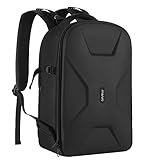
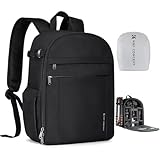
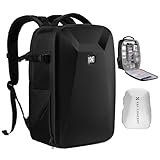

Top 3 picks at a glance
Quick comparison: which camera bag fits your setup?
| Bag | Nominal capacity | Best for | Access | Weather protection | Typical market range |
|---|---|---|---|---|---|
| Peak Design Everyday Backpack 20L | 20L | Small mirrorless kit and daily carry | Very fast side and top access | Weather-resistant shell and zippers; use a cover in sustained rain | Usually $200–$300 |
| Lowepro ProTactic BP 450 AW II | Approx. 25L | DSLR, mirrorless, and long-lens combinations | Fast from multiple sides | Built-in All Weather AW Cover | Usually $200–$300 |
| Shimoda Action X30 | 30L | Mixed camera kit, travel, and outdoor work | Rear, side, and top access depending on insert | Water-resistant materials plus rain cover | Usually $300–$450 |
| WANDRD PRVKE 21L | 21L, expandable | Hybrid photo and laptop carry | Rear camera access and wide top opening | Water-resistant tarpaulin-style construction; cover recommended for heavy rain | Usually $200–$300 |
| Think Tank Retrospective 7 M | Approx. 7L | Quiet, compact mirrorless street kit | Excellent one-handed top access | Water-resistant fabric and cover on some configurations | Usually $150–$250 |
What matters more than the stated litre capacity?
Camera-bag capacity is not the same as usable camera capacity. A 20L backpack may reserve space for a laptop, jacket, charger, and tripod, leaving only part of its interior for lenses. The useful question is whether the bag can hold your largest item, protect it with dividers, and still let you remove the camera without unpacking everything.
Protection comes from four parts: padded walls, a rigid or semi-rigid base, dividers that stop equipment from colliding, and a closure that keeps the camera compartment from opening when the bag is set down. Weather resistance is separate. Water-resistant fabric buys time in drizzle; a dedicated rain cover is the safer choice for sustained rain, wet grass, or a camera mounted on a tripod.
Access speed also involves trade-offs. Side access is fast when the bag is worn on one shoulder, while rear access is harder for a thief to reach but usually requires taking the pack off. Top access is convenient for one camera and one lens, but it can expose the whole compartment when you are working in dust or rain.
Best camera bags by shooting setup
Compact mirrorless: Peak Design Everyday Backpack 20L
The Everyday Backpack 20L is a strong choice for a small mirrorless body, two or three compact lenses, spare batteries, and a tablet or 13-inch-class laptop. Its adjustable internal dividers are useful when your lens collection changes, and the side openings allow a camera to be reached without fully removing the backpack.
Choose it when everyday usability matters as much as camera protection. It looks less like specialist camera luggage than a fully padded professional pack, which can be useful for commuting and travel. The limitation is depth: a full-frame mirrorless body with a large 70–200mm-type zoom, battery grip, or professional telephoto may make the dividers feel cramped.
For an even smaller kit, a compact shoulder bag such as the Think Tank Retrospective 7 M is faster for street photography. It is better when the camera is used every few minutes and worse when you need to carry a laptop, clothing, or a large water bottle.
DSLR or large-lens kit: Lowepro ProTactic BP 450 AW II
The ProTactic BP 450 AW II prioritizes protection and organization. Its boxier shape accommodates a DSLR body, standard zoom, telephoto zoom, flash, batteries, and accessories more comfortably than slim lifestyle backpacks. Multiple access points reduce the need to place the bag on muddy ground, and its modular exterior lets you attach selected pouches or a tripod.
This is the safer pick for heavier equipment because the internal camera unit has more structure than a casual daypack insert. It is also a good fit for a mirrorless kit that includes professional zooms, since small mirrorless bodies do not always mean small lenses.
The trade-off is weight and bulk. If your complete kit weighs only 3–4 kg, the ProTactic may provide more protection than you need. If it includes a 70–200mm lens, a second body, and a flash, the extra structure is easier to justify.
Mixed camera and travel kit: Shimoda Action X30
The Shimoda Action X30 suits photographers carrying camera equipment alongside clothing, food, a jacket, or outdoor accessories. Its removable camera insert approach lets you change the internal layout instead of committing the entire backpack to camera gear. That is particularly useful for a mixed mirrorless and DSLR kit.
Its outdoor-oriented design makes weather management and carrying comfort central advantages. The bag is a better match for hiking, location work, and travel days than a narrow urban camera pack. Check the size of the chosen Core Unit before buying: the backpack volume may be generous, but the insert determines whether your camera bodies and longest lenses actually fit.
Hybrid photo and laptop carry: WANDRD PRVKE 21L
The PRVKE 21L is aimed at photographers who also carry a laptop, documents, clothing, or gaming accessories. Its roll-top section provides expandable everyday storage, while the separate camera compartment can be configured with an optional insert.
This design works well for a mirrorless body, two lenses, headphones, a laptop, and a compact controller or handheld gaming device. It is less efficient than a dedicated professional pack when every cubic centimetre must hold camera gear. The optional camera cube also adds cost and occupies volume that a simple padded camera bag would use more directly.
A practical capacity calculation before you buy
Estimate your kit in layers rather than relying on the bag’s advertised volume. For example, suppose a mixed kit contains:
- Mirrorless body with standard zoom: approximately 4.5L when protected and separated.
- Telephoto zoom: approximately 3.5L.
- Wide-angle lens and spare battery pouch: approximately 2L.
- Flash, charger, cables, and cards: approximately 2L.
- Rain shell, water bottle, and small personal items: approximately 6L.
The total is about 18L. Add 20–25% for divider inefficiency and access clearance: 18L × 1.2 = 21.6L. A nominal 20L bag could therefore feel full, while a 25–30L backpack would leave usable room. This is why the Shimoda Action X30 or ProTactic BP 450 AW II is more suitable than a compact 20L lifestyle pack for this particular load.
Protection, access, and weather: the head-to-head decision
| Priority | Choose | Why | Accept the limitation |
|---|---|---|---|
| Fastest access during street shooting | Shoulder bag or side-access backpack | The camera can be reached without removing the whole bag | Less comfortable for long walks and less balanced when heavily loaded |
| Maximum protection for expensive equipment | Structured professional backpack | Thicker padding, firmer base, and better lens separation | More weight and a more obvious camera-bag appearance |
| Rain and outdoor work | Backpack with a supplied rain cover | A cover protects seams and zippers during prolonged exposure | Cover deployment slows access and can flap in wind |
| Camera plus personal luggage | Expandable travel backpack | Separates camera equipment from clothing and daily items | Camera insert dimensions may limit large lenses |
How to configure a camera bag for faster shooting
- Put the primary camera in the fastest-access position. Use a side compartment or upper section rather than burying it beneath spare lenses.
- Store lenses upright when possible. This makes focal lengths easier to identify and reduces the risk of a lens rolling into another item.
- Place dense items close to your back. Batteries, chargers, and lenses should sit near the frame for better balance; a water bottle can go on the outer side.
- Leave one divider gap as a hand channel. A perfectly packed compartment can hold more equipment but slows every lens change.
- Keep rain protection accessible. Store the rain cover in an outer pocket, not underneath the camera insert, so weather protection does not require unpacking.
Which bag should you buy?
Choose the Peak Design Everyday Backpack 20L for a compact mirrorless setup used around town. Choose the Lowepro ProTactic BP 450 AW II when protection, structured storage, and large lenses are the priority. Choose the Shimoda Action X30 for a mixed kit and outdoor travel, or the WANDRD PRVKE 21L when camera gear shares space with a laptop and everyday equipment.
Before ordering, measure the longest lens with its hood reversed, the tallest camera body with a plate attached, and the insert’s internal dimensions. Those three measurements predict fit more reliably than the bag’s headline litre figure.


