
The best camera drones in 2026 are the DJI Mavic 4 Pro for maximum image quality, the DJI Air 3S for the strongest balance of cameras and flight safety, the DJI Mini 4 Pro for travel, and the DJI Neo for inexpensive, simple social-media footage.
As an Amazon Associate we earn from qualifying purchases at no extra cost to you.
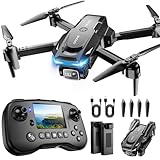


Top 3 picks at a glance
Best camera drones compared
| Drone | Typical market range | Main camera and sensor | Advertised flight time | Best for |
|---|---|---|---|---|
| DJI Mavic 4 Pro | Usually $2,000–$3,500 depending on kit | Triple-camera system, including a large Four Thirds Hasselblad camera | Up to about 51 minutes | Professional photos, commercial video, low-light work |
| DJI Air 3S | Usually $1,000–$1,500 | 1-inch wide camera plus 1/1.3-inch medium-tele camera | Up to about 45 minutes | Travel films, landscapes, real-estate work and flexible framing |
| DJI Mini 4 Pro | Usually $750–$1,100 | 1/1.3-inch 48-megapixel camera with a wide f/1.7 lens | Up to about 34 minutes, or roughly 45 minutes with an extended battery where permitted | Portable 4K video and vertical social content |
| DJI Mini 3 | Usually $400–$700 | 1/1.3-inch 48-megapixel camera | Up to about 38 minutes with the standard battery | Affordable stills and daylight video |
| DJI Neo | Usually $200–$350 | Small 12-megapixel wide camera with electronic stabilization | Up to about 18 minutes | Hands-free clips, beginners and short social videos |
| Autel EVO Lite+ | Usually $800–$1,200 when available | 1-inch 20-megapixel camera with an adjustable-aperture lens | Up to about 40 minutes | One-camera image quality and aperture control |
Advertised flight times are measured in controlled conditions. Wind, cold weather, rapid acceleration, obstacle sensing, return-to-home reserves and the weight of accessories reduce usable time.
Best overall: DJI Air 3S
The Air 3S is the most sensible choice for many buyers because it combines a large 1-inch main sensor with a second telephoto camera, long endurance and comprehensive obstacle sensing. The larger main sensor gathers more light than the Mini series, producing cleaner shadows, better night footage and more natural detail at the same resolution.
Its second camera is important in practice rather than merely on a specification sheet. A medium-telephoto perspective lets you isolate buildings, mountains or people without flying as close to the subject. It also reduces the exaggerated foreground perspective that wide lenses create. The result is often a more polished-looking shot with less aggressive cropping.
The Air 3S uses a mechanical three-axis gimbal, so pans and tilts look smoother than footage stabilized only through software. Its forward-facing sensing and additional vision systems can help detect obstacles during automated flight, although no sensor system can identify every wire, branch or low-contrast object. Keep a clear flight path and do not treat obstacle avoidance as autonomous piloting.
Best image quality: DJI Mavic 4 Pro
The Mavic 4 Pro is the strongest option when still-photo dynamic range, low-light quality and lens flexibility matter more than size or price. Its large Four Thirds main sensor has substantially more light-gathering area than the 1-inch cameras in the Air 3S and EVO Lite+. That advantage is most visible at dawn, dusk, in deep shadows and when preserving highlight detail in bright clouds.
The three-camera design also makes it useful for professional establishing shots. A wide camera handles landscapes, a medium telephoto frames subjects without flying closer, and a longer telephoto perspective can compress distant layers in a scene. The gimbal provides physical stabilization, while high-resolution recording modes give editors room to crop or reframe.
Choose the Mavic 4 Pro if you regularly deliver paid work, print large photographs or need multiple focal lengths in one aircraft. It is excessive for casual clips: the aircraft is larger, more expensive and less convenient to carry than a Mini.
Best portable drone: DJI Mini 4 Pro
The Mini 4 Pro is the best camera drone for travelers who want strong footage without carrying a larger aircraft. Its 1/1.3-inch sensor is smaller than the Air 3S’s main sensor, but the bright f/1.7 lens, modern processing and 10-bit video modes make it capable in daylight and city scenes.
Its vertical shooting mode is a practical advantage. The camera rotates rather than forcing you to crop a horizontal frame, preserving more usable resolution for short-form video. Omnidirectional obstacle sensing is also unusual at this size and helps when orbiting a subject or flying backward, though it still requires active supervision.
The compromises are clear: there is no dedicated telephoto camera, low-light footage becomes noisier sooner, and gusty conditions affect a lightweight drone more quickly. For hiking, travel and family trips, those compromises are usually worth the smaller bag.
Best value: DJI Mini 3
The DJI Mini 3 delivers much of the Mini 4 Pro’s basic image character for less money. Its 1/1.3-inch sensor, vertical-capable gimbal and efficient flight design make it a strong daylight camera drone for beginners and casual creators.
The key difference is safety equipment. The Mini 3 does not provide the Mini 4 Pro’s full obstacle-sensing coverage, so it is better suited to open spaces and deliberate, manually controlled flights. It is also less attractive for complex automated shots around trees, buildings or other obstacles.
Buy the Mini 3 when image quality matters more than advanced sensing. Spend extra on the Mini 4 Pro when you fly in cluttered environments or want more confidence during tracking and orbit maneuvers.
Best inexpensive option: DJI Neo
The DJI Neo is designed around convenience rather than maximum image quality. It can launch from a hand, follow a person and record short clips with minimal controller input. Its protected propellers make it less intimidating around beginners, although they do not make indoor or crowded flying risk-free.
The small camera and electronic stabilization are adequate for bright social-media footage, but the Neo cannot match the dynamic range, detail or low-light performance of a gimbal-equipped Mini. Its short battery life also changes how you shoot: plan brief takes rather than long cinematic sequences.
Choose the Neo for quick hiking clips, cycling footage and hands-free recording. Choose the Mini 3 or Mini 4 Pro if you want photographs that can be edited heavily or printed.
How the camera differences affect real images
- Sensor size: larger sensors generally produce cleaner shadows, smoother tonal transitions and better low-light results. Megapixel count alone does not determine image quality.
- Lens aperture: a wider aperture, represented by a smaller f-number, lets in more light. This helps at dusk but does not replace a larger sensor.
- Gimbal stabilization: a three-axis mechanical gimbal corrects pitch, roll and yaw physically. Electronic stabilization can crop the image and has less flexibility during fast movement.
- Bit depth and codec: 10-bit recording captures more gradations than 8-bit footage and gives color graders more room, but it requires compatible editing software and more storage.
- Telephoto cameras: a real telephoto lens preserves detail better than digitally enlarging a wide-camera image. It also changes perspective, which can be valuable for architecture and landscapes.
Flight-time calculation: plan around usable minutes
Suppose a drone advertises 45 minutes but you reserve 25% of the battery for return-to-home and landing. The theoretical working time is:
45 minutes × 0.75 = 33.75 minutes.
Wind, cold temperatures and repeated acceleration can reduce that further. If those conditions cut practical endurance by another 20%, the expected shooting time becomes approximately:
33.75 × 0.80 = 27 minutes.
That is why a creator filming several takes should carry at least two spare batteries, rather than planning a single continuous 45-minute flight. A short flight also needs setup time: allow minutes for takeoff, GPS stabilization, framing, retakes and a safe return.
Which drone should you buy?
| Your situation | Recommended choice | Why |
|---|---|---|
| You need the cleanest stills and professional video | DJI Mavic 4 Pro | Largest main sensor and multiple useful focal lengths |
| You want one drone for travel, landscapes and client-style work | DJI Air 3S | Strong main camera, telephoto flexibility and long endurance |
| You pack light and publish vertical video | DJI Mini 4 Pro | Compact aircraft, rotating gimbal and advanced sensing |
| You want good photos at the lowest sensible price | DJI Mini 3 | Large-for-its-class sensor and useful vertical shooting |
| You want automatic personal clips | DJI Neo | Fast launch, subject-following features and simple operation |
| You prefer aperture control and an alternative ecosystem | Autel EVO Lite+ | One-inch sensor and adjustable-aperture lens |
Settings that improve photo and video quality
For cinematic motion, record at 24 or 30 frames per second and use a shutter speed near twice the frame rate: about 1/50 second at 24 fps or 1/60 second at 30 fps. In bright daylight, an ND filter is usually needed to maintain that shutter speed without overexposing the image. For action or propeller-heavy movement, 60 fps with a shutter near 1/120 second provides smoother motion, though it uses more storage and may look less cinematic.
Photographers should capture RAW stills when the drone supports it, expose carefully to protect bright clouds and avoid excessive digital zoom. Video creators should select a flat or log profile only if they will color-grade; otherwise, a standard profile is faster and less likely to produce dull footage through incorrect conversion.
Final verdict
The DJI Air 3S is the best all-round camera drone for most serious buyers. Choose the Mavic 4 Pro for the highest image quality, the Mini 4 Pro for portability and obstacle sensing, the Mini 3 for value, and the Neo for effortless short clips. The right choice depends less on the headline megapixel number than on sensor size, stabilization, focal-length options and how much of the advertised flight time you can actually use.


