
Top 3 picks at a glance
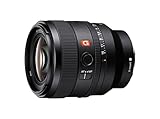

Best Prime Lenses for Sharp Photos and Video
The best prime lenses for sharp photos and video are usually a 35mm for everyday shooting, a 50mm for natural perspective, or an 85mm for portraits, with an f/1.8 aperture offering the strongest balance of image quality, low-light ability, size, and price.
Prime lenses have one fixed focal length, so they cannot zoom, but that limitation allows manufacturers to optimize the optical design for sharpness, brightness, and compactness. The right choice depends less on finding one universally “best” lens and more on matching focal length, camera sensor, autofocus behavior, and your shooting distance.
As an Amazon Associate we earn from qualifying purchases at no extra cost to you.

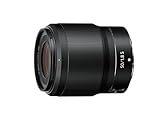
Quick comparison of the best prime-lens choices
| Lens type | Typical maximum aperture | Best use | Typical size and weight | Common market range |
|---|---|---|---|---|
| 35mm full-frame prime | f/1.4–f/1.8 | Travel, street, documentary video, environmental portraits | 45–80mm long; 250–700g | Usually $300–$900 |
| 50mm full-frame prime | f/1.4–f/2 | General photography, interviews, food, detail shots | 45–90mm long; 160–700g | Usually $150–$900 |
| 85mm full-frame prime | f/1.4–f/2 | Portraits, weddings, stage work, subject isolation | 70–110mm long; 350–900g | Usually $300–$1,200 |
| APS-C 23mm or 24mm prime | f/1.4–f/2 | Equivalent to roughly 35mm on full frame | 40–75mm long; 180–500g | Usually $300–$900 |
| APS-C 33mm or 35mm prime | f/1.4–f/2 | Equivalent to roughly 50mm on full frame | 45–80mm long; 250–600g | Usually $300–$900 |
Choose focal length before maximum aperture
Focal length controls the field of view and strongly affects how far you must stand from the subject. A 35mm lens shows more of the surroundings and is easier to use indoors. It is often the safest first prime for travel, family videos, and handheld documentary work.
A 50mm lens gives a more concentrated view without feeling excessively tight. It works well for interviews, portraits from a moderate distance, product details, and everyday photography. On an APS-C camera, a 33mm lens provides a similar field of view to a 50mm full-frame lens.
An 85mm lens is flattering for head-and-shoulder portraits because it lets you stand farther away, reducing exaggerated facial features. It is less convenient in small rooms, where you may run out of space. On a typical APS-C camera, a 56mm lens is approximately equivalent to 85mm on full frame.
Full-frame equivalence calculation
To compare framing across systems, multiply the lens focal length by the camera’s crop factor. A 35mm lens on a 1.5x APS-C camera gives a full-frame-equivalent view of approximately 52.5mm: 35 × 1.5 = 52.5. A 23mm APS-C lens gives approximately 34.5mm, making it the closer match to a 35mm full-frame lens.
Maximum aperture: brightness, blur, and practical trade-offs
The maximum aperture is the widest opening available on the lens. A lower f-number admits more light and can produce a shallower depth of field, but it usually increases size, weight, price, and focusing demands.
- f/1.4: Best when you need maximum subject separation or frequent low-light work. Premium versions can be large and heavy.
- f/1.8: The best all-round compromise for many photographers and videographers. These lenses are often sharp, relatively compact, and affordable.
- f/2: A useful choice when optical stabilization, macro capability, weather sealing, or smaller dimensions matter more than maximum blur.
- f/2.8 and slower: Still suitable in daylight, studio lighting, or when you want more of a group or scene in focus.
For video, do not assume that f/1.4 is always preferable. At close distance, the depth of field may be so thin that an eye moves out of focus during a small head movement. An f/1.8 or f/2 lens can deliver more reliable focus while remaining bright enough for many interiors when paired with appropriate ISO and shutter settings.
Autofocus noise matters more for video than photos
A lens can be optically sharp yet unsuitable for recorded dialogue if its focusing motor produces audible clicks, whirring, or vibration. For video, prioritize lenses with stepping motors, linear motors, or other quiet electronic focusing systems, and check whether the camera records internal lens noise through its built-in microphones.
Examples of video-friendly options include the Canon RF 35mm F1.8 Macro IS STM and RF 50mm F1.8 STM, Sony FE 35mm F1.8 and FE 85mm F1.8, Nikon NIKKOR Z 35mm f/1.8 S and Z 50mm f/1.8 S, and Fujifilm XF 23mm f/1.4 R LM WR and XF 33mm f/1.4 R LM WR. The exact result still depends on camera settings, microphone placement, and whether continuous autofocus is enabled.
For serious dialogue, an external microphone is more reliable than trying to make any lens completely inaudible. When possible, use a short test recording with the lens mounted on your actual camera. Listen for focus transitions, aperture clicks, and image stabilization noise rather than judging only the still-image sharpness.
Sharpness versus size: popular prime-lens directions
Compact f/1.8 lenses
Compact f/1.8 primes are the strongest choice for a lightweight camera bag. Sony’s FE 35mm F1.8, FE 50mm F1.8, and FE 85mm F1.8 cover the main full-frame focal lengths without the bulk of many f/1.4 designs. Nikon’s Z 35mm f/1.8 S, Z 50mm f/1.8 S, and Z 85mm f/1.8 S are larger than some budget alternatives but are designed as high-quality S-Line lenses.
These lenses usually provide enough sharpness for high-resolution stills and 4K video while being easier to balance on a gimbal. Their main limitation is that they gather less light than an f/1.4 lens at the same shutter speed and ISO.
Premium f/1.4 lenses
Premium f/1.4 primes are appropriate when low-light performance and background separation take priority over portability. Sigma’s 35mm F1.4 DG DN Art, 50mm F1.4 DG DN Art, and 85mm F1.4 DG DN Art are prominent full-frame options for compatible Sony E-mount and L-mount systems. They generally provide a brighter aperture, but their larger front elements and higher weight can make handheld video tiring.
An f/1.4 lens is only one stop brighter than an f/2 lens. In practical terms, if an f/2 lens requires ISO 3200 for a correctly exposed shot, an f/1.4 lens can produce a similar exposure at about ISO 1600, assuming the shutter speed and lighting remain unchanged. That benefit is useful, but it may not justify carrying a much heavier lens for daylight work.
Crop-sensor versus full-frame compatibility
Buy a lens made for your camera mount and sensor format unless you have a specific upgrade plan. Full-frame lenses work on many APS-C cameras from the same mount, but they show a narrower effective field of view. APS-C lenses generally cannot cover a full-frame sensor without heavy vignetting or an automatic crop mode.
| Your situation | Recommended choice | Reason |
|---|---|---|
| Full-frame camera, one lens for travel and video | 35mm f/1.8 | Wide enough indoors, natural perspective, manageable size |
| Full-frame camera, portraits and background blur | 85mm f/1.8 or f/1.4 | Flattering working distance and strong subject separation |
| APS-C camera, everyday prime | 23mm or 24mm f/1.4–f/2 | Roughly matches a 35mm full-frame view |
| APS-C camera, portrait and general-purpose prime | 33mm or 35mm f/1.4–f/2 | Roughly matches a 50mm full-frame view |
| Frequent handheld video | Quiet AF lens with stabilization where available | Reduces focus noise and makes movement easier to control |
| Low-light events or night street photography | 35mm or 50mm f/1.4 | Collects more light while preserving a useful field of view |
Low-light performance is more than aperture
A wide aperture helps, but shutter speed, stabilization, subject movement, and sensor performance also determine the result. Optical or in-body stabilization can reduce camera shake for static subjects, but it cannot stop a person from moving. For people, a shutter speed around 1/125 second is a practical starting point; for faster movement, 1/250 second or higher may be needed.
For 24 or 30 frames-per-second video, many creators begin near 1/50 or 1/60 second to maintain natural-looking motion blur. If the scene is too dark, an f/1.4 lens may help, but adding light or reducing the frame rate can be more effective than accepting noisy footage at an extreme ISO.
How to make the final choice
- Identify your sensor: Confirm whether the camera is full frame, APS-C, or another format, then calculate the equivalent field of view.
- Choose your working distance: Select 35mm for close indoor work, 50mm for general use, or 85mm when you can step back for portraits.
- Set an aperture ceiling: Choose f/1.8 unless you regularly work in dim conditions or need maximum background blur.
- Check autofocus behavior: For video, prioritize quiet focusing and smooth transitions over a small difference in still-photo focusing speed.
- Compare weight with your support: A heavy f/1.4 lens may be excellent on a tripod but uncomfortable on a gimbal or during an entire day of travel.
- Confirm the mount and coverage: Make sure the lens is built for your mount and that its image circle covers your sensor at the intended recording mode.
For most people searching for the best prime lenses, a 35mm f/1.8 is the safest all-purpose answer, a 50mm f/1.8 is the most economical natural-perspective option, and an 85mm f/1.8 is the best focused choice for portraits. Move to an f/1.4 model only when its extra light and blur are worth the added cost, weight, and more demanding focus.


