
The best convertible toddler beds for most families are models that use a standard 28-by-52-inch crib mattress first, add a genuinely useful toddler guardrail, and convert to a twin without forcing you to buy an unusual mattress or replacement hardware.
As an Amazon Associate we earn from qualifying purchases at no extra cost to you.

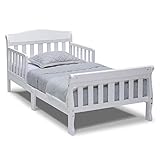
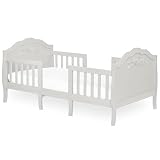

Top 3 picks at a glance
Best Convertible Toddler Beds at a Glance
| Best for | Recommended type or model | Typical stages | Mattress path | What to verify |
|---|---|---|---|---|
| Most families | DaVinci Kalani 4-in-1 | Crib, toddler bed, daybed, twin | Crib mattress to twin mattress | Twin conversion kit and rail configuration |
| Low-cost full conversion | Delta Children Canton 4-in-1 | Crib, toddler bed, daybed, twin | Standard crib mattress to twin | Whether the twin rails are included or sold separately |
| Maximum conversion flexibility | Dream On Me Ashton 5-in-1 | Crib, toddler bed, daybed, twin, full | Crib mattress to twin or full | Full-size conversion parts and recommended mattress support |
| Premium compact design | Stokke Sleepi system | Mini, crib, toddler configuration, junior bed | Proprietary mattress sizes | Higher long-term accessory and mattress cost |
| Simple toddler-to-twin planning | Any 3-in-1 or 4-in-1 crib using a standard mattress | Crib, toddler bed, daybed, sometimes twin | 28-by-52-inch crib mattress to 38-by-75-inch twin | Exact conversion stages, rail height, and kit availability |
Model names and included parts can change between production years. Before buying, use the current manual and parts list rather than assuming that “4-in-1” includes every rail or twin-size conversion component.
What Makes a Convertible Toddler Bed a Good Long-Term Choice?
A convertible bed is worthwhile when its stages match your child’s likely needs and the later stages use common mattress sizes. The number of advertised stages matters less than whether you will actually use them.
- Crib to toddler bed: The crib mattress remains in place, while one side is removed and replaced with a low guardrail or toddler rail.
- Daybed: One side remains open, usually with a partial back panel. This can be useful for reading or quiet play, but it is not always a necessary sleep stage.
- Twin bed: The crib frame is reconfigured for a 38-by-75-inch twin mattress. Conversion rails may be included or may require a separate kit.
- Full bed: Some 5-in-1 designs accept a 54-by-75-inch full mattress. This adds flexibility but also increases the room space and hardware required.
For most homes, a 4-in-1 design ending at twin is the practical sweet spot. A full-size conversion is useful if the frame is especially sturdy and the child will keep the bed into the teenage years, but it should not be a deciding factor if the room is small.
Safety: Compare Rail Height, Gaps, and Materials
Rail height is about fall prevention, not maximum enclosure
A toddler rail should prevent a sleeping child from rolling out while still allowing the child to climb in and out independently. A very high rail can encourage unsafe climbing; a very low rail may provide little protection. Look for a rail that covers a meaningful portion of the mattress length and sits securely against the frame rather than relying on a loose fabric panel.
Do not judge safety from the rail’s height alone. Check whether the mattress sits flush with the frame, whether the rail is fixed at both ends, and whether there are openings large enough for a limb or head to become trapped. Follow the manufacturer’s minimum age and weight guidance. In the United States, toddler beds covered by federal rules are generally intended for children at least 15 months old and under 50 pounds, but the product’s own instructions still control.
Material safety checklist
- Choose a frame made from solid wood, plywood, or a clearly identified engineered-wood construction with secure joinery.
- Prefer finishes described as non-toxic, lead-free, and tested to applicable children’s furniture standards.
- Look for smooth, sealed surfaces with no accessible splinters, sharp corners, peeling finish, or exposed fasteners.
- Check that every bolt uses the supplied washer, barrel nut, or locking hardware specified in the manual.
- Avoid modifying the side rails, drilling new holes, or attaching an aftermarket rail unless the manufacturer explicitly approves it.
“Non-toxic” is not a substitute for a safety standard. A stronger purchase signal is a documented compliance claim for applicable ASTM and CPSC requirements, plus a manual that clearly shows assembly, mattress support, and conversion parts.
Mattress Fit: The Measurement That Prevents the Most Problems
For a standard full-size crib, the usual mattress footprint is approximately 28 by 52 inches. The mattress should fit tightly enough that you cannot insert more than two fingers between its edge and the crib frame. A gap is not harmless: it can create an entrapment hazard.
When the bed becomes a twin, the normal mattress footprint is 38 by 75 inches. That is a major size change, not a matter of turning the crib mattress around. A twin conversion therefore needs a dedicated support platform or rails designed for the larger mattress.
A practical fit calculation
Suppose a child is 30 months old and uses the crib mattress for two more years. If the child later moves to a twin bed at age four and remains in it until age 12, the twin stage could provide eight years of use. A 4-in-1 crib that converts to twin may therefore serve two distinct periods:
- Crib and toddler stages: 28-by-52-inch mattress, roughly ages 0–4 depending on development and instructions.
- Twin stage: 38-by-75-inch mattress, potentially ages 4–12 or longer.
The frame may last a decade, but mattresses do not. Budget separately for the initial crib mattress and a later twin mattress; do not assume that a convertible frame includes either one.
Decision Matrix: Which Conversion Path Fits Your Situation?
| Your situation | Best choice | Why | Main drawback |
|---|---|---|---|
| You want the fewest purchases | 4-in-1 with twin conversion kit included | One frame covers crib, toddler, daybed, and twin stages | Usually costs more initially |
| The child’s room is small | Crib-to-twin model | Twin takes less floor area than a full bed | Less sleeping space later |
| You expect siblings to reuse the frame | Simple solid-wood 3-in-1 or 4-in-1 | Fewer complex moving parts and easier maintenance | May not include a full-size stage |
| You want one bed through adolescence | 5-in-1 with twin and full options | Allows a larger mattress without replacing the frame | More hardware, space, and conversion cost |
| You value compact, distinctive styling | Stokke Sleepi system | Modular design and rounded footprint | Proprietary mattress sizes and accessories |
How to Check a Bed Before Assembly
- Download the manual first. Confirm the toddler rail, mattress support, and twin conversion kit are available for the exact model number.
- Measure the mattress support. Confirm the required crib mattress dimensions and check that the listed thickness matches the manual.
- Inspect every rail. Run a hand over edges and corners. Reject parts with cracks, rough areas, peeling paint, or bent hardware.
- Assemble on a level floor. A twisted frame can make a rail appear loose even when the bolts are tight.
- Tighten, then recheck. After a few nights, retighten fasteners according to the manual because wood joints can settle.
- Test the conversion. Before the child uses the toddler stage, push and pull the rail from several directions and verify that it does not shift independently from the frame.
Common Buying Mistakes
The most common mistake is choosing by the largest conversion number. “5-in-1” can sound better than “4-in-1,” but a rarely used full-bed stage may matter less than a well-designed toddler rail and an included twin kit.
Another mistake is buying the mattress before checking the frame. Some systems require a particular mattress thickness, while compact systems such as the Stokke Sleepi use nonstandard dimensions. A mattress that is too thick can reduce effective rail height; one that is too small can leave dangerous gaps.
Finally, avoid assuming that an attractive finish proves durability. Examine the joinery, center support, hardware quality, warranty terms, and availability of replacement rails. Those details determine whether the bed remains useful after several conversions.
Frequently asked questions
Can a convertible toddler bed use the same mattress throughout all of its stages?
No. The crib and toddler stages generally use a standard crib mattress measuring approximately 28 by 52 inches, while a twin conversion requires a 38-by-75-inch twin mattress. Some full-size conversions use a 54-by-75-inch mattress. Budget separately for the initial crib mattress and any later mattress because the frame does not necessarily include either one.
What should I do if the conversion kit is not included?
Check the current manual and parts list before buying the bed. A conversion kit, toddler rail, or twin rails may be sold separately, even when a product is described as 4-in-1 or 5-in-1. Confirm that the exact model has the hardware needed for the conversion stage you expect to use, rather than relying only on the advertised number of stages.
Is a daybed stage necessary for every child?
No. A daybed stage can be useful for reading or quiet play, but it is not always a necessary sleep stage. The more important considerations are whether the bed has a secure toddler rail, fits the required mattress correctly, and provides the conversion path your family expects to use. A bed with fewer advertised stages may still be the more practical choice.
When should a child move from the crib mattress to a twin mattress?
The timing depends on the child’s development and the manufacturer’s instructions. The article gives an example of a child moving to a twin bed at age four, but a convertible frame may support the crib and toddler stages until then. Before changing mattresses, confirm that the frame is configured for a twin, has the required support, and leaves no unsafe gaps.
Can I add an aftermarket rail if the included toddler rail seems too low?
Do not add an aftermarket rail unless the manufacturer explicitly approves it. The article advises against modifying side rails, drilling new holes, or attaching unapproved hardware. Instead, check the manual’s rail configuration, mattress thickness requirements, and assembly instructions. A very high rail can encourage unsafe climbing, while a low rail may provide limited protection.
Bottom Line
The best convertible toddler beds combine a secure, appropriately low toddler rail with a standard crib mattress fit and a clearly documented path to a twin mattress. For most buyers, a solid-wood 4-in-1 model such as the DaVinci Kalani or Delta Children Canton offers the best balance of useful stages and ordinary mattress sizing. Choose a 5-in-1 model such as the Dream On Me Ashton when a future full-size bed is genuinely useful, and choose a modular system such as Stokke Sleepi only if you accept proprietary mattress and accessory costs in exchange for its compact design.


