Foam panels absorb echo, not outside noise. That is the first thing to know about every listing below, even though most titles say “soundproof”. In a streaming room, absorption is still valuable: bare walls bounce your voice back into the mic, and a few well-placed panels make speech clearer. This roundup compares ten packs by size, thickness and wall coverage, notes where titles claim safety or density without proof, and ends with a mirror trick for placing them. If your real problem is neighbors or traffic, panels alone will not solve it.
Our Top Picks
Top 3 picks at a glance
Quick picks
As an Amazon Associate we earn from qualifying purchases at no extra cost to you.


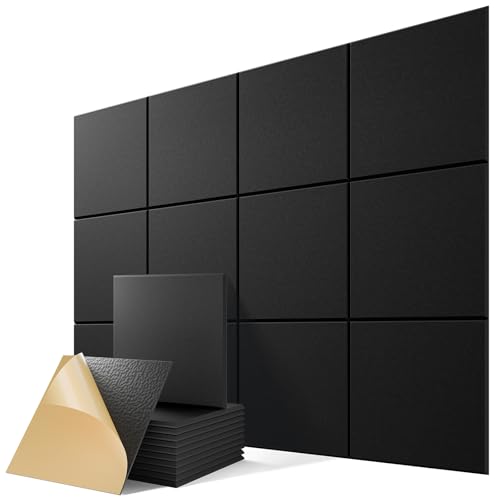


- Saiqiang 98 Pack – best for covering a large room with 1 inch wedges
- Focusound 52 Pack – best for a mid-size room with adhesive included
- TDHLYJHF 52 Pack – best for a black and blue look in the same size
- Focusound 50 Pack – best as the near-identical alternative to the 52 pack
- SD SODOCT 24 Pack – best for thicker 2 inch pyramid foam
- TOUO 12 Pack – best for a small corner or first test of the idea
- HWLIYUTAI 4 Pack – best for a few large 2 inch slabs
- Lebenforce 12 Pack – best for a thin, tidy polyester fiber look
- XyraSound 12 Pack – best for white slatted decor
- ZenSonic 12 Pack – best for a decorative hexagon wall with starlight
Comparison table
| Model | Panel size as stated | Pack | Approx. footprint* | Best for |
|---|---|---|---|---|
| Saiqiang | 1 x 12 x 12 in wedge | 98 | 98 sq ft | Large rooms |
| Focusound 52 | 1 x 12 x 12 in wedge | 52 | 52 sq ft | Mid-size rooms |
| TDHLYJHF | 1 x 12 x 12 in wedge, black/blue | 52 | 52 sq ft | Colored look |
| Focusound 50 | 1 x 12 x 12 in wedge | 50 | 50 sq ft | Same as 52, fewer |
| HWLIYUTAI | 2 x 24 x 48 in | 4 | 32 sq ft | Fewer, larger slabs |
| SD SODOCT | 2 in pyramid | 24 | 24 sq ft (title) | Thicker foam |
| TOUO | 1 x 12 x 12 in wedge | 12 | 12 sq ft | Small spaces |
| Lebenforce | 0.4 x 12 x 12 in polyester fiber | 12 | 12 sq ft | Tidy walls |
| XyraSound | 0.4 x 12 x 12 in slatted | 12 | 12 sq ft | White decor |
| ZenSonic | 0.4 x 12 x 10 in hexagon | 12 | about 10 sq ft | Decor with lights |
*Footprint is simple arithmetic from the dimensions and pack counts in each title. It is not a coverage or absorption rating.
Saiqiang 98 Pack Acoustic Foam Panels
The largest pack here: ninety-eight 1 x 12 x 12 inch black wedge panels, described as fire resistant, noise dampening and sound absorbing, aimed at studio recording, office and home use. At one square foot per panel that is roughly 98 square feet of footprint, enough to treat a big streaming room or several walls.
The title does not mention adhesive, so budget for mounting putty or tape and read the listing for what ships. “Fire resistant” is a seller claim; look for certification details if you care. One-inch wedges mostly treat higher frequencies, so they will not tame a deep, boomy room alone.
In a smaller room the sheer quantity can backfire: covering every wall tightly can leave the space sounding dead and muffled. Plan to use only part of the pack and keep the rest for later.
- Pros: biggest quantity; enough for large coverage
- Cons: adhesive not mentioned; thin wedge profile
Who it’s for: large rooms and shared studio spaces. Who should skip it: small rooms that would waste most of the pack.
Focusound 52 Pack Acoustic Foam Panels
This one states 52 wedge panels measuring 1 x 12 x 12 inches for home office or recording studio use, and it adds 300 pieces of double-sided adhesive. Having the adhesive in the title is practical, because mounting is often the part that people forget to budget for. About 52 square feet of footprint suits a mid-size room where you want treatment on two walls.
Double-sided adhesive grips well, but it can strip paint on removal, so avoid it on walls you plan to repaint soon or on rental walls. Density and absorption ratings are not given in the title.
Sticking 52 tiles also takes time. Lay them out on the floor first in the pattern you plan, count the adhesive pieces per tile, and work from the top of the wall downward so you can adjust before the adhesive grabs.
- Pros: adhesive included per the title; generous panel count
- Cons: adhesive can damage walls; no rating stated
Who it’s for: owners treating a mid-size room. Who should skip it: renters unable to mark walls.
TDHLYJHF 52 Pack Acoustic Foam Panels
Another 52-pack of 1 x 12 x 12 inch wedge foam, this time labeled black and blue and described as sound absorption wall panels for studios. The size and pack match the Focusound 52, so the difference is mainly appearance and what the listing includes. The title does not mention adhesive, so check the listing.
Colored panels can look better behind a camera, since a mix of black and blue reads as a deliberate stream backdrop rather than a studio wall. If you want a plain look, compare it with the all-black options and check what colors you actually receive.
Because the title lists two colors without a split, check the listing images for the ratio. If you want a pattern on camera, a mixed pack lets you arrange a checkerboard or a gradient behind your chair.
- Pros: same footprint as the larger packs; colored option for camera backdrops
- Cons: mounting items not stated; colors may vary per order
Who it’s for: streamers who want panels visible on camera. Who should skip it: anyone who wants a neutral room.
Focusound 50 Pack Acoustic Foam Panels
The same brand, the same 1 x 12 x 12 inch wedge description and the same 300 pieces of double-sided adhesive as the 52 pack, with two fewer panels. These look like the same product in two quantities, so choose by price per panel and by how many you need rather than by any difference in quality.
It does not matter much whether you choose 50 or 52, which is why it helps to work out your wall area first. The worked example in the buying section shows how.
If you are unsure between the two packs, divide your target square footage by the pack’s footprint and round up. Two extra tiles rarely change a result, but running out halfway across a wall does.
- Pros: adhesive named in the title; pack size close to the 52
- Cons: near-duplicate of another listing; no rating
Who it’s for: buyers matching a budget. Who should skip it: anyone who needs a very different thickness.
HWLIYUTAI 4 Pack Acoustic Foam Panels
Large slabs instead of tiles: four panels at 48 x 24 x 2 inches, described as high density soundproof foam for noise reduction in studio walls, home theater and office. Each slab is 8 square feet, so four give about 32 square feet. The 2 inch depth is thicker than the 1 inch wedges and generally absorbs a wider range of frequencies.
Big slabs mount in fewer places, which means less fiddly placing, but they are heavier and need secure fixing. The title does not state how to hang them, and a flat slab does not diffuse sound the way a wedge face does.
Slabs of this size are easiest to fix with a frame or screw-in hangers rather than adhesive alone. Cutting is also harder than with small tiles, so measure your wall space before ordering, especially around a window or door.
- Pros: 2 inch thickness; fewer pieces to mount
- Cons: mounting method not stated; large pieces are harder to place
Who it’s for: streamers with one echo-prone wall. Who should skip it: those who want to fine-tune individual spots.
SD SODOCT 24 Pack Pyramid Acoustic Foam
This title is detailed: 24 pyramid panels, 2 inches thick, with 24 square feet of coverage, a stated 25 kg per cubic meter density, and flame retardant certified wording. It also promises high NRC for echo control. NRC is a standard rating, but the title gives no number, so ask for one before treating the claim as meaningful.
Pyramid foam is thicker than flat wedge tiles, which is why it suits boomy rooms better than one-inch tiles. The “certified” wording is better than “fire resistant”, but check the listing for what certificate is named.
Pyramid shapes break up reflections on the surface as well as absorbing, which is the usual reason people choose them over flat slabs. The extra depth also means the panels stand further from the wall, so check clearance behind your desk.
- Pros: thicker 2 inch foam; coverage and density stated
- Cons: no NRC value given; pack is small for a big room
Who it’s for: streamers who want a stronger treatment per square foot. Who should skip it: large-room buyers on a tight budget.
TOUO 12 Pack Acoustic Panels
Twelve black wedge tiles at 12 x 12 x 1 inch, flame retardant and high density per the title, for home studio use. Twelve square feet will not transform a room, but it is a sensible way to try the idea behind one monitor or one wall before you buy fifty.
That small footprint is its limit: it covers a mic corner or the wall behind your chair, not the whole room. The title says flame retardant but gives no certification details, so treat that wording as a claim. The 12 x 12 inch tiles are also easy to reposition, which suits experimenting with where the echo is worst.
A small pack suits a trial of the mirror method described below: place all twelve at the reflection spots, record a minute of speech, and judge whether you hear less room before ordering a larger set.
- Pros: small commitment; flame retardant wording
- Cons: limited coverage; claims not backed by numbers
Who it’s for: first-time buyers treating one spot. Who should skip it: owners of large, bare rooms.
Lebenforce 12 Pack Self-Adhesive Acoustic Panels
Not foam wedges: the title describes 12 x 12 x 0.4 inch high-density polyester fiber panels with a self-adhesive backing, for home and office walls in black. At 0.4 inch they are thin, so expect mostly a tidy, flat look and modest absorption of higher frequencies rather than the deeper effect of 2 inch foam.
Self-adhesive backing makes them easy to place, but it also makes them hard to remove cleanly. For a stream background where appearance matters, thin panels can be an acceptable trade. Buyers who want a stronger effect usually combine a few thin panels with thicker foam at the main reflection points.
Because they are so thin, these panels sit closer to wall decoration with a little absorption. Lay one against the wall first to judge the finish before you peel the backing, since removal is the hard part.
- Pros: flat, tidy profile; adhesive backing stated
- Cons: thin, so lower absorption; may strip paint
Who it’s for: small rooms where looks matter. Who should skip it: anyone fighting strong echo.
XyraSound 12 Pack Slatted Sound Proof Panels
Twelve white self-adhesive slatted panels at 12 x 12 x 0.4 inch, described as high density, sound absorbing and suitable for gaming and recording studio decor. The slatted face is the visual hook, and white is useful if your room is light colored and a black grid would look heavy.
Thin panels share the same limits as the Lebenforce set. The title does not say what material is inside, so check the listing before assuming it behaves like foam. Slatted faces mainly change how the wall looks, and any benefit depends on what sits behind the slats, which the title does not describe.
A white panel looks very different from black on camera: it throws more light back, which can brighten a dim room slightly, though nothing in the title speaks to color accuracy or finish.
- Pros: white slatted look; self-adhesive per the title
- Cons: thin; material not named in the title
Who it’s for: decor-minded streamers in light rooms. Who should skip it: those who want strong treatment.
ZenSonic 12 Pack Hexagon Panels with Starlight
The decorative option: twelve self-adhesive hexagon panels at 12 x 10 x 0.4 inch with a fiber optic starlight feature, for home studio decor. At that size twelve panels cover at most about 10 square feet, and hexagon shapes leave gaps, so real coverage will be lower.
The lighting feature is not described beyond the name, so check the listing for power needs and controls. Treat it as a mostly cosmetic panel set with some mild absorption, not a treatment kit. If echo is your main complaint, put your budget into thicker foam and use these only as accents on a wall the camera sees.
Check whether the lights run from USB or a battery and where the cable would route, because a cable draped across a streaming desk is one more thing to catch on camera.
- Pros: eye-catching on camera; self-adhesive
- Cons: thin; small real coverage; lighting details unclear
Who it’s for: background decor with mild treatment. Who should skip it: anyone with a real echo problem.
How we picked these
We read each listing title, manufacturer documentation and buyer reviews, then sorted the packs by thickness, panel size and quantity. Footprints come from simple arithmetic on the sizes in the titles. Claims about density, flame resistance and NRC are repeated as claims. Nobody on the team used or measured these units, so no absorption results are given.
What to look for in panels for a streaming room
Absorption is not soundproofing
Absorption lowers echo inside the room. Soundproofing stops sound crossing a wall, which needs mass and airtight seals. If you want your stream to sound better, buy absorption. If you want the neighbors to hear less, panels will barely help, and a heavier door seal or a quieter schedule will do more. A quick listen helps: clap once in the room, and if you hear a short ring or a long tail, that is the echo panels address.
Thickness decides what you absorb
A thin 0.4 inch panel mostly handles higher frequencies, a 1 inch wedge does a bit more, and 2 inch foam reaches lower. Boomy voices in a small room usually need thicker material, while bright slap echo off flat walls responds even to thin panels. Bass buildup in corners needs far thicker traps than any pack here, so these listings improve clarity but do not cure low-end boom.
Reading density, fire and NRC claims
A density figure such as 25 kg per cubic meter describes the foam, but it does not by itself tell you how well it absorbs. NRC is a single number between 0 and 1 that averages absorption across several frequencies, so a title that says “high NRC” without a value gives you nothing to compare. For safety wording, flame retardant, fire resistant and certified are not interchangeable terms, so look for a named standard in the listing rather than an adjective.
Worked example: a ten by ten foot room
Walls total about 320 square feet with 8 foot ceilings. Covering around a quarter of that, roughly 80 square feet, is a common starting point. The table shows what each pack could contribute.
| Pack | Footprint | Share of an 80 sq ft goal |
|---|---|---|
| Saiqiang 98 | 98 sq ft | All of it, with spare |
| Focusound 52 / TDHLYJHF 52 | 52 sq ft | About two thirds |
| HWLIYUTAI 4 | 32 sq ft | About 40 percent |
| SD SODOCT 24 | 24 sq ft | About 30 percent |
| Any 12 pack | 10 to 12 sq ft | About 12 to 15 percent |
Place panels at reflection points
Sit at your mic and have someone slide a mirror along the wall; wherever you can see the mic or your mouth in it, put a panel. Cover the wall facing your mic and the wall behind you first, then the side walls. Keep in mind that panels on the wall behind you also show on camera, which matters if you use a webcam, so see our PC webcam for streaming guide.
What panels do not fix
PC fans, a rattling desk, keyboard clicks and traffic outside come from sources that panels barely touch. Fix those at the source: move or quiet the PC, add a mic arm with a shock mount, close a window. Use panels for echo, and treat the rest separately.
Mounting, safety and layout
Adhesive can mark walls, so consider removable putty or hang panels on a board. Flame retardant or fire resistant wording is a seller claim, so check the certificate details. Your desk layout also shapes where panels can go; for a corner setup see our L-shaped desks for dual-PC streaming.
Mistakes buyers make
- Buying for soundproofing. Foam treats echo, not outside noise.
- Covering one wall with everything. Spread panels across the reflection points instead.
- Trusting vague claims. “High NRC” and “fire resistant” need numbers or certificates.
- Ignoring adhesive. Check whether any is included, and what it does to paint.
- Choosing by looks alone. Thin decorative panels give mild results.
- Treating the PC as a quiet source. Fan noise comes from inside the room and panels do little against it.
Verdict
For a typical bedroom streaming room, a 50 or 52 pack of 1 inch wedges is the practical starting point, and the Saiqiang 98 only makes sense for bigger rooms. The SD SODOCT pyramid is the thicker option for boomy voices, the HWLIYUTAI slabs suit one problem wall, and the thin decorative sets are about appearance. Place the first panels at the mirror points and add more only if the echo remains.
Related guides
- When I Turn On Record Game In Background On Gamebar. Gamebar Crashes, What Do I Do?
- Poly Computer Accessories Company Streaming Evaluation
- Hyperx Gaming Peripherals Review For Game Streaming
Frequently asked questions
Does soundproof foam stop noise from leaving my streaming room?
No. Foam panels absorb echo inside the room, which makes your voice cleaner on the mic, but they are thin and light, so they do little to stop sound passing through walls. Blocking sound needs mass, sealed gaps and decoupled structure. Think of these panels as treatment for how the room sounds, not insulation against your neighbors or the street.
How many panels do I need for a small streaming room?
There is no fixed number, but a common starting point is covering a quarter or so of the wall area, concentrated at the reflection points near your mic. In a ten by ten foot room that is roughly eighty square feet. Many streamers begin with a pack of twelve to fifty-two foot-square panels and add more only if the echo is still audible.
Will adhesive panels damage my walls?
They can. Double-sided adhesive and peel-and-stick backings may pull paint or drywall paper when removed, especially on fresh paint. Renters often prefer removable mounting putty or hang panels on a board. Try a small spot first, and read the listing for what adhesive is included, since not every title states it.
Are thin 0.4 inch panels as good as thick foam?
Generally no. Thicker foam absorbs a wider range of frequencies, so a thin fiber or foam tile tends to handle mainly higher frequencies and does less against boomy low-mid echo. Thin panels do have a tidier look and may suit a room where appearance matters more than strong treatment. Choose by what bothers you on the recording.
Is acoustic foam a fire risk?
Foam can burn, which is why some titles mention flame retardant or fire resistant materials. Those words are seller claims and do not replace a certification you can verify. Keep panels away from heaters and lamps, do not cover smoke detectors, and look for the safety or certification details in the listing before you put foam on a wall.