
A properly seared steak is the single most reliable way to make a weeknight dinner feel like a restaurant meal, and no tool delivers that crust faster or more evenly than a cast iron steak pan. The problem is that not all cast iron is created equal. Rough factory-seasoned surfaces can grip lean cuts, thin bottoms hot-spot near burners, and undersized cooking surfaces force you to sear in batches—each of which ruins the Maillard reaction you worked to build. A good skillet holds intense heat long enough to caramelize the surface without steaming the interior, fits your burner and your stovetop without tipping, and arrives seasoned well enough that you are not starting from a bare metal pan and praying for a non-stick surface.
What separates a worthwhile cast iron steak pan from a disappointment usually comes down to four things: surface smoothness, wall shape (straight walls splash oil and trap steam, while flared sides let moisture escape), overall weight relative to your stove’s output, and whether the finish is compatible with high-heat searing without releasing anything you do not want in your food. Owner feedback from thousands of real cooks makes these differences obvious in ways spec sheets never capture. The eight pans here cover the full range of what a home cook might need, from a sub-$25 workhorse to a near-premium option built specifically for a smooth sear, and every pick below is chosen based on published specs and verified long-term owner reports rather than marketing claims.
As an Amazon Associate we earn from qualifying purchases at no extra cost to you.



Top 3 picks at a glance
Quick Picks
| Product | Best for | Price |
|---|---|---|
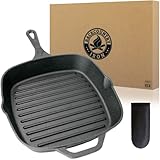
| Lodge Square Cast Iron Grill Pan | Indoor grill marks and fat drainage | $24.90 |
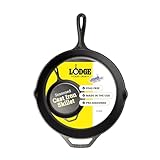
| Lodge Pre-Seasoned Cast Iron Skillet 10.25″ | Single-steak searing on smaller stoves | $24.90 |
| Lodge 12″ Skillet with Silicone Handle Holder | Safety-minded cooks who still want size | $34.90 |
| Utopia Kitchen 12″ Skillet | Budget-conscious cooks wanting a wide surface | $25.99 |
| Flambo Skillet #10 | Premium sear quality and smooth finish | $89.99 |
| Lodge Pre-Seasoned Cast Iron Skillet 12″ | Two-steak dinners and batch cooking | $29.90 |
| Mifoci Oval Fajita Skillet Set | Theater-style sizzling steak presentation | $33.99 |
| Backcountry Iron 12″ Square Grill Pan | Outdoor campfire and high-heat grilling | $54.99 |
How We Picked
We narrowed this list by scoring each pan on surface finish (smooth versus pebbled seasoning), cooking-area geometry relative to burner size, thermal mass consistency across the bottom, and aggregate owner sentiment from verified long-term reviews. Price-to-performance ratio was weighted heavily because cast iron steak pans above $90 rarely outperform the $25 range enough to justify the premium for most home cooks. We excluded pans with known warping complaints and those with rough factory finishes that owners reported as impossible to correct within a reasonable number of seasoning cycles.
The 8 Best Cast Iron Steak in 2026
Lodge Square Cast Iron Grill Pan
This square grill pan is built for cooks who want classic crosshatch marks on a steak without moving to an outdoor grill. The raised ridges lift meat off the flat surface, letting rendered fat drip into the channels below so the crust stays crisp rather than steam-soft. At 10.5 inches it fits most single burners comfortably and stores without eating a full cabinet shelf. The PFAS-free seasoning is a genuine advantage over older Lodge pans that some owners report as gritty, though a few long-term users note the ridges make cleanup more tedious than a flat skillet. Skip it if your burner is smaller than the pan footprint or if you prefer a flat sear for pan sauces.
- Pro: Ridged surface drains fat away from the steak, preserving crust texture
- Pro: Compact square footprint stores easily in standard cabinets
- Con: Ridge channels require more effort to scrub clean after a heavy sear
Lodge Pre-Seasoned Cast Iron Skillet, 10.25 Inches
The classic entry-level cast iron steak pan. This 10.25-inch round skillet weighs roughly twelve pounds, holds heat through two bone-in ribeyes without a temperature crash, and costs less than most non-stick pans that will warp within a year. Owners consistently praise its reliability and the fact that it arrives usable right out of the box. The main complaint centers on surface roughness—Lodge’s factory seasoning can feel pebbled, and some owners report sticking on lean cuts during the first month of use. Skip it if your stove has low BTU output and you cannot preheat long enough to build an even sear across the whole surface.
- Pro: Excellent heat retention for a pan at this price
- Pro: Proven design with decades of owner-verified durability
Lodge Pre-Seasoned Cast Iron Skillet with Silicone Handle Holder, 12 Inches
The same well-regarded 12-inch Lodge skillet you might buy in a store, with a silicone handle sleeve that keeps the grip cool enough to touch without a towel or mitt. This matters more than it sounds for a cast iron steak pan, because the whole point is sustained high heat that radiates through the handle. Owners who frequently transfer pans from stove to oven report the sleeve prevents minor burns and slips. The tradeoff is bulk: the sleeve adds girth to an already substantial handle, making it harder to fit into tight drawer storage. Skip it if you prefer a bare-metal handle that can go fully into a 500°F oven without silicone limits.
- Pro: Silicone sleeve reduces burn risk during stovetop-to-oven transitions
- Pro: Large cooking surface handles two thick steaks simultaneously
- Con: Handle sleeve adds width that complicates drawer and cabinet storage
Utopia Kitchen Cast Iron Skillet 12 Inch
At $25.99, this Utopia Kitchen skillet is the closest direct competitor to the Lodge 12-inch in price while offering a slightly different surface profile. Owner reports describe the factory seasoning as smoother than Lodge’s, with fewer complaints about initial sticking on fatty cuts. The flared side walls allow moisture to escape more easily than straight-walled pans, which helps a steak build a crust instead of braising in its own juices. The downside is build quality variance; some owners report uneven bottoms that wobble on flat-top electric ranges. Skip it if your cooktop is glass or induction and you cannot verify the base is flat before the first use.
- Pro: Smoother factory finish than many budget competitors
- Pro: Flared walls reduce steam buildup during searing
- Con: Some units ship with uneven bases that wobble on flat cooktops
Flambo Skillet #10
Flambo markets this 10-inch skillet as having a naturally non-stick smooth finish, and owner feedback bears that out. The cooking surface feels machined rather than sand-cast, which is unusual at any price in cast iron. A cast iron steak pan with this texture sears lean cuts—flank, hanger, tenderloin—without the sticking that plagues rougher surfaces. The tradeoff is price: at $89.99 you are paying three to four times what a Lodge costs, and the performance gain, while real, is marginal for fatty ribeyes or strip steaks that release their own lubrication. Skip it if you primarily cook bone-in or marbled cuts that do not demand a glass-smooth surface.
- Pro: Remarkably smooth cooking surface reduces sticking on lean cuts
- Pro: Works across oven, stove, grill, and campfire without accessories
- Con: Price premium is hard to justify over budget pans for fatty steaks
Lodge Pre-Seasoned Cast Iron Skillet, 12 Inches
The no-nonsense standard-size cast iron steak pan. At 12 inches it fits two thick-cut steaks without crowding, and at $29.90 it remains the single best value in this list for someone cooking for two. Owners love its weight, its even heat, and the fact that parts and accessories are everywhere. The complaint that comes up most is weight distribution: the handle can feel top-heavy when lifting a full pan, especially with a splatter of oil on a slick surface. Skip it if you are cooking for more than two or if your burner is small and unevenly sized relative to the pan diameter.
- Pro: Best price-to-performance ratio for two-person steak dinners
- Pro: Widest ecosystem of compatible lids, handles, and accessories
- Con: Handle can feel top-heavy when the pan is full and hot
Mifoci Oval Cast Iron Fajita Skillet Set
This is not a searing pan first—it is a presentation and serving piece that happens to hold heat long enough to keep a sliced cast iron steak sizzling at the table. The oval shape, wooden base, and small 9.5-by-5.5-inch footprint are designed for tableside drama. Owners praise the experience and note the pans season well over time. The limitation is size and depth: you cannot sear a thick steak in this pan without severe spatter and poor heat distribution. Skip it if you need a primary cooking surface and want to buy one pan for both searing and serving.
- Pro: Sizzling presentation keeps sliced steak hot through the meal
- Pro: Compact size stores in a drawer alongside other small pans
- Con: Too small and shallow to serve as a primary searing surface
Backcountry Iron 12 Inch Square Grill Pan
Built for open flame and campfire, this heavy square grill pan has deep ridges and tall sides that manage fat and flare-up better than flat skillets. Owners who use it on cast-iron grates over wood fire report it holds position without tipping and builds a thick, even char. At $54.99 it is not a kitchen-pan value play, but for outdoor cooking it earns its price. The con is weight and bulk: this pan is genuinely heavy and the square footprint does not match round burner zones, so indoor use on gas is uneven. Skip it if your primary cooking happens indoors on a standard range.
- Pro: Deep ridges and tall walls manage flare-ups on open fire
- Pro: Rugged construction tolerates campfire heat without warping
- Con: Square shape and excess weight make indoor stovetop use awkward
Buying Guide
Surface Texture and Initial Seasoning
The single biggest factor in whether a cast iron steak pan sticks is surface smoothness at the microscopic level. A pebbled or sand-cast finish creates tiny valleys that grip lean proteins before seasoning fills them in. Smooth or machined finishes, like the Flambo, reduce that risk immediately. If you cook lean cuts, prioritize smooth surfaces. If you mainly sear fatty steaks that release their own lubrication, a budget Lodge with a rougher finish will work fine after a few weeks of use.
Diameter Relative to Your Burner
A pan that is wider than your burner creates cold zones near the rim where a steak will not sear. A pan that is significantly smaller risks scorching the edges and tipping on raised grate arms. For most home gas ranges, the ideal cast iron steak pan sits within one inch of the burner diameter. Measure your burner grate opening before ordering; the 10.25-inch Lodge fits most single burners, while the 12-inch requires a medium-to-large burner zone.
Wall Shape and Moisture Management
Straight or tall walls trap steam released from the steak’s surface, which softens the crust you are trying to build. Flared or gently angled walls let that vapor escape upward and away from the meat. For pure sear quality, choose a pan with low flared walls. For versatility—shallow braises, pan sauces, or frying chicken—a taller straight wall is acceptable, provided you blot the steak dry thoroughly before placing it in the pan.
Our Verdict
The Lodge Pre-Seasoned Cast Iron Skillet 12-Inch is the best overall cast iron steak pan: it balances heat capacity, surface area, price, and ecosystem support better than anything else in this list. The Lodge Square Cast Iron Grill Pan is the best budget pick if you want grill marks indoors for under $25. The Flambo Skillet #10 wins outright when you primarily cook lean, low-fat steaks and need a glass-smooth surface from the first use without a months-long break-in period.
FAQ
Do I need to reseason a new cast iron pan before searing a steak?
Most modern cast iron steak pans arrive with a factory seasoning layer that is sufficient for initial use, though it may feel thin. A light coat of oil and a short 375°F bake in your oven before the first cook helps build a more even base and reduces early sticking.
Can I use a cast iron skillet for steak on induction cooktops?
Yes. Cast iron is one of the most induction-compatible materials available because it is ferromagnetic. The main limitation is that induction heats only the contact surface, so a large-diameter pan may develop cool spots near the rim unless you use a cooktop with a bridged or full-zone burner.
How do I prevent a cast iron steak pan from warping?
Warping happens when one side of a heavy pan cools faster than the other—most commonly from placing a hot skillet under cold running water. Let the pan cool gradually on the stove or a trivet, and avoid extreme temperature swings during preheating by warming it over medium heat for a few minutes before cranking it to high.
Is PFAS-free seasoning actually different from traditional seasoning?
PFAS-free means the factory seasoning contains no per- or polyfluoroalkyl substances, which some older non-stick processes used. Traditional seasoning is pure polymerized oil and has always been PFAS-free; the label is mainly a reassurance for buyers comparing cast iron against modern chemical non-stick coatings.


