
Choose open-back headphones for a quiet room where you want wide, natural sound, and choose closed-back headphones if you need isolation, privacy or a built-in microphone for chat. The difference comes down to the ear cup: open-back designs let air and sound pass through the outside of the cup, while closed-back designs seal it.
As an Amazon Associate we earn from qualifying purchases at no extra cost to you.
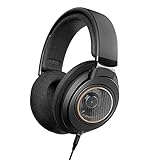


Top 3 picks at a glance
What Each Type Is
- Open-back: The outer grille or mesh allows sound to leave the cup and outside noise to enter. This typically gives a more spacious, airy presentation and less pressure build-up in the ear.
- Closed-back: A solid shell traps sound inside, which blocks some outside noise and keeps your audio from leaking out. Bass often feels more impactful because of the sealed chamber.
Neither type is automatically better. The right choice depends on where you listen, what you listen to and whether you need to talk to teammates.
Key Differences at a Glance
| Feature | Open-back | Closed-back |
|---|---|---|
| Soundstage | Wider, more natural | Narrower, more intimate |
| Bass | Lighter, tighter, less rumble | Often stronger and more impactful |
| Noise isolation | Very little | Moderate passive isolation |
| Sound leakage | High; others can hear you | Low |
| Heat and comfort | Cooler, breathable | Warmer over long sessions |
| Built-in microphone | Rare, often a detachable boom | Common on gaming models |
| Best environment | Quiet room, home office | Shared or noisy spaces |
Gaming: Which Fits Better
Many gamers value positional audio, and reviewers often credit open-back designs with a more spacious image that helps with judging where footsteps and gunfire come from in games. That said, closed-back gaming headsets are far more common, mostly because they include microphones and block out household noise. If you play in a bedroom or a room shared with others, closed-back wins on practicality, since an open-back model will leak your game to anyone nearby and let their conversation into your ears.
For competitive play in a quiet space, an open-back pair with a separate desk microphone or a clip-on boom microphone is a popular combination. For console or living-room gaming, a closed-back wired or wireless headset is usually more convenient.
Creators and Music Listeners
Mixing and editing audio benefits from the natural presentation of open-back headphones, which is why many studios use them for mixing. Closed-back models are generally preferred for recording, because they limit sound bleed into the microphone, and for monitoring on location. If you edit video, you might use open-backs for detail work and closed-backs when the environment is loud.
Budget Tiers Without Dollar Prices
- Entry level: Closed-back gaming headsets dominate this tier because they combine drivers, a boom microphone and a cable in one package. Open-back options exist but are less common.
- Mid range: Both types are well represented. Examples that reviewers often discuss include the Sennheiser HD 560S and Philips SHP9500 for open-back listening, and the Audio-Technica ATH-M40x and Sony MDR-7506 for closed-back monitoring. Product lineups change, so confirm a model is still sold before planning around it.
- High end: Planar magnetic and high-impedance designs appear in both categories. They may need a good amplifier or DAC to reach their potential, and the maker’s specifications list the impedance and sensitivity.
Common Myths
- “Open-back always sounds better.” It sounds different. Many listeners prefer the airy presentation, others prefer the punch of a sealed design.
- “Closed-back is noise cancelling.” Passive isolation is not the same as active noise cancellation, which uses electronics to counter noise.
- “Open-back leaks only a little.” Leakage is significant. In a quiet room, someone nearby can hear your audio.
- “You need an amplifier for open-back.” Impedance, not design, decides that. Many open-back models run well from a motherboard output or USB dongle.
- “Bass is missing on open-backs.” Sub-bass is usually lighter, but quality and tuning vary widely among models.
How to Decide in Three Steps
- Look at your room. Is it quiet, and do you share it? If others will be disturbed, or if outside noise is constant, choose closed-back.
- Look at your microphone need. If you want a single device for voice chat, a closed-back headset with a boom is easiest. If you already own a desk microphone, open-back becomes more attractive.
- Look at your comfort. If your ears get hot in long sessions, an open-back design may be more comfortable. Also consider clamping force and whether you wear glasses.
Practical Recommendation
If you game and chat in a shared room, choose closed-back headphones with a good microphone. If you play alone in a quiet room and care about spatial sound or music, try open-back with a separate microphone. If you want one pair for everything and cannot decide, closed-back is the safer all-rounder, while open-back is the enthusiast addition. Many people eventually own both.
When Neither Is Ideal
If you need strong noise reduction on a commute or in a noisy office, look for active noise cancelling headphones instead. If you want to stay aware of your surroundings, bone-conduction or open-ear designs may be better. If you have hearing concerns, keep volume moderate and consult a hearing professional rather than relying on headphone design.
Fit, Cables and Connection
Beyond the cup design, look at how the headphones connect. Many open-back models are wired with a detachable cable, which makes them easy to repair and pair with a desktop DAC or a USB dongle. Closed-back gaming headsets often use a USB connection with a built-in sound card or a four-pole jack that carries both audio and microphone. Check the connector type before buying, because a headset with a single combined plug may need a splitter on a desktop motherboard that has separate headphone and microphone jacks. Consider the ear pads too: velour pads are breathable and comfortable but let in more noise, while leatherette seals better and can feel warm. Pad shape matters for people with glasses, since thick frames can break the seal on closed-back cups and reduce bass. Weight and clamping force affect long sessions more than any specification, so read owner reports about head size. Finally, remember that wired headphones need no battery and no charging, which makes them a reliable choice for desktop setups.
One last point on hearing safety: because open-back cups let outside noise in, some people raise the volume to compensate in busy rooms. Keep levels moderate, take breaks during long sessions, and switch to closed-back models if your environment is consistently loud.
Frequently Asked Questions
Are open-back headphones good for gaming?
They can be, especially for positional audio in a quiet room. The drawbacks are sound leakage and the lack of a built-in microphone on most models, so you may need a separate microphone.
Do closed-back headphones have better bass?
Typically they sound bassier because the sealed cup helps hold low frequencies. Tuning still matters more than the design alone, so a well-tuned open-back can have satisfying bass.
Can people hear open-back headphones?
Yes. Sound escapes through the outside of the cup, so someone sitting nearby may hear your audio, especially at higher volume.
Do I need an amplifier?
Not always. Check the impedance and sensitivity the maker lists. Lower-impedance models run from most PCs, while high-impedance ones may benefit from a dedicated amplifier.
Which type is more comfortable for long sessions?
Open-back usually runs cooler because air can pass through the cup. Comfort also depends on weight, pads and clamping force, so choose the specific model with those in mind.


