
Managing a modern video editing studio or stream archiving setup requires balancing raw hardware performance with desk organization, acoustic comfort, and thermal safety. When broadcasting sessions generate hundreds of gigabytes of raw multi-track footage every week, offloading those massive video archives from local system drives becomes a daily routine. Housing high-speed M.2 solid-state drives in compact external chassis keeps your primary desktop clean while giving you direct editing access to high-bitrate stream archives. Finding the best external nvme enclosure for editing stream archives ensures your timeline playback remains smooth without cluttering your studio with noisy, power-hungry desktop RAID arrays.
An optimized home studio setup in 2026 prioritizes passive heat dissipation, structurally sound aluminum chassis construction, and neat cable routing. Whether you mount an enclosure under a standing desk, clip it to a monitor arm, or keep it positioned on a hardwood desk pad, the enclosure must dissipate operational heat efficiently so sustained video renders do not trigger thermal throttling. We evaluated the leading enclosures across speed tiers, mounting styles, and thermal profiles to help you select the ideal drive housing for your creative workflow.
As an Amazon Associate we earn from qualifying purchases at no extra cost to you.


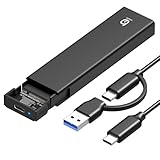


Top 3 picks at a glance
Quick Picks
| Product | Best For | Price |
|---|---|---|
| SABRENT USB-C NVMe Enclosure & Reader (EC-PNVO) | Best Overall Value | $19.99 |
| UGREEN USB-C M.2 NVMe SSD Enclosure, 10Gbps | Best Minimalist Desk Aesthetic | $16.99 |
| SABRENT Tool-Free NVMe & SATA M.2 SSD Enclosure (EC-SNVE) | Best Quick-Swap Utility | $26.76 |
| LINTYLE M.2 NVMe SSD Enclosure 10Gbps | Best Budget Workstation Pick | $9.99 |
| Xiaobi M.2 NVMe SSD Enclosure | Best Friction-Fit Toolless Design | $12.99 |
| OWC Express 1M2 40Gb/s Portable NVMe SSD | Best Ultra-Speed 40Gbps Workstation | $88.99 |
| UGREEN USB-C M.2 NVMe SSD Enclosure, 20Gbps | Best High-Bandwidth Mid-Tier | $26.98 |
| Cloudeck SSD Enclosure USB C 10Gbps | Best Ultra-Compact Footprint | $14.99 |
How We Picked
Evaluating external NVMe drive enclosures from a home office and studio design perspective requires looking beyond theoretical megabytes per second. We analyzed physical heat transfer mechanisms, shell materials, cable routing flexibility, and long-term structural durability. An ideal enclosure should sit stably on desk surfaces without sliding, radiate operational heat away from fine wood finishes via thermal silicone pads and finned aluminum shells, and maintain clean aesthetics alongside modern workspace accessories.
We compared connectivity standards across 10Gbps (USB 3.2 Gen 2), 20Gbps (USB 3.2 Gen 2×2), and 40Gbps (USB4 / Thunderbolt) speed tiers using 2TB to 4TB PCIe Gen3 and Gen4 drives. Performance was assessed based on continuous multi-gigabyte file transfers, 4K timeline scrubbing responsiveness in video editing software, thermal surface temperatures under heavy writes, and ease of physical assembly.
The 8 Best Picks
1. SABRENT USB-C NVMe Enclosure & Reader, M.2 PCIe SSD, 10Gbps (EC-PNVO)
Designed for stream editors who need a dependable, compact housing for daily footage archives. The SABRENT EC-PNVO uses an extruded aluminum outer shell that functions as a structural heatsink, pulling excess heat away from internal M.2 chips during long exports. Operating at USB 3.2 Gen 2 speeds up to 10Gbps (around 1,000 MB/s real-world transfers), it delivers ample bandwidth for multi-stream 1080p and 4K video editing without hogging desk real estate.
- Pro: Sturdy aluminum build provides effective passive thermal management.
- Pro: Ultra-slim profile (4.1 x 1.3 x 0.5 inches) fits easily into cable management trays.
- Con: Requires tiny screws for installation rather than a tool-free latch.
When to skip: Skip if you need to swap out archive drives multiple times a day without using a small screwdriver.
2. UGREEN USB-C M.2 NVMe SSD Enclosure, 10Gbps
Ideal for creative professionals focused on maintaining a sleek, dark-toned desk setup. The UGREEN 10Gbps enclosure combines an aluminum body with a removable protective silicone bumper that dampens surface vibrations on wooden desks. Its internal heat-dissipation pad ensures steady thermal transfer to the exterior frame, allowing continuous stream archiving at speeds reaching 1,000 MB/s.
- Pro: Clean space-gray finish blends neatly into modern desktop accessories.
- Pro: Included rubber bumper prevents scratches on premium furniture surfaces.
- Con: Short included 1.6-foot cable limits placement away from host ports.
When to skip: Skip if your computer tower sits under the desk and requires a longer connecting cable.
3. SABRENT Tool-Free NVMe & SATA M.2 SSD Enclosure, USB 3.2 Type-C (EC-SNVE)
Tailored for editors managing a mixed library of older SATA M.2 drives alongside modern NVMe drives. Featuring a top-latching tool-free canopy, the SABRENT EC-SNVE lets you insert or remove drives in seconds without tiny hardware rolling across your desk. It supports both M.2 PCIe NVMe and SATA protocols up to 10Gbps over a USB 3.2 Type-C connection.
- Pro: Effortless press-and-latch tool-free mechanism for rapid drive changes.
- Pro: Dual-protocol support handles both SATA and NVMe M.2 drives.
- Con: Composite plastic-and-aluminum frame feels slightly lighter in hand.
When to skip: Skip if you prefer a solid 100% metal chassis for maximum structural weight and cooling capacity.
4. LINTYLE M.2 NVMe SSD Enclosure, USB 3.2 Gen2 10Gbps External SSD Case
A smart option for budget-conscious creators needing basic external storage without cluttering their setup. The LINTYLE enclosure offers standard 10Gbps throughput housed in a lightweight 2.8-ounce aluminum frame. At $9.99, it provides an economical way to turn spare NVMe drives into cold storage backup units for completed broadcast archives.
- Pro: Unbeatable budget pricing for full 10Gbps functionality.
- Pro: Slim, narrow footprint tucks away easily behind desktop monitors.
- Con: Thinner aluminum casing warms up noticeably during heavy sustained exports.
When to skip: Skip if your editing workflow involves hours of continuous 4K video scrubbing that demands high-mass heat dissipation.
5. Xiaobi M.2 NVMe SSD Enclosure, Tool-Free Installation, External SSD Reader
Built for editors who prioritize fast hardware setup and versatile drive swapping. The Xiaobi tool-free enclosure utilizes a sliding cover design to secure M.2 drives without loose screws. Operating over USB 3.2 Gen2 at 10Gbps, its casing features side ventilation channels that encourage ambient air circulation across desk work surfaces.
- Pro: Convenient slide-lock housing speeds up drive swaps.
- Pro: Side ventilation grooves assist ambient thermal dissipation.
- Con: Plastic end caps feel less premium than full-metal alternatives.
When to skip: Skip if you plan to install one drive permanently and prefer a screw-locked casing.
6. OWC Express 1M2 40Gb/s Portable NVMe SSD
Engineered for high-end video suites demand ultra-fast timeline performance. Supporting USB4 and Thunderbolt 4 protocols up to 40Gbps, the OWC Express 1M2 delivers real-world read/write speeds exceeding 3,000 MB/s. Its massive, deep-finned aluminum block works as a heavy-duty heatsink, keeping high-performance PCIe Gen4 drives cool during demanding multi-cam stream editing.
- Pro: Blazing 40Gbps bandwidth enables seamless scrubbing of uncompressed raw footage.
- Pro: Thick ribbed aluminum body provides top-tier thermal dissipation and desktop stability.
- Con: Premium price point ($88.99) and larger physical size (5.2 x 2.8 x 0.9 inches).
When to skip: Skip if your editing computer only supports standard 10Gbps USB ports.
7. UGREEN USB-C M.2 NVMe SSD Enclosure,20Gbps
The ideal middle ground for PC editors whose motherboard features USB 3.2 Gen 2×2 capability. Delivering up to 20Gbps bandwidth (approx. 2,000 MB/s), this UGREEN enclosure halves file offloading times compared to standard 10Gbps models. Its dark gray aluminum enclosure features prominent heat cooling fins on the upper shell to manage heat during big file transfers.
- Pro: Impressive 20Gbps speeds shorten archive transfer times significantly.
- Pro: Finned top metal cover offers enhanced surface area for passive cooling.
- Con: Requires a dedicated USB 3.2 Gen 2×2 host port (Macs drop down to 10Gbps).
When to skip: Skip if you edit primarily on Apple Mac computers, which do not support the 20Gbps Gen 2×2 protocol natively.
8. Cloudeck SSD Enclosure USB C External 10Gbps M.2 NVMe to USB Adapter
Great for minimalists and mobile video editors who require a compact external storage solution. The Cloudeck enclosure measures under four inches in length and weighs just 2.6 ounces, taking up minimal space on small desks or in gear bags. It operates over USB 3.2 Gen 2 at 10Gbps for steady stream archive management.
- Pro: Ultra-compact aluminum casing minimizes desktop clutter.
- Pro: Includes internal thermal pad and heat-dissipating top aluminum strip.
- Con: Requires tiny mounting screws during initial assembly.
When to skip: Skip if you want rapid, tool-free drive changes on the fly.
Buying Guide
Thermal Management and Desk Surface Safety
M.2 NVMe drives produce considerable heat when writing multi-gigabyte video files. Without proper heat sinking, drives throttle performance, dropping transfer speeds down to legacy hard drive levels. Look for enclosures built with thick aluminum outer shells and included thermal silicone pads that press directly against the drive controller. If you place your enclosure on fine wood desks or delicate vinyl desk pads, consider models with rubber feet or silicone protective covers to prevent heat transfer marks and scratches.
Bandwidth Requirements: 10Gbps vs. 20Gbps vs. 40Gbps
Selecting the right interface speed depends on your footage bitrates and computer hardware capabilities:
- 10Gbps (USB 3.2 Gen 2): Delivers roughly 1,050 MB/s real-world read/write performance. This is ideal for offloading 1080p and compressed 4K H.264/H.265 stream archives and editing standard timeline tracks.
- 20Gbps (USB 3.2 Gen 2×2): Pushes real-world speeds to around 2,000 MB/s. This standard requires a supported PC motherboard port. It cuts transfer times in half for heavy video files.
- 40Gbps (USB4 / Thunderbolt 4): Reaches real-world transfer speeds over 3,000 MB/s. This tier is essential for uncompressed raw video archives, high-bitrate ProRes multi-cam editing, and instant scrub responsiveness.
Assembly Style and Studio Workflow
Choose between tool-free mechanisms and screw-fastened enclosures based on how you handle storage media. Tool-free enclosures use sliding latches or rubber retention pegs, making them ideal if you swap M.2 drives like tape cartridges. Screw-fastened enclosures, on the other hand, provide slightly superior physical pressure between the drive, thermal pad, and aluminum shell, making them better suited for permanent desk setups where an external drive stays plugged in for long periods.
Our Verdict
For most stream editors, the SABRENT USB-C NVMe Enclosure (EC-PNVO) ($19.99) offers the best combination of thermal stability, compact sizing, and steady 10Gbps performance. If you swap archive drives frequently throughout the day, the SABRENT Tool-Free Enclosure (EC-SNVE) ($26.76) adds dual NVMe/SATA protocol support and quick drive changing. For top-tier professional editing suites editing uncompressed 4K stream files, the high-speed OWC Express 1M2 40Gb/s ($88.99) delivers unmatched Thunderbolt 4 throughput and thermal performance.
FAQ
Why does my NVMe enclosure feel hot on my desk surface?
An aluminum NVMe enclosure is designed to act as a heatsink. When the outer metal casing feels warm or hot to the touch, it indicates that the internal thermal pad is successfully drawing heat away from the M.2 SSD controller and transferring it into the surrounding air. Using a small desk mat or rubber feet elevates the chassis and protects delicate furniture finishes.
Can I edit high-bitrate video archives directly off an external NVMe enclosure?
Yes. A standard 10Gbps enclosure providing ~1,000 MB/s transfer speeds easily handles multiple streams of compressed 1080p and 4K footage in software like Premiere Pro, DaVinci Resolve, or Final Cut Pro. For heavy multi-cam uncompressed workflows, upgraded 40Gbps USB4 enclosures prevent timeline lag.
What length cable should I use for a clean desk setup?
High-speed data cables (10Gbps to 40Gbps) perform best at shorter lengths, typically between 0.8 feet and 2 feet (0.25m to 0.6m). Long cables can degrade signal integrity or drop connection speeds. To keep your desk tidy, mount the enclosure in an under-desk tray or place it directly alongside your laptop or desktop dock.
Do these NVMe enclosures require external power bricks?
No. All eight portable enclosures featured on this list operate on bus power supplied directly through the host computer’s USB-C or USB4 port. This keeps your studio desk neat and eliminates extra power bricks under your workspace.


