
Building a home streaming space forces you to balance professional camera presence with practical interior design. When setting up a desk for video creation, the debate between led panel vs softbox lighting for live video streaming comes down to a fundamental choice: space efficiency and precision control versus soft, flattering illumination. A bright, unlit frame can make high-end webcams look grainy, but bulky studio gear can easily turn a dual-purpose guest bedroom or living room corner into an industrial obstacle course.
Selecting the right fixtures involves evaluating how much physical space you can dedicate to light modifiers, how long you broadcast per session, and how sensitive your eyes are to direct glare. LED panels offer ultra-slim profiles and color temperature adjustments at the touch of a dial, while softboxes use physical fabric hoods and diffusers to create effortless, wrap-around light that smooths skin tones. Understanding how these two lighting approaches perform within a residential footprint ensures your setup delivers crisp camera quality without compromising your home’s aesthetic or comfort.
As an Amazon Associate we earn from qualifying purchases at no extra cost to you.



Top 3 picks at a glance
Quick Verdict
For most home creators operating in multi-use rooms, small apartments, or tight desk setups, LED panels are the overall winner. Their ultra-thin profiles (often less than 1.5 inches deep), wide color temperature ranges (2800K–6500K), and flexible mounting options make them easy to blend into modern home decor. However, if your stream relies heavily on close-up facial shots, beauty presentation, or long multi-hour broadcasts where direct light glare causes eye fatigue, softbox lighting remains the gold standard for soft, shadowless light quality, provided you have the floor space to accommodate physical diffusion hoods.
Side by Side
| Feature / Attribute | LED Panel Lighting | Softbox Lighting |
|---|---|---|
| Comfort & Eye Fatigue | Direct light can cause glare; requires heavy digital/frosted diffusion for long sessions. | Extremely comfortable; deep fabric diffusion disperses glare across a broad surface area. |
| Durability & Build | High; solid-state aluminum or rigid plastic frames withstand accidental bumps. | Moderate; fabric hoods, rods, and external diffuser sheets can tear or wear over time. |
| Price Range | $40 – $180 for standard dual-panel desktop kits. | $35 – $120 for entry-level dual softbox continuous kits. |
| Maintenance | Low; dust frame with a micro-fiber cloth; integrated solid-state LEDs last up to 50,000 hours. | Moderate; fabric gathers dust and requires occasional assembly, breakdown, or bulb replacement. |
| Space Needed | Minimal; 1 to 2 inches depth; mounts easily on desk clamps or slim stands. | Substantial; requires 16×16 to 24×36 inches of clearance per head plus tripod footprint. |
| Interior Look | Sleek, technical, unobtrusive; pairs cleanly with modern home office furniture. | Bulky, utility-focused; gives rooms an active photo studio appearance. |
| Resale & Versatility | High; highly adaptable for photography, Zoom calls, reading, or general accent light. | Moderate; primarily limited to video production and studio portraiture. |
| Best For | Small rooms, desk-clamp setups, dynamic color temperature matching, quick tear-downs. | Dedicated studio rooms, zero-shadow facial lighting, long broadcast shifts, budget diffusion. |
Where Led Panel Wins
LED panels excel in spatial efficiency and digital control. Because an LED panel packs dozens or hundreds of surface-mounted diodes into a frame measuring just 1 to 2 inches thick, it requires virtually no rear clearance behind your desk or monitors. Designing a home studio in 2026 requires balancing video presentation with everyday interior aesthetics, and sleek LED panels fit seamlessly alongside minimalist monitors and floating shelving.
Variable color temperature control is another massive advantage. Many panel options—such as a 2-Pack LED Video Light Kit like the NiceVeedi Studio Light with its 2800-6500K dimmable range and 73-inch stream light stands—allow you to dial in cool daylight to fight mid-afternoon sun, then shift to a warm 3000K glow for late-night gaming broadcasts. You can switch color profiles in seconds using built-in rear dials or remote controls without swapping physical bulbs or adding gel filters.
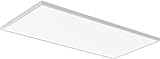
For permanent home upgrades where floor stands are entirely out of the question, architectural options even exist to illuminate entire working spaces cleanly. Built-in fixture solutions like the Lithonia Lighting 2×4 LED Flat Panel Light (offering up to 4000 Lumens across 3500K/4000K/5000K settings) demonstrate how flat-panel technology delivers expansive, uniform light from above without taking up a single square inch of floor or desk space.
Where Softbox Lighting for Live Video Streaming Wins
Softbox lighting remains unrivaled when it comes to the flattering physics of light modifier size. When evaluating led panel vs softbox lighting for live video streaming, softboxes score immediate points for high diffusion quality right out of the box. A softbox works by placing a light source—often a high-efficiency 50W LED or continuous bulb—inside a reflective fabric box covered by a translucent front panel sheet.
This construction creates a light source that is physically large relative to the subject’s face. The result is soft, wrap-around illumination that minimizes harsh nose shadows, softens dark under-eye circles, and disguises skin blemishes. Entry-level diffusion options, such as the Softbox Lighting Kit by NiceVeedi featuring a 16×16 inch hood on a 63-inch tripod stand paired with a 5400K daylight-balanced bulb, offer exceptional skin-smoothing quality at accessible price points under $40.
Softboxes are also vastly superior for eye comfort during continuous four- to eight-hour streams. Because the light emission is spread evenly across a large 16×16-inch or 20×28-inch fabric face rather than coming from pin-point diodes, subjects experience significantly less eye strain and squinched facial expressions while looking toward the camera setup. Kits utilizing modern pull-box designs, such as the EMART Softbox Photography Lighting Kit 2Pack with 50W LED heads, eliminate complex rod assembly while delivering that classic, cinematic studio shine.
Cost Over 5 Years
Over a five-year lifespan, both lighting styles present relatively modest ownership costs, but their long-term maintenance profiles differ depending on construction style and thermal efficiency.
LED panels rely on solid-state circuitry. Quality panels draw between 20 to 45 watts per unit, keeping energy usage negligible even with daily multi-hour broadcasts. With built-in heat sinks and solid-state construction, quality LED panels routinely achieve operational lifespans of 30,000 to 50,000 hours. A initial investment of $50 to $120 for a dual-panel desktop kit generally requires zero replacement parts over five years, yielding an average annual cost of roughly $10 to $24.
Softbox kits carry similar initial outlays, with budget starter setups ranging from $35 to $70 for complete 2-pack systems. However, softboxes feature replaceable components. If a continuous bulb burns out or a fabric diffuser tears during breakdown or transport, replacement components are inexpensive—standard high-CRI LED replacement bulbs cost around $10 to $15. Expect a 5-year total ownership cost between $45 and $90, accounting for potential bulb replacements or minor fabric wear over extended use.
Which One for Your Home
Small Apartment or Shared Space
If your streaming setup doubles as your bedroom or living room home office, physical clutter is your primary enemy. LED panels are unequivocally the best choice here. Mounted directly to the back of your desk using C-clamp mounts or slim desktop tripods, thin LED panels take up zero floor space and store flat in a desk drawer when guest visitors arrive. Their low-profile aesthetic keeps your space looking clean and clutter-free during non-streaming hours.
Family Home with Kids or Pets
In high-traffic areas where pets or children frequently pass by your workspace, lightweight softboxes on extended tripod legs represent a tip-over hazard. The wide three-leg footprint of standard softbox light stands can easily be snagged by a passing dog or energetic child, causing bulky hoods to crash into monitors or streaming gear. Rigid, low-center-of-gravity LED panels mounted securely to heavy baseplates or clamped directly to heavy furniture are significantly safer and more resilient in active households.
Rental Property
Renters who cannot install overhead track lighting or ceiling fixtures benefit from versatile standalone kits. Compact LED panels with wide height ranges—like stands expanding up to 73 inches—allow renters to bounce bright light off light-colored rental walls to create indirect, diffused ambient fills without drilling a single hole in drywall or installing permanent mounting brackets.
Long-Term Dedicated Home Studio
When you have a dedicated room purely devoted to content creation and live streaming, space efficiency gives way to production value. In a dedicated studio space, a pair of 16×16-inch or 20×28-inch softbox lights positioned 45 degrees off-camera provides unmatched, professional-grade key and fill lighting. Because the equipment can remain permanently set up on studio stands without disrupting daily living routines, the superior diffusion and face-smoothing qualities of softbox lighting easily outperform compact panels.
FAQ
Does softbox lighting create less eye strain during long streams?
Yes. Softbox lighting spreads luminescence across a large surface area of translucent fabric, reducing the harsh specular intensity that causes squinting. Standard LED panels expose your eyes to hundreds of concentrated light-emitting points, which can lead to faster optical fatigue during streams lasting longer than two hours unless heavy frosted diffusion is attached.
Can I put a softbox diffuser on a standard LED panel?
Many modern LED panels accept pop-up softbox attachments or clip-on soft grid modifiers designed specifically for thin panel dimensions. While these attachments improve light diffusion and reduce harsh shadows, the limited depth of a panel-mounted softbox won’t produce light quite as soft as a traditional, deep-hooded softbox enclosure.
Which lighting setup generates less ambient heat in a small room?
Both modern LED panels and LED-based softbox kits emit very little forward heat compared to old halogen studio lights. However, solid-state LED panels feature integrated aluminum rear heat sinks that passively disperse warmth away from the front of the fixture, keeping the space directly in front of the camera noticeably cooler during long streams.
What color temperature setting looks best for live video streaming?
A color temperature range between 4000K and 5400K delivers a clean, natural neutral daylight look that makes skin tones appear accurate without looking overly orange (below 3200K) or excessively cold and blue (above 6000K). Look for fixtures with high Color Rendering Index (CRI 95+) ratings for optimal video accuracy.


