
Creating a functional home studio is as much about space management as it is about acoustics. For solo podcasters setting up a desk in a spare bedroom, a home office, or a corner of their living room, desk space is at a premium. You do not need a massive, multi-channel mixing console taking up half your workspace. Instead, a compact, dedicated desktop interface allows you to run a professional XLR microphone directly into your computer, converting your analog voice into pristine digital files without cluttering your environment.
However, setting up a solo show on a budget means you must balance cost with technical capability. Many entry-level interfaces compromise on preamp quality, leaving you with a distracting background hiss, or they lack the necessary phantom power to drive studio-grade condenser microphones. In 2026, the market is flooded with compact options, making it crucial to find a unit that delivers low-latency monitoring and clean gain without draining your bank account. Below, we have compared and ranked the best budget xlr interface for solo podcasters to help you make an informed decision for your home setup.
As an Amazon Associate we earn from qualifying purchases at no extra cost to you.



Top 3 picks at a glance
Quick Picks
| Product | Best for | Price |
|---|---|---|
| Focusrite Scarlett Solo 3rd Gen USB-C Audio Interface | Best Overall Quality | $119.99 |
| M-AUDIO M-Track Solo USB Audio Interface | Best Ultra-Budget Entry | $49 |
| BOMGE USB Audio Interface SOLO (U202P) | Best High-Resolution Option | $52.9 |
| M-GAME Solo USB Audio Interface Mixer | Best for Live Streamers | $89 |
| M-AUDIO M-Track Duo USB Audio Interface | Best for Future Expansion | $69 |
| Focusrite Vocaster One | Best Dedicated Podcast Features | $85 |
| XTUGA USB Audio Interface Q-12 | Best Bare-Bones Budget | $29.99 |
| BOMGE USB Audio Interface (32bit/192 kHz) with Loopback | Best for Remote Interviews | $44.9 |
How We Picked
To find the best budget XLR interfaces, we focused on the practical needs of a solo podcaster working from home. First, we evaluated physical ergonomics and footprint. A good solo interface should sit comfortably on a standard 48-inch writing desk alongside a laptop, monitor, and boom arm, weighing between 0.7 and 1.5 pounds so it does not easily slide around when heavy XLR cables are plugged in. Second, we examined preamp performance, looking for clean gain ranges of 50dB to 56dB to ensure standard dynamic microphones can record clear vocal tracks without excessive background hiss. Finally, we prioritized ease of use, focusing on plug-and-play USB connectivity and intuitive physical controls that allow you to adjust your headphone volume and microphone gain on the fly.
The 8 Best Picks
Focusrite Scarlett Solo 3rd Gen USB-C Audio Interface
The Focusrite Scarlett Solo 3rd Gen ($119.99) is the gold standard for solo creators who want premium audio performance on a budget. This sleek red metal box measures just 3.77 by 5.65 inches, making it easy to slide under a monitor stand. The analog preamps are remarkably clean, offering a 56dB gain range that handles most broadcast microphones well. The proprietary “Air” mode emulates classic ISA preamps, adding a bright, open quality to your voice. It is perfect for home offices where desk aesthetics matter as much as audio clarity.
- Pros: Air mode adds brilliant high-end vocal clarity; rugged aluminum enclosure.
- Con: The most expensive option in the budget category.
Skip this model if you are on a strict sub-$50 budget or need built-in hardware voice effects.
M-AUDIO M-Track Solo USB Audio Interface
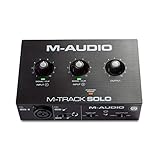
The M-AUDIO M-Track Solo ($49) is designed specifically for budget-conscious podcasters who need an ultra-compact, lightweight setup. Weighing just 0.75 pounds, this interface fits easily into a laptop bag or the corner of a crowded desk. It features M-Audio’s Crystal preamp, which provides a surprisingly transparent signal path for your XLR microphone. With a dedicated direct monitoring switch, you can listen to your voice in real-time without distracting computer latency.
- Pros: Highly affordable entry price; lightweight and portable design.
- Con: Plastic casing can slide around when heavy cables are attached.
Skip this model if you plan to use low-sensitivity dynamic microphones that require massive amounts of clean gain.
BOMGE USB Audio Interface SOLO (U202P)
The BOMGE USB Audio Interface SOLO (U202P) ($52.9) targets vocalists and solo podcasters who want to experiment with ultra-high-resolution audio. Uniquely offering 32-bit/192kHz analog-to-digital conversion at this price point, it captures subtle vocal nuances that cheaper 16-bit interfaces might miss. The compact interface includes 48V phantom power to drive studio-grade condenser microphones, and it is entirely plug-and-play, meaning you do not have to fuss with complicated driver installations on your computer.
- Pros: Outstanding 32-bit high-fidelity audio resolution; simple plug-and-play operation.
- Con: Knobs lack clear physical resistance, making precise adjustments slightly difficult.
Skip this model if you prefer a well-known brand with an established customer support network and bundled recording software.
M-GAME Solo USB Audio Interface Mixer
The M-GAME Solo ($89) is a hybrid interface and mixer tailored for solo podcasters who also stream live content or play games. This unit features an angled desktop design with customizable LED lighting, physical mute buttons, and assignable sampler pads. It boasts a solid software suite that lets you add real-time voice effects, shape your EQ, and route audio from a gaming console via the optical input.
- Pros: Fun, interactive physical layout with real-time voice FX; optical input for consoles.
- Con: Larger physical footprint takes up significant desk space.
Skip this model if you only record traditional, pre-recorded audio podcasts and want a clean, simple, distraction-free workflow.
M-AUDIO M-Track Duo USB Audio Interface
The M-AUDIO M-Track Duo ($69) offers a smart step up for solo podcasters who want to keep their options open for future co-hosts. This interface features two combo XLR/TRS inputs with Crystal preamps, allowing you to run two microphones simultaneously. Despite the dual-channel capability, it maintains a small footprint of roughly 7.5 by 4.4 inches, keeping your desk clutter-free while providing professional 48V phantom power.
- Pros: Dual XLR inputs offer room to grow; independent channel gain controls.
- Con: Shared headphone volume control makes individual monitoring levels tough to balance.
Skip this model if you are 100% certain you will never record with a physical guest in your studio space.
Focusrite Vocaster One
The Focusrite Vocaster One ($85) is built from the ground up specifically for podcasters rather than musicians. It strips away complicated musical inputs in favor of podcast-centric features like an Auto-Gain button that automatically sets your microphone levels, a dedicated mute button, and a loopback channel for recording phone calls or remote guests. Its slim, pebble-like design looks elegant on any desktop.
- Pros: Auto-gain feature prevents clipping; easy phone and tablet integration.
- Con: No instrument inputs for recording guitars or keyboards.
Skip this model if you want a multi-purpose interface that can handle both musical instruments and vocal podcasting.
XTUGA USB Audio Interface Q-12
The XTUGA USB Audio Interface Q-12 ($29.99) is the ultimate bare-bones, budget-friendly interface for creators who want to get started with an XLR mic without financial risk. It features a standard XLR input with 48V phantom power and a unique 3.5mm microphone jack for consumer-grade lapel mics. It is incredibly compact and runs entirely on USB bus power, making it a highly portable choice.
- Pros: Unbeatable price point for beginners; ultra-low latency monitoring.
- Con: Higher internal noise floor than premium competitors when gain is pushed.
Skip this model if you are recording professional voiceover work where background hiss must be completely nonexistent.
BOMGE USB Audio Interface (32bit/192 kHz) Loopback
This version of the BOMGE USB Audio Interface ($44.9) focuses heavily on digital routing, making it an excellent choice for solo podcasters who frequently conduct remote interviews via Zoom, Discord, or Skype. It offers high-fidelity 32-bit/192kHz recording alongside a robust hardware-level loopback function. This allows you to capture your computer’s internal audio alongside your microphone input without complex software workarounds.
- Pros: Built-in loopback routing is perfect for remote interviews; great price-to-performance ratio.
- Con: Lightweight plastic housing feels somewhat cheap and can slide easily.
Skip this model if you do not record remote guests and prefer a heavier, more rugged metal interface.
Buying Guide
Understanding Gain and Preamp Quality
When shopping for a budget XLR interface, the preamp is the most critical component. The preamp boosts the weak electrical signal from your microphone to a level your computer can record. Standard dynamic microphones, like the Shure SM58, require around 50dB to 55dB of clean gain. If your interface’s preamp has a high noise floor, boosting the gain will introduce an annoying background hiss into your recordings. Look for interfaces that offer transparent, low-noise preamps. If you plan to use a demanding dynamic mic, you may need to pair a cheaper interface with an inline preamp booster, or choose a model like the Scarlett Solo which offers cleaner gain at the top end of its range.
Form Factor and Desktop Ergonomics
Your audio interface will live on your desk, meaning its size, weight, and layout matter. Interfaces with top-mounted controls, like the Focusrite Vocaster One, are easier to adjust while sitting down compared to front-facing knobs. Additionally, consider the weight of the unit. Lightweight plastic interfaces under 0.8 pounds can easily be pulled off your desk or tilted backward by the weight of a heavy XLR cable. Metal chassis designs offer more stability and durability, ensuring your controls stay exactly where you want them during a recording session.
Loopback and Connectivity Features
For solo podcasters, “loopback” is a vital feature. Loopback allows you to route your computer’s internal audio—such as a Skype call, a YouTube video, or sound effects—back into your recording software alongside your microphone. Without hardware-level loopback, recording remote guests requires complex, often unstable virtual audio cables. If your show relies heavily on remote interviews, prioritizing an interface with built-in loopback, like the BOMGE Loopback or the Vocaster One, will save you hours of troubleshooting and technical frustration.
Our Verdict
For the absolute best balance of audio quality, build durability, and ease of use, the Focusrite Scarlett Solo 3rd Gen remains our top recommendation, even at the higher end of the budget spectrum. If you are strictly focused on podcasting workflows and want automated features to handle your levels, the Focusrite Vocaster One is an incredibly smart, streamlined choice. For those working with a tight budget under $50, the M-AUDIO M-Track Solo offers the best entry-point performance without sacrificing the essential controls needed for a clean solo broadcast.
FAQ
Do I need an XLR interface if I already have a USB microphone?
If you already have a high-quality USB microphone, you do not strictly need an XLR interface. However, transitioning to an XLR interface opens the door to professional-grade broadcast microphones, better preamp control, and zero-latency hardware monitoring, which significantly improves your overall production value as your show grows.
What is phantom power, and does my budget interface need it?
Phantom power (usually labeled as +48V) is electrical power sent through the XLR cable to power condenser microphones. While dynamic microphones do not require it, almost all professional condenser microphones do. Every interface on our list features +48V phantom power, ensuring compatibility with any microphone you choose.
Can I use these budget interfaces with a phone or tablet?
Yes, many modern budget interfaces are class-compliant, meaning they can connect to iPads, iPhones, or Android devices using a USB-C cable or an adapter. However, because mobile devices output less power, you may need to use a powered USB hub to ensure the interface receives enough electricity to run phantom power.
How do I stop my interface from sliding off my desk?
Lightweight budget interfaces often slide around due to the tension of thick XLR cables. You can easily solve this by applying adhesive rubber feet to the bottom of the device, using a small strip of mounting tape, or placing the interface on a non-slip silicone desk mat to keep it firmly in place.


