
When you are designing a home gaming setup, your desk is more than just a place to park a PC—it is a central piece of furniture in your bedroom, living room, or home office. Every cable, stand, and accessory impacts the visual flow, cleanliness, and functionality of your living space. If you have decided to share your gameplay with the world, choosing between a usb microphone vs xlr microphone for gaming stream setups is one of the most critical decisions you will make. It is not just a technical choice; it is a spatial and aesthetic one.
A USB microphone offers a streamlined, plug-and-play simplicity that keeps your desk clutter-free. On the other hand, an XLR microphone setup introduces a professional studio aesthetic, offering modular components that can grow with your hobby, but at the cost of more desk real estate and complex cable management. Balancing your acoustic goals with your home’s design and daily routine is key to choosing the right gear.
As an Amazon Associate we earn from qualifying purchases at no extra cost to you.


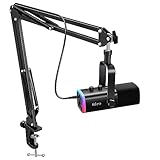

Top 3 picks at a glance
Quick Verdict
If your priority is a clean, minimalist desk with a quick five-minute setup and zero extra boxes to hide, a USB microphone is your best choice. It is budget-friendly, highly portable, and perfect for multi-use rooms. However, if you want studio-grade audio control, hate the idea of replacing an entire unit when one part breaks, and have the desk space to accommodate an external audio interface, an XLR setup is the superior long-term investment for your home gaming studio.
Side by Side
To help you visualize how these two microphone types fit into your home environment, here is a breakdown of how they compare across key categories:
| Feature | USB Microphone | XLR Microphone |
|---|---|---|
| Comfort & Ergonomics | Highly portable; easy to push aside or store in a drawer when not streaming. | Requires a heavy-duty boom arm; stays fixed in place as a permanent desk fixture. |
| Durability | Moderate; if the internal USB port or converter fails, the entire mic must be replaced. | High; industrial-grade build. Cables and interfaces can be replaced individually. |
| Price Range | $15 to $150 (Complete setup). | $150 to $600+ (Requires mic, interface, and specialized cables). |
| Maintenance | Virtually zero; software updates are handled automatically by your PC. | Occasional physical dust cleaning of dials; manual gain staging required. |
| Space Needed | Minimal; fits on a tiny desktop stand or a light, flexible arm. | Significant; requires space for an audio interface (approx. 6″ x 4″) and thicker cables. |
| Look & Aesthetics | Modern, sleek, and compact; often features customizable RGB lighting. | Classic, professional broadcast style; looks like a high-end recording studio. |
| Resale Value | Low; consumer electronics depreciate quickly. | High; audio enthusiasts value quality XLR gear for decades. |
| Best For | Casual streamers, shared home offices, and clean, minimalist workspaces. | Dedicated gaming rooms, audiophiles, and creators wanting maximum sound control. |
Where Usb Microphone Wins
The primary appeal of a USB microphone lies in its absolute simplicity. It is designed for the modern home where a desk might serve as a corporate workstation by day and a streaming battle station by night. Because the analog-to-digital converter is built directly into the microphone casing, you only need a single cable running from the mic to your computer’s USB port.
For budget-conscious creators or those testing the waters of streaming, USB microphones offer incredibly low barrier-to-entry pricing. For example, entry-level options like the JOUNIVO USB Microphone (priced around $17.99) feature a highly adjustable 360-degree gooseneck design and a simple mute button with an LED indicator, taking up virtually no visual space on a desk. Even a slightly more robust desktop condenser option like the Amazon Basics Condenser Microphone for PC (priced around $22.67) offers a compact 5.8″ x 3.4″ footprint with a 360-degree adjustable stand, making it easy to tuck behind a monitor when your stream ends.
USB mics also excel in portability. If you stream from a laptop at the dining table or need to pack your setup for travel, a USB microphone can be wrapped up and tossed into a backpack in seconds. There are no heavy metal boxes or thick XLR cables to carry, making it the ultimate space-saving audio solution.
Where Xlr Microphone for Gaming Stream Wins
While USB mics win on convenience, XLR microphones dominate when it comes to audio quality, physical control, and long-term durability. An XLR microphone uses a three-pin analog connector to send a balanced audio signal to an external audio interface or mixer. This separation of components is where the real magic happens for your home studio.
Because the preamps and analog-to-digital conversion happen outside your computer in a dedicated interface, you get a clean, rich sound with almost non-existent background hiss. You also gain physical knobs right at your fingertips to adjust your volume, mute your stream, or add real-time voice effects without having to click through complicated computer menus mid-game.
Furthermore, XLR setups are highly modular. If your microphone cable gets chewed by a pet or crushed by a desk chair, you only need to spend $10 to $15 on a new XLR cable, rather than replacing a $100 USB microphone. If you want to upgrade your sound later, you can keep your audio interface and simply swap out the microphone head.
For gamers who want the best of both worlds, hybrid options have emerged. The FIFINE AmpliGame AM8 USB/XLR Dynamic Microphone (priced around $56.99) and the FIFINE AmpliGame AM8T XLR/USB Gaming Microphone Set (priced around $67.99) offer both USB and XLR connection ports. This allows you to start with a simple USB connection today and transition to a professional XLR interface setup later without buying a brand-new microphone.
Cost Over 5 Years
When planning your home budget, looking at the total cost of ownership over five years reveals a surprising trend between these two options.
With a USB microphone, your upfront cost is very low. You might spend $20 to $80 initially. However, consumer USB ports and internal micro-boards are prone to wear and tear over time. If you stream regularly, you are likely to replace a budget USB microphone at least once or twice over a five-year period due to port looseness or software compatibility shifts, bringing your five-year total to roughly $100 to $200.
An XLR setup requires a steeper initial investment. You must purchase the microphone ($50 to $250), an audio interface ($80 to $200), a high-quality XLR cable ($15), and a sturdy boom arm ($30 to $100) to support the heavier mic weight. This puts your year-one cost between $175 and $565. However, because these components are built to professional broadcast standards, they rarely break. Over five years, you will likely spend $0 on replacements, keeping your five-year total at $175 to $565. While more expensive upfront, the cost per year stabilizes, and you are left with high-value gear that retains its resale worth.
Which One for Your Home
Your physical living arrangement plays a massive role in which microphone style will feel like a natural extension of your home rather than an annoying obstacle.
Small Apartment or Studio
In a small apartment or studio, your gaming desk is often visible from your bed or sofa. Visual clutter can quickly make a small room feel chaotic. A USB microphone is the ideal choice here. You can mount it on a lightweight, slim arm that folds flat against the wall, or use a compact desktop model that can be stored in a drawer when company arrives. The lack of an extra audio interface box means more precious surface area is left open on your desk for daily living.
Family with Kids and Pets
If your home is bustling with children or pets, durability and quick storage are paramount. A heavy XLR setup with thick cables can be a hazard if a dog snags a cord or a child pulls on a heavy boom arm. However, dynamic XLR microphones are excellent at blocking out background household noise, such as kitchen clatter or toys in the next room. If you go the XLR route, invest in solid cable management tracks under your desk. Otherwise, a simple USB mic that can be unplugged and placed safely on a high shelf is the safest bet.
Rental Home or Shared Space
In a rental, you want to avoid drilling holes or clamping heavy, damaging mounts onto delicate furniture. A lightweight USB microphone can sit on a simple foam pad on your desk without causing any wear and tear. Because shared rentals often require you to keep noise to a minimum, a USB microphone with a physical mute button is incredibly handy for instantly cutting your feed if a roommate walks into the room unexpectedly.
Long-Term Home or Dedicated Stream Room
If you have a dedicated home office or a spare room designated as your gaming sanctuary, you have the freedom to build without spatial limitations. As we look ahead to home design trends in 2026, clean lines integrated with professional-grade studio gear are becoming the gold standard. Here, an XLR microphone setup mounted on a premium, internally-cable-routed boom arm is the ultimate choice. It establishes a permanent, striking visual anchor for your stream, showing your audience that you take your production value seriously while turning your desk into a beautiful, functional tech centerpiece.
FAQ
Can I plug an XLR microphone directly into my PC’s USB port?
No, a standard XLR microphone cannot plug directly into a USB port because it outputs an analog signal. You must route the XLR cable into an external audio interface or mixer first, which then translates the analog signal into a digital one and sends it to your PC via a USB cable.
Are USB microphones bad at blocking out background noise?
Not necessarily, but it depends on the microphone type. Many USB microphones are condenser mics, which are highly sensitive and will pick up room echo, air conditioning, and mechanical keyboard clicks. XLR dynamic microphones are naturally less sensitive, making them superior at rejecting ambient home noises.
Can I use a hybrid USB/XLR microphone without an interface?
Yes. Hybrid microphones, like the FIFINE AmpliGame series, feature both connections. You can plug them directly into your computer using a standard USB-C cable to start streaming immediately, and upgrade to an XLR interface later when your budget and desk space allow.
Do XLR setups require special software to run on Windows or Mac?
Most modern audio interfaces used for XLR microphones are “class-compliant,” meaning they are plug-and-play and do not require complex software. However, some interfaces come with companion control panels that let you adjust internal routing, EQ settings, and noise gates directly from your computer.


