
Setting up a home office, a dedicated podcasting corner, or a streaming station is no longer just about buying a fast computer and a comfortable chair. Today, visual ergonomics and acoustic control play a massive role in how we design our living spaces. If you use a standalone microphone, the mount you choose determines not only how clear you sound, but also how cluttered your desk looks. The debate of a spring loaded boom arm vs tube style mic arm is one of the most common dilemmas buyers face when trying to balance professional-grade utility with residential interior design.
On one side, you have the classic, utilitarian spring-loaded arm. It is highly flexible, instantly recognizable, and budget-friendly. On the other side sits the modern tube-style arm, which hides its mechanical components inside sleek, architectural metal channels to keep your desktop looking clean. Choosing between them requires looking beyond just the price tag. You must consider desk surface protection, cable clutter, joint noise, and how the arm integrates into your daily life when you are not actively recording.
As an Amazon Associate we earn from qualifying purchases at no extra cost to you.
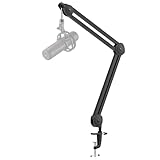


Top 3 picks at a glance
Quick Verdict
If you prioritize a clean, minimalist home office aesthetic and want to hide ugly cables completely out of sight, the tube style mic arm is the clear winner. It acts more like a premium home accessory than a piece of radio studio gear. However, if you have a tight budget, frequently swap out microphones of different weights, or need to constantly swing the arm out of the way with one hand, the classic spring-loaded boom arm offers unmatched mechanical simplicity and value for the money.
Side by Side
To help you visualize the differences, here is a breakdown of how these two mounting styles compare across key home-use categories:
| Feature | Spring-Loaded Boom Arm | Tube-Style Mic Arm |
|---|---|---|
| Usability & Adjustment | Highly flexible; easy to pull down or push away with one hand. | Stiffer; often requires tightening friction joints or knobs. |
| Durability | High, but external springs can stretch, rust, or lose tension over years. | Excellent; internal mechanics are protected from dust and moisture. |
| Price Range | $15 to $50 (very budget-friendly). | $50 to $150+ (premium tier). |
| Cable Management | Cables must be wrapped around the frame using velcro straps or clips. | Cables are completely hidden inside integrated tracks or channels. |
| Noise Level | Can squeak or creak when adjusted while the microphone is live. | Virtually silent; enclosed joints prevent metal-on-metal screeching. |
| Aesthetic Style | Industrial, mechanical, and busy; resembles warehouse lighting. | Sleek, minimalist, and architectural; looks like premium office furniture. |
| Safety (Kids & Pets) | Exposed springs pose a minor pinch hazard for curious fingers. | Safe, smooth exterior with no exposed pinch points. |
| Desk Footprint | Compact base clamps, but scissor arms take up vertical visual space. | Slightly wider base plates, but folds flatter against the wall. |
| Best For | Budget setups, multi-user desks, and quick, frequent adjustments. | Modern home offices, professional video calls, and permanent setups. |
Where Spring Loaded Boom Arm Wins
The spring-loaded boom arm is the workhorse of the audio world. Its design is based on the classic architect’s lamp, utilizing dual metal struts and external tension springs to counteract the weight of your microphone. Because the springs are on the outside, adjusting the height and angle of the arm is incredibly fluid. You do not need to loosen a series of plastic dials just to lower the mic by two inches; you simply grab the arm, pull it to your mouth, and let go. The springs immediately hold it in place.
This effortless movement makes it perfect for dynamic workspaces. If you share a desk with a partner or children, a spring-loaded model can be adjusted for different sitting heights in less than a second. Additionally, these arms are highly accommodating of different microphone weights. Many models feature adjustable tension screws at the base, allowing you to tighten the springs to support heavier gear or loosen them for lighter accessories.
From a cost perspective, spring-loaded arms are incredibly accessible. Entry-level options like the InnoGear Mic Stand Desk Max Load 4.4 lbs Boom Arm Desktop Microphone Stand ($24.99) provide surprisingly heavy-duty weight support without breaking the bank. For those wanting a sturdier build with a wider reach, mid-tier options like the Gator Frameworks Spring-loaded Desk-Mounted Microphone Boom Arm (GFWMICBCBM1000) ($45.65) offer robust construction that can handle daily wear and tear in busy households.
Where Tube Style Mic Arm Wins
While spring-loaded arms win on pure mechanical utility, tube-style arms dominate when it comes to interior design and visual clutter. A tube-style arm uses hollow aluminum or steel rectangular tubes to house both the internal tension mechanisms and the microphone cables. Instead of looking like an industrial crane sitting on your desk, a tube arm looks like an extension of a high-end monitor mount.
The primary advantage of the tube design is cable management. In a home office, visual clutter can make a room feel smaller and more chaotic. Tube arms solve this by featuring built-in tracks, magnetic covers, or internal channels that allow you to route your XLR or USB cables directly through the arm. This completely eliminates the messy “spiral wrap” of cables associated with spring-loaded stands.
Another major benefit is acoustic silence. If you need to adjust your microphone position during a live Zoom meeting, a podcast recording, or a gaming stream, external springs can emit a loud, metallic creak that travels straight through the desk clamp and into the microphone capsule. Tube-style arms, such as the Blue Compass Premium Tube-Style Microphone Broadcasting Boom Arm (Renewed) ($59.99), utilize enclosed internal springs and friction hinges that operate in near-total silence. Furthermore, premium designs like the IXTECH Boom Arm Mic Stand with Extension Tube Upgraded Microphone Arm ($64.99) offer extra height clearance, allowing the arm to hover cleanly over the top of your computer monitors rather than sweeping across your desk surface.
Cost Over 5 Years
When buying furniture and accessories for your home, calculating the long-term cost of ownership is essential. A cheap mic arm that breaks or ruins your desk veneer in two years is a poorer investment than a premium arm that lasts a decade.
With a budget spring-loaded arm, the initial investment is low (typically $20 to $45). However, over a five-year period, external springs are prone to stretching out, especially if they are constantly holding up heavy microphones near their maximum weight limit. The exposed metal joints are also susceptible to gathering dust and pet hair, which can degrade the lubrication and cause squeaks. In a typical home environment, a budget spring-loaded arm may need to be replaced once or twice over five years, bringing your total spent to around $50 to $90, alongside the annoyance of squeaky joints.
A high-quality tube-style arm requires a larger upfront investment (typically $60 to $120). However, because the tensioning bands, cables, and springs are entirely enclosed within protective metal tubes, they are shielded from dust, spills, and physical damage. The friction joints are designed for long-term stability and rarely require more than a quick turn of an Allen wrench to restore factory-level stiffness. Over five years, a tube-style arm is highly likely to survive without any loss in performance or aesthetic appeal, making its true cost over time identical to its purchase price, while offering a far superior daily user experience.
Which One for Your Home
The Small Apartment or Studio Workspace
If your desk sits in the corner of your bedroom or living room, keeping your workspace visually quiet is crucial. A tube-style arm is the best choice here. When you are done working for the day, a tube arm can be folded flat and pushed parallel to the wall, looking like a sleek, deliberate design element rather than a messy piece of recording equipment. Its hidden cable management ensures your living space doesn’t look like a chaotic production studio.
The Busy Family Home with Kids or Pets
If you have curious toddlers or cats that love to jump onto your desk, safety and durability are paramount. Exposed springs on traditional boom arms can pinch tiny fingers or catch pet fur if they are played with. A tube-style arm is much safer because its exterior is completely smooth, with no open scissor joints or high-tension springs exposed to the room. It is also harder for pets to snag or chew on the microphone cables when they are tucked safely inside the metal tubing.
The Rental Home or Temporary Desk Setup
If you are renting and using a lightweight, flat-pack desk (such as those made of hollow cardboard fill or thin particle board), weight and clamping pressure are major concerns. A lightweight spring-loaded arm is often the safer bet here. Because they use lighter materials and distribute their weight through simple mechanical leverage, they put less concentrated stress on thin desk edges. They are also easy to clamp and unclamp without leaving deep indentations in delicate wood veneers.
The Long-Term Dedicated Home Office
For those who own their home and have invested in a high-quality solid wood desk, a premium tube-style arm is the ideal match. It complements the clean lines of modern monitors, mechanical keyboards, and designer desk mats. As we look toward workspace designs in 2026, the trend is moving toward hiding technology and emphasizing natural materials; a tube-style arm fits this philosophy perfectly by keeping unsightly cables out of sight and maintaining a sophisticated, uncluttered environment.
FAQ
Do tube-style mic arms support heavy microphones like the Shure SM7B?
Yes, premium tube-style arms are specifically designed to support heavy broadcast microphones. While cheap plastic arms may sag, high-quality tube models use internal tension cables or heavy-duty friction joints that can comfortably hold microphones weighing up to 3 to 4 pounds without slipping.
Can I use my existing cables with a tube-style arm?
In most cases, yes. Most tube-style arms feature cable channels that can accommodate standard XLR cables or USB-C cords. However, if your cable has an exceptionally thick braided jacket or a large integrated ferrite bead, you should check the channel dimensions of the specific arm to ensure a smooth fit.
Are spring-loaded boom arms noisier than tube arms?
Yes. Because the springs on a boom arm are exposed to the open air, any movement causes the metal coils to expand or contract, which can produce a metallic ringing or creaking sound. This sound can vibrate down the arm, through the shock mount, and directly into your audio recording.
Can I mount these arms without clamping them to the edge of my desk?
Yes, many models in both styles offer alternative mounting options. In addition to the standard C-clamp, many manufacturers include a grommet mount insert, which allows you to bolt the arm directly through a pre-drilled cable hole in your desktop for an ultra-clean, permanent installation.


