
In the modern smart home, storage is no longer just a concern for IT professionals. Between high-definition 4K home security camera feeds, smart doorbell logs, family video archives, and work-from-home creative projects, we are producing petabytes of data right from our living rooms. When it comes to managing this mountain of digital memories and security footage, homeowners face a critical hardware decision: solid state drive (SSD) vs hard disk drive (HDD) for footage.
This is not merely a technical debate; it is a design, comfort, and lifestyle choice. Deciding between these two storage mediums affects how much physical space you need on your desk, whether your media console emits a constant, irritating hum during movie night, how many power cables you have to hide behind your furniture, and how well your data survives if a dog or toddler knocks a drive off a shelf. To choose the right setup, you must balance raw capacity and budget against physical size, noise, and speed.
As an Amazon Associate we earn from qualifying purchases at no extra cost to you.



Top 3 picks at a glance
Quick Verdict
For active video editing, silent home offices, and households where physical durability is a priority, the Solid State Drive (SSD) is the undisputed winner. However, if your primary goal is storing weeks of continuous home security footage or building a massive, budget-friendly archive of family movies that you rarely access, the Hard Disk Drive (HDD) remains the most cost-effective choice.
Side by Side
To understand how these storage types integrate into your living space, here is a direct comparison of their physical, economic, and practical attributes:
| Feature | Solid State Drive (SSD) | Hard Disk Drive (HDD) |
|---|---|---|
| Comfort (Noise & Heat) | Completely silent; runs cool to warm (no fans required). | Audible clicking and humming; can run warm and often requires active fan cooling. |
| Durability | Highly durable; no moving parts; shock and drop resistant. | Fragile; moving parts can fail if dropped or bumped while operating. |
| Price Range | $70 to $400+ depending on capacity (approx. $80–$150 per TB). | $40 to $250+ (approx. $15–$30 per TB). |
| Maintenance | Plug-and-play; zero physical maintenance; automatic trim commands. | Requires occasional defragmentation; sensitive to dust accumulation. |
| Space Needed | Minimal footprint; pocket-sized (approx. 2.9″ x 2.9″ x 0.4″ or smaller). | Bulky; requires desk space for 3.5″ enclosures (approx. 4″ x 6″ x 1.5″) plus power bricks. |
| Visual Look | Sleek, modern, and easily hidden or mounted under a desk. | Industrial, utilitarian; often comes with thick cables and external power supplies. |
| Resale Value | Holds value well due to high demand and long lifespans. | Depreciates quickly; used mechanical drives have low market appeal. |
| Best For | Real-time 4K/8K video editing, compact home offices, and portable use. | 24/7 continuous security camera recording and bulk cold storage. |
Where Solid State Drive Wins
The solid state drive represents the modern standard for home data management, primarily because it lacks moving parts. Instead of reading data off a spinning magnetic platter with a mechanical needle, an SSD reads and writes data electronically to flash memory. This fundamental design difference gives the SSD several massive advantages in a residential setting.
First and foremost is speed. For creative professionals editing video footage from home, transfer speeds dictate how smoothly a timeline plays back. A high-performance internal drive like the Samsung SSD 990 PRO 2TB ($389.99) can reach sequential read speeds of up to 7,450 MB/s. This allows you to scrub through multiple streams of high-definition footage without a single stutter. Even external options, such as the rugged Sandisk 2TB Extreme Portable SSD ($289.99), offer speeds up to 1050MB/s, allowing you to move hours of footage onto your computer in seconds rather than minutes.
From an interior design and home comfort perspective, SSDs are entirely silent. Traditional hard drives produce a distinct, rhythmic clicking sound when reading or writing data. In a quiet study or a minimalist living room, this acoustic clutter can be highly distracting. SSDs emit zero noise, helping you maintain a peaceful home environment. Furthermore, because they do not require external power bricks or heavy enclosures, they keep your workspace free of cable clutter. A portable SSD can easily be tucked behind a monitor or taped underneath a floating desk for a completely invisible setup.
Where Hard Disk Drive for Footage Wins
While SSDs win the speed and aesthetic battles, the classic hard disk drive remains the undisputed king of capacity and cost. If you are setting up a local continuous recording system for your home security cameras, writing hundreds of gigabytes of footage every single day will quickly fill up a drive. Buying multiple terabytes of SSD storage for this purpose is financially impractical for most households.
Mechanical hard drives offer massive storage pools at a fraction of the cost per gigabyte. A standard 8TB or 12TB internal hard drive can be purchased for a modest sum, whereas an equivalent SSD setup would cost many hundreds of dollars. For homeowners who want to build a centralized Network Attached Storage (NAS) system in a basement or utility closet, HDDs are the logical choice. They are highly reliable when left stationary and run continuously, making them ideal for sequential, long-term write cycles.
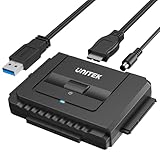
To keep your home office organized while using these bulk mechanical drives, you do not necessarily need clunky external enclosures for every single disk. Utilizing a desktop dock, such as the SABRENT USB 3.0 to SATA Hard Drive Docking Station ($29.95), allows you to swap bare 2.5-inch or 3.5-inch hard drives in and out with ease. If you have legacy drives from old computers filled with old family footage, a versatile tool like the Unitek USB 3.0 IDE/SATA Adapter ($35.99) lets you plug those older drives directly into your modern computer via USB, bypassing the need for permanent, bulky desk installations.
Cost Over 5 Years
When planning your home storage budget, looking only at the retail price can be misleading. You must consider the total cost of ownership over a typical five-year cycle, factoring in capacity needs, drive replacements, and even electrical power consumption.
Consider a household that requires 10TB of total storage for home video archives and security footage:
- The HDD Path: A single 10TB external hard drive costs roughly $200 to $250 upfront. Over five years, a mechanical drive running 24/7 draws about 7 to 10 watts of power. Depending on your local utility rates, this adds roughly $10 to $15 per year to your electric bill ($50 to $75 over five years). Mechanical drives also have a higher failure rate after three to four years of continuous spin, meaning you may need to budget for a replacement or a redundant backup drive. Total estimated 5-year cost: $250 to $325.
- The SSD Path: Acquiring 10TB of SSD storage (for example, combining multiple high-capacity drives) will require a significant initial investment, likely between $800 and $1,200. However, SSDs draw significantly less power (typically 2 to 5 watts under load and virtually nothing when idle), costing less than $3 per year to run. They also have no moving parts to wear out, meaning they easily last five years without physical degradation. Total estimated 5-year cost: $815 to $1,215.
As we look forward to 2026, the price gap between flash memory and magnetic platters is projected to narrow further, but for high-capacity local storage, the mechanical hard drive will continue to offer a much lower entry barrier for budget-conscious homeowners.
Which One for Your Home
Small Apartment
In a compact apartment, space is at a premium and every sound echoes. A bulky, humming external hard drive sitting on a living room media console can quickly become an eyesore and an acoustic nuisance. For apartment dwellers, a compact, silent external SSD is the ideal choice. It can be easily tucked away in a drawer when not in use, runs silently off bus power without requiring an extra wall outlet, and won’t clutter your limited surface areas.
Family with Kids and Pets
Homes with busy children and curious pets are prone to accidental bumps, spills, and drops. If a mechanical hard drive is knocked off a desk or console table while its magnetic platters are spinning at 7,200 RPM, the read/write head can scratch the platter, resulting in catastrophic and permanent data loss. For family homes, the physical durability of an SSD is paramount. Ruggedized portable SSDs can survive drops onto hardwood floors and liquid spills without losing a single frame of your precious family footage.
Rental
If you rent your home, you likely want a storage setup that is highly portable and requires no permanent wall mounting or complex structural wiring. A portable SSD allows you to pack up your entire media library in a pocket when it is time to move. It is completely plug-and-play, meaning you do not have to configure complex network-attached storage units hidden in closets to avoid looking at unsightly cables.
Long-Term Home
For established homeowners with a dedicated home office, a basement, or a structured media closet, a hybrid approach is best. You can install a high-speed internal SSD directly into your desktop computer for active video editing and daily work, while routing your heavy security camera feeds to a high-capacity, multi-drive HDD system tucked safely away in a closet where its fan noise and vibrations won’t disturb your daily life.
FAQ
Can I use a solid state drive for 24/7 home security camera recording?
While you can use an SSD, it is generally not recommended for continuous, 24/7 security writes. SSDs have a limited write endurance (measured in Terabytes Written, or TBW). Constant overwriting of security footage can wear out the flash memory cells prematurely. High-capacity mechanical HDDs designed specifically for surveillance are much better suited for continuous overwrite cycles.
Why does my external hard drive make a clicking sound in my quiet living room?
Mechanical hard drives contain a physical actuator arm with a read/write head that moves rapidly across spinning magnetic platters. This mechanical movement creates a physical clicking or tapping sound, and the motor spinning the platters creates a low-frequency hum. If you want absolute silence, you must switch to an SSD, which has no moving parts.
Is a docking station safe for long-term home backup?
A docking station is an excellent, flexible tool for transferring data and managing bare drives, but it is not ideal as a permanent, long-term backup enclosure. Because the drives are exposed to the open air, they are vulnerable to dust accumulation, physical bumps, and household spills. For permanent backups, keep your drives in a fully enclosed, protected casing.
How do I access footage stored on old internal hard drives?
If you have old 2.5-inch or 3.5-inch internal hard drives from retired family computers, you do not need to reinstall them inside a computer tower. You can use an external USB adapter or a docking station to plug the raw drive directly into your current laptop or desktop computer via a standard USB port, allowing you to easily retrieve and digitize your legacy footage.


