
Your voice sounds boxy or echoey on stream, and you have two popular fixes in front of you: a portable reflection filter that wraps around the mic, or acoustic panels mounted on the walls. They solve overlapping problems in very different ways, and the right pick depends on your room and your budget.
As an Amazon Associate we earn from qualifying purchases at no extra cost to you.

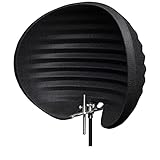


Top 3 picks at a glance
What each one does
A reflection filter is a curved shield that mounts behind the microphone to absorb sound before it bounces off the wall right behind you. Acoustic panels are mounted on the room’s surfaces to reduce reflections across the whole space. One treats the mic; the other treats the room.
Quick comparison
| Factor | Reflection filter | Acoustic panels |
|---|---|---|
| Coverage | Just behind the mic | Whole room |
| Typical cost | $50–120 | $60–200+ for a set |
| Install | Clamps to stand | Wall mounting |
| Best for | Renters, tight spaces | Dedicated rooms |
| Effect on echo | Partial | Broad |
Strengths and limits
A reflection filter is portable, needs no drilling, and helps in a room you cannot modify, making it ideal for renters and small setups. But it only shields one small zone, so a very reverberant room still colors your sound because reflections come from the sides and ceiling too. Panels tackle the whole room, so they reduce echo more completely, but they cost more collectively, need mounting, and are not going anywhere when you move.
Which fixes what
If your problem is a hard wall directly behind the mic, a reflection filter helps noticeably. If your voice rings around a hard, empty room, panels on the first-reflection points (side walls, behind you) plus a bit of soft furnishing do far more. For a boomy low end, neither foam panel nor a small filter helps much; that needs thicker bass absorption in the corners.
The budget-smart order
Start with free changes: move closer to a dynamic mic, add a rug, curtains, and a bookshelf, and point the mic away from the hardest surface. Then, in a room you cannot treat, add a reflection filter. If you own the space and want real control, invest in a few thick panels at the reflection points; they beat a filter for overall clarity and also improve how anything else in the room sounds.
Reading your room before you spend
The right choice depends on how bad your room actually is, which you can test for free. Stand where you record and clap once, sharply. If you hear a quick, ringing tail after the clap, your room is reflective and a single small filter will only get you part of the way; broadband panels at the reflection points will do far more. If the clap dies almost instantly, you already have enough soft furnishings, and a reflection filter or even just good mic placement may be all you need.
Spend in the order of impact. Free changes come first: move closer to a dynamic mic, add a rug and curtains, and put a bookshelf on the hardest wall. Next comes a reflection filter if you rent or cannot mount anything. Panels are the investment for a room you own and want to control fully, and they pay off beyond the mic by improving how monitors and the whole space sound. Buying panels for a room that just needs a rug, or a filter for a room that needs bass absorption, is how people waste money chasing echo.
FAQ
Can I use both together?
Yes, and it is a common combo: panels calm the room while a filter shields the mic’s immediate zone. In a small, hard room using both gives the cleanest result.
Do reflection filters muffle my voice?
A good one absorbs reflections without dulling your direct tone. If your voice sounds muffled, the filter is too close or too enclosing; give it a little space behind the mic.
Bottom line
A reflection filter is the portable, renter-friendly fix that shields the mic’s worst reflection, while acoustic panels treat the whole room for a bigger, more complete reduction in echo. Handle the free basics first, then choose the filter for flexibility or panels for permanence, and combine them in truly hard rooms.


