
A streaming desk quietly runs out of USB ports fast: mic or interface, webcam, Stream Deck, capture card, keyboard, mouse, lights, headset dongle. Cram all of that into a cheap unpowered hub and you get dropouts — the webcam disconnects mid-stream, the mic cuts out, the capture card loses signal. The fix is the right hub with the right power and bandwidth. Here is how to choose one that keeps every device rock solid.
Top 3 picks at a glance
Powered vs unpowered: the key decision
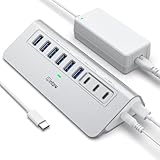
An unpowered hub splits the limited power of one PC port across everything plugged in. High-draw devices — webcams, capture cards, some interfaces, external drives — starve and drop out. A powered hub has its own wall adapter, so each port gets full power. For streaming, a powered hub is almost always the right call.
As an Amazon Associate we earn from qualifying purchases at no extra cost to you.




| Device | Typical draw | Hub needs |
|---|---|---|
| Webcam (1080p60/4K) | High | Powered port |
| Capture card | High | Powered, USB 3.0 |
| Audio interface | Medium–high | Often its own port |
| Stream Deck | Low | Any port |
| Keyboard/mouse | Low | Any port |
Match USB version to bandwidth
USB 2.0 hubs are fine for keyboards, mice, and Stream Decks, but webcams and capture cards need USB 3.0 (5Gbps) or better to move uncompressed or lightly compressed video without stuttering. A 4K capture card can saturate USB 2.0 entirely. Read the hub spec: you want USB 3.0/3.1 ports for anything video, and enough total bandwidth that they are not all sharing one choked lane.
Bandwidth is shared
All ports on a hub share the single uplink to your PC. Two high-bandwidth video devices on the same hub can compete and cause dropped frames. Spread heavy devices across different physical PC ports or across separate hubs rather than stacking a capture card and a 4K webcam on one hub.
Features worth paying for
Per-port power switches let you cut a misbehaving device without unplugging. Individual over-current protection keeps one faulty device from taking down the rest. A quality controller chip reduces the “device disconnected” errors that plague cheap hubs. And enough physical spacing between ports so chunky USB dongles and dual-mic interface plugs actually fit side by side.
Cable and placement
Keep the hub’s uplink cable short and use USB 3.0-rated cabling; long or thin cables cause voltage drop and errors. Position the hub where you can reach the switches but where its power brick is not adding hum near your audio gear.
Mapping your ports before you buy
Before buying any hub, list every USB device on your desk and note which are high-bandwidth (webcam, capture card, external drives) and which are low-draw (keyboard, mouse, Stream Deck, dongles). Count how many of each you have and add room for two more — streaming kits only grow. Plan to spread the high-bandwidth devices across your PC’s rear ports and separate hubs so none compete, and cluster the low-draw accessories on a single powered hub. This five-minute exercise prevents the classic mistake of buying one hub, plugging everything into it, and then chasing random dropouts for weeks. Buy the hub that fits the map, not the cheapest one on the shelf.
FAQ
Why does my webcam keep disconnecting from my USB hub?
Almost always a power or bandwidth problem. An unpowered hub cannot supply enough current for a webcam, and a USB 2.0 hub may not have the bandwidth for its video. Move the webcam to a powered USB 3.0 hub or straight into a rear PC port.
Can I run my capture card and webcam on the same hub?
You can, but two high-bandwidth video devices share the hub’s single uplink and may drop frames. It is safer to put them on separate PC ports or separate hubs so each has dedicated bandwidth back to the computer.
Bottom line
Choose a powered USB 3.0 hub for a streaming desk, keep high-bandwidth video devices on separate uplinks, and use USB 2.0 ports for low-draw accessories. Per-port switches and a good controller chip are worth the extra few dollars. Get the power and bandwidth right and the mid-stream disconnects that plague cheap hubs simply stop happening.


