
Whether you travel to events, run a dual-PC rig in a tight space, or want a second screen for chat that folds away, a portable monitor is one of the most underrated pieces of streaming gear. The right one adds a real display over a single cable and disappears into a bag when you are done. The wrong one is dim, laggy, and needs three cables to work. Here is what actually matters for streamers.
Top 3 picks at a glance
USB-C single-cable is the goal
The best portable monitors accept video and power over one USB-C cable, so a modern laptop or handheld drives them with no wall plug. If your source device does not support video-over-USB-C (DisplayPort Alt Mode), you fall back to HDMI plus a separate USB-C power cable. Check your source before buying, because single-cable convenience is the whole appeal.
As an Amazon Associate we earn from qualifying purchases at no extra cost to you.

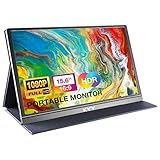


| Spec | For chat/second screen | For gameplay |
|---|---|---|
| Resolution | 1080p | 1080p–1440p |
| Refresh rate | 60Hz | 120Hz+ |
| Brightness | 250–300 nits | 300–400 nits |
| Ports | USB-C | USB-C + HDMI |
| Size | 14–16 in | 15–17 in |
Refresh rate depends on the job
If the portable monitor just shows chat, alerts, or OBS on a second machine, 60Hz is plenty and saves money and battery. If you actually game on it — on a handheld or as a travel display — look for 120Hz or higher so fast motion stays smooth. Do not overpay for a high-refresh panel you will only use to read chat.
Brightness and panel type
Portable monitors are often used in bright rooms or near windows at events, and many are dimmer than desktop displays. Aim for at least 250–300 nits so the screen is usable in ambient light; 400 nits is noticeably better outdoors. IPS panels give the wide viewing angles you want when the monitor sits at an odd angle beside your main setup.
Stand and durability
The built-in kickstand or magnetic cover-stand determines how usable the monitor really is on a cramped desk. Look for one that holds a comfortable angle without flopping, and a slim protective cover if it is going in a bag regularly. Weight in the 1.5–2.5 lb range is easy to carry.
Common uses for streamers
Portable monitors shine as a dedicated chat/alerts screen that packs away, a second display for a streaming laptop at events, a preview monitor for a capture-card source, or the game screen for handheld and console setups on the road. Because they are cheap relative to desktop monitors, many streamers keep one permanently in the travel kit.
Powering one on the road
Away from a desk, powering a portable monitor is the detail people forget. A single USB-C cable carrying video and power is ideal, but if your laptop’s port cannot supply enough current while also driving the display, the screen dims or flickers. Carry a compact USB-C power bank or a small wall charger so the monitor has its own power source when needed, and check that any HDMI-plus-USB-C monitor came with both cables. For event and travel use, a monitor that also runs off a standard power bank means you are never stranded by a laptop that will not push both signals at once. Test the whole chain at home before you rely on it live.
FAQ
Can a portable monitor run on just one cable?
Yes, if both the monitor and your source support USB-C DisplayPort Alt Mode, a single USB-C cable carries video and power. If your source lacks that, you will need HDMI for video plus a USB-C cable for power. Confirm your device supports video-over-USB-C first.
Are portable monitors good enough for gaming?
For casual and travel gaming, yes — but check the refresh rate and input lag. A 60Hz portable monitor is fine for slower games and chat, while fast-paced play benefits from a 120Hz+ panel. Brightness of 300 nits or more also helps in bright rooms.
Bottom line
For a second chat screen, a 1080p 60Hz USB-C portable monitor at 250–300 nits is ideal and cheap. For travel gaming, step up to 120Hz and a brighter panel. Prioritize single-cable USB-C operation and a solid stand, and you get a real display that folds into your bag — perfect for mobile and space-tight streaming.


