
A tripod seems like the boring part of a camera setup until a wobbly one ruins every shot or a too-short one leaves your camera pointing up your nose. For streaming, the tripod’s job is to hold your camera or webcam dead steady at eye level, from a footprint that does not eat your desk or trip you up. Here is how to choose the right support for a desk facecam, a full-body shot, or an overhead angle.
Top 3 picks at a glance
Match the tripod to the shot
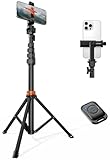
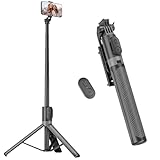
There is no single best tripod — there is the right type for each shot. A desk facecam wants a small tabletop tripod or a clamp arm. A standing full-body or two-person shot wants a full-height floor tripod. An overhead cooking or craft shot wants a tripod with a horizontal arm or a dedicated overhead rig.
As an Amazon Associate we earn from qualifying purchases at no extra cost to you.




| Shot type | Tripod style | Height/reach | Price range |
|---|---|---|---|
| Desk facecam | Tabletop / clamp arm | 6–20 in | $15–50 |
| Full-body standing | Floor tripod | Up to 60–75 in | $40–150 |
| Overhead top-down | Horizontal arm / C-stand | Reach over desk | $60–200 |
| Heavy mirrorless | Fluid-head tripod | Rated to payload | $80–250 |
Payload rating matters
Every tripod has a weight it can hold steadily. A webcam weighs almost nothing, but a mirrorless camera with a lens can be 1–2kg (2–4.5 lb), and a tripod rated below that will sag, drift, or tip. Always check the payload rating and give yourself margin — a tripod rated for double your camera’s weight will be far steadier than one at its limit.
Head type changes how you frame
A ball head is quick to point anywhere and lock — great for a set-and-forget facecam. A fluid head gives smooth pans and tilts — better if you ever move the camera on air. A simple pan-tilt head is a cheap middle ground. For a static stream shot, a solid ball head is usually all you need.
Stability features to look for
Aluminum legs are cheaper and heavier; carbon fiber is lighter and pricier — irrelevant for a desk, useful if you travel. Flip locks are faster than twist locks. A weight hook on the center column lets you hang a bag for extra stability. And rubber feet keep it from sliding on hard floors. For overhead work, a counterweighted arm prevents the whole thing from tipping toward the camera.
Desk clamps as an alternative
For facecams, a clamp arm that grips the desk edge often beats a tripod: it frees floor and desk space, positions the camera precisely over your monitor, and does not get bumped. Consider one if desk real estate is tight.
Quick-release plates save your sanity
If you move a camera between a tripod, a gimbal, or a clamp — or just pull it off to charge or change a card — a quick-release plate is a small feature with a big daily payoff. Leave a plate attached to each camera and matching receivers on your supports, and swapping the camera takes a second instead of unscrewing a bolt every time. Look for the widely used Arca-Swiss style so accessories interchange, and make sure the plate locks positively with no wobble. For a permanent facecam this matters less, but the moment you run more than one mount or shoot in more than one spot, quick-release turns a fiddly chore into a non-event.
FAQ
Do I need a tripod for a webcam, or is the built-in clip enough?
The built-in monitor clip is fine for many setups, but a small tripod or clamp arm gives you far more control over height and angle — important for hitting eye level and the rule of thirds. It also helps if your monitor is too low or too high for a flattering angle.
What tripod height do I need for a full-body stream?
For a standing or full-body shot, you want a tripod that extends to around 60–75 inches so the camera can sit at roughly your eye level a few feet back. Shorter tripods force an unflattering upward angle. Check the maximum height before buying.
Bottom line
Pick the tripod for the shot: a tabletop tripod or clamp arm for a desk facecam, a tall floor tripod for full-body, and a counterweighted arm for overhead. Respect the payload rating — heavier cameras need sturdier support — and choose a ball head for set-and-forget or a fluid head for movement. The right support disappears; the wrong one shows up in every frame.


