
A second screen is one of the highest-value streaming upgrades: somewhere to watch chat, keep OBS visible, and monitor alerts without alt-tabbing out of your game. A full second monitor is ideal, but a portable USB-C monitor is cheaper, takes almost no desk space, and can be repositioned or packed away, which makes it perfect for tight desks, laptops, and console setups.
As an Amazon Associate we earn from qualifying purchases at no extra cost to you.
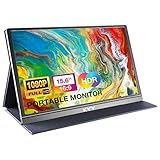


Top 3 picks at a glance
Why a portable monitor suits streamers
Portable monitors are typically 13 to 16 inches, weigh around 0.6 to 1 kg, and run off a single USB-C cable that carries video and power together. For a streamer, that means you can prop one beside your keyboard for chat, or mount it on an arm above your main display. Because it draws power over USB-C, there is one less wall adapter competing for your surge protector.
Panel size and resolution
For a chat-and-OBS screen, a 15.6-inch 1080p panel is the sweet spot, text is readable and you do not need 4K for reading messages. Going 4K on a small second screen mostly wastes power and money. If you will read fast-scrolling chat, prioritize a matte finish to cut glare from your key light.
Connection and power options
| Connection | Carries video? | Carries power? | Notes |
|---|---|---|---|
| USB-C (full-function) | Yes | Yes | Single-cable, cleanest |
| USB-C (data only) | No | Yes | Will not display, check spec |
| Mini-HDMI + USB power | Yes | Separate | Two cables, works with any GPU |
The catch with single-cable USB-C is that your source device must output video over USB-C (DisplayPort Alt Mode). Many desktop GPUs do not, in which case you use the mini-HDMI input plus a USB cable for power. Confirm your PC or laptop’s port before assuming one cable will do it.
Touchscreen: nice, not necessary
Some portables add touch, which can be handy for tapping OBS scenes, but it adds cost and power draw. For a pure chat monitor, skip it. If you want tap controls, a Stream Deck is a more reliable tool than a touch panel.
Mounting and placement
Many portable monitors have a fold-out cover stand that eats desk depth. Look for a VESA mount pattern (often 75mm) so you can put it on a small arm and float it above or beside your main display, freeing desk space and getting chat closer to your eyeline. Keep it out of the webcam frame unless you want viewers seeing your chat window.
Brightness for a lit room
Streaming rooms are bright thanks to key lights. A portable rated around 250 to 300 nits with a matte coating stays readable; a dim 200-nit glossy panel washes out under a key light. Check the nit rating, not just the resolution.
FAQ
Can a portable monitor be my main display for console streaming?
It can in a pinch, and it is genuinely useful as a travel or dorm setup. But for a fixed home streaming station, a standard monitor gives more size and brightness for the money. Use the portable as the flexible second screen it is best at.
Will one USB-C cable really run everything?
Only if your source outputs DisplayPort over USB-C and supplies enough power. Laptops and handhelds usually do; many desktop GPUs do not. When in doubt, plan for the HDMI-plus-power two-cable method, which works universally.
Bottom line
A 15.6-inch, 1080p, matte, ~300-nit portable monitor with a VESA mount is the ideal second screen for chat and OBS. Confirm your device outputs video over USB-C for the clean single-cable setup, otherwise use mini-HDMI plus USB power. It is a small, movable, low-power upgrade that ends alt-tabbing for good.


