
Both a sound card and an audio interface turn your voice into digital audio, but they solve very different problems for a streamer. If you have ever wondered whether the $120 internal card advertised for “immersive gaming audio” is the same thing broadcasters plug their XLR mic into, this guide draws a clean line between the two and tells you which one actually improves what your audience hears.
As an Amazon Associate we earn from qualifying purchases at no extra cost to you.

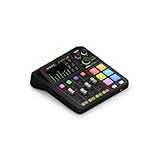

Top 3 picks at a glance
What each device really does
A consumer sound card, whether it is the codec baked into your motherboard or a dedicated PCIe/USB card, is optimized for playback: driving headphones, adding virtual surround, and shaping game audio with EQ presets. Its microphone input is an afterthought, usually a 3.5mm jack with a weak preamp and no phantom power.
An audio interface is built the other way around. It exists to capture input cleanly. It provides balanced XLR/TRS jacks, 48V phantom power for condensers, dedicated gain knobs, and a low-noise preamp designed to sit a broadcast microphone right where it should be.
Where the quality gap shows up
The difference is most obvious with a real microphone. Run a dynamic mic like a broadcast cardioid into a motherboard jack and you fight hiss the moment you push volume. Run the same mic into a modest interface and you get clean gain with headroom to spare.
Spec comparison at a glance
| Feature | Consumer sound card | Audio interface |
|---|---|---|
| Typical price | $25-$150 | $90-$250 (2-in/2-out) |
| Mic input | 3.5mm, unbalanced | XLR/TRS, balanced |
| Phantom power (48V) | No | Yes |
| Preamp gain | ~30-40 dB, noisy | ~55-65 dB, low noise |
| Bit depth / sample rate | 16-24 bit / 48-96 kHz | 24 bit / 48-192 kHz |
| Primary strength | Playback, virtual surround | Clean capture, monitoring |
Which one should you buy?
Pick based on the microphone you own or plan to own. If you are staying on a USB microphone, you do not need either device, since the mic already contains its own converter. If you want to move to an XLR microphone, an interface is mandatory, not optional. A sound card cannot supply phantom power or the 55 dB+ of clean gain a dynamic broadcast mic wants.
A sound card still makes sense if your goal is better headphone output, a cleaner headphone amp, or per-app audio routing on the listening side. Many streamers eventually own both: an interface for the mic, and either an internal card or a small DAC for monitoring. Budget roughly $100-$150 for a solid entry interface and you cover the input side for years.
Common mistakes people make
The most frequent error is buying a $150 “gaming” sound card expecting broadcast-grade voice, then plugging a cheap 3.5mm mic into it and wondering why hiss remains. The card polishes a weak signal instead of capturing a strong one. A second mistake is over-buying an interface: a solo streamer does not need an eight-input mixer-interface; a simple 2-in/2-out unit around $100-$130 covers a mic and headphones with room to grow.
Latency confusion trips people up too. A quality interface offers direct hardware monitoring, letting you hear your own voice with effectively zero delay, something a general sound card driver often cannot match. If you have ever heard yourself echo a fraction of a second late while recording, that is software monitoring latency the interface’s direct-monitor button eliminates. Finally, remember that a USB microphone already contains an interface inside it, so pairing a USB mic with a separate interface does nothing; you would need an XLR mic to benefit. Match the chain end to end: XLR mic to interface, or self-contained USB mic to a USB port, and skip the redundant box.
Frequently asked questions
Can I use a sound card and an audio interface at the same time?
Yes. Windows and macOS both let you choose separate input and output devices, so you can capture through the interface while sending game audio to a sound card’s headphone amp. Many streamers do exactly this, though a single interface usually handles both jobs well enough that a second device is a nice-to-have rather than a need.
Will a gaming sound card make my microphone sound better?
Only marginally, and only for a 3.5mm mic. The “AI noise removal” and EQ presets marketed on gaming cards operate after a mediocre preamp, so they polish a weak signal instead of capturing a strong one. For a genuine step up, spend the money on an interface plus a decent XLR mic instead.
Bottom line
A sound card improves what you hear; an audio interface improves what your audience hears. If you are serious about voice quality and heading toward XLR, the interface is the correct purchase and the sound card is optional. Match the tool to the job and skip paying twice for overlapping features you will not use.


