
The hardest part about shopping for color grading monitors isn’t the spec sheet — it’s knowing which numbers actually translate to trust. You spend four hours in a suite, your curves look perfect, scopes say the image is balanced, and then you upload and discover your skin tones lean magenta on every phone. That gap between what your display shows and what the rest of the world sees is the entire problem a good monitor has to solve.
What separates a reliable color grading monitor for video editors from a generic HD panel comes down to three things: gamma tracking across the full signal range, uniformity from corner to center, and how consistently it holds calibration over weeks rather than hours. Budget field monitors can absolutely produce accurate work if you pair them with scopes and reference LUTs, but they demand more discipline from the operator. This roundup covers the best color grading monitors for video editors alongside the resources that help you squeeze real accuracy out of them.
As an Amazon Associate we earn from qualifying purchases at no extra cost to you.



![VideoPad Video Editor - Create Professional Videos with Transitions and Effects [Download]](https://m.media-amazon.com/images/I/91zAUcPqOhL._SL160_.png)
Top 3 picks at a glance
Quick Picks
| Product | Best For | Price |
|---|---|---|
| Color Correction Handbook | Foundational color theory for monitor users | $118.82 |
| Color Grading 101 | Beginners starting their grading journey | $37.67 |
| FEELWORLD FW759 PRO Touchscreen | Field color checks on DSLR rigs | $109.99 |
| FEELWORLD FW759 HD Screen | Budget field monitoring without touch | $109.99 |
| Final Cut Pro 12 Guide | Grading workflows inside FCP | $6.99 |
| FEELWORLD FW759 PRO Touchscreen (Alt) | Slightly different retailer variant of the FW759 PRO | $114.99 |
| FEELWORLD S55 V3 | Compact high-brightness field monitoring | $109.99 |
| VideoPad Video Editor | Entry-level grading software to pair with a monitor | $69.99 |
How We Picked
We prioritized displays based on panel technology quality, brightness headroom, and build reliability under field or studio conditions. Beyond hardware, we factored in how well each product supports a complete color pipeline — a monitor without proper calibration tools or grading software knowledge is just a brighter phone screen. Price-to-performance ratio mattered heavily, because editors building suites on a budget need every dollar to serve accuracy first and luxury second.
The 8 Best Color Grading Monitors For Video Editors in 2026
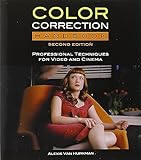
Color Correction Handbook: Professional Techniques for Video and Cinema
This is the reference book that makes your monitor investment actually pay off. Owning a calibrated display means nothing if you don’t understand what the scopes and waveforms are telling you. Steve Hullfish wrote the industry-standard guide to color correction for both video and film workflows. It pairs perfectly with any hardware you choose from this list because it teaches you to read your display correctly.
- Pro: Covers the full theoretical foundation from signal levels to cinematic contrast decisions.
- Pro: Written by a working colorist, so every technique reflects real delivery requirements.
- Con: Some examples reference older software interfaces, requiring you to translate steps.
Skip this only if you already have equivalent training from formal color science courses.
Color Grading 101: Getting Started for Editors, Cinematographers, Directors, and Aspiring Colorists
Where the Handbook goes deep, Color Grading 101 builds your starting vocabulary. If you just bought your first monitor and your first NLE, this book closes the gap between “the picture looks nice” and “the picture is technically correct.” It speaks to non-colorists who need to make defensible decisions quickly, whether you’re directing or editing solo.
- Pro: Accessible language that avoids intimidating jargon without dumbing down the process.
- Pro: Helps you evaluate whether your monitor’s output matches what your client will see.
- Con: Not enough depth for someone already delivering broadcast-quality work.
Experienced colorists should skip this in favor of more advanced material.
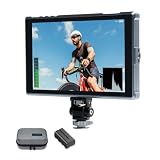
FEELWORLD FW759 PRO 7 Inch 400nit IPS Touchscreen Field DSLR Camera Monitor
The FW759 PRO at this price point is the entry ticket into reliable field color assessment. The IPS panel holds its gamma reasonably well when you’re shooting under mixed lighting, and 400 nits of brightness keeps the image readable even on a sunny location. The touchscreen lets you load 3D LUTs and toggle peaking without fumbling through button menus mid-take.
- Pro: Touch interface speeds up LUT loading and false-color toggling on set.
- Pro: IPS viewing angles make it usable as a client monitor on small setups.
- Con: Factory calibration is minimal; you’ll need a probe or reference LUT for serious color decisions.
Skip it if your grading happens in a controlled suite where a larger studio reference monitor makes more sense.
FEELWORLD FW759 7-Inch 400nit IPS HD Screen Field DSLR Camera Monitor
This is the FW759 without the touchscreen layer, and it’s the version I actually prefer for long editing sessions because the physical buttons give you tactile feedback when you’re working in dim environments. The panel brightness and color behavior match the PRO version. You’re trading convenience for reliability at the exact same price.
- Pro: Physical controls mean no accidental touches when you bump the rig or work with gloves.
- Pro: Fewer layers between glass and panel can mean slightly less reflection.
- Con: Slower LUT switching workflow, which matters during fast-paced shoots.
Skip this if you regularly work under bright sunlight where a glare-resistant touchscreen is more practical than tactile buttons.
Final Cut Pro 12 User Guide: Complete Step-by-Step Handbook
A monitor is only as good as the grading environment you feed it. This guide walks through FCP’s color board, custom curves, and the LUT pipeline so you can actually route correct signals to your display. At this price it’s essentially a no-risk purchase that protects the hundreds you spend on hardware.
- Pro: Step-by-step structure means you can follow along while grading real footage.
- Pro: Covers magnetic timeline and multicam workflows that affect how you evaluate color consistency across angles.
- Con: Text-only format; no video walkthroughs for visual learners.
Skip this if you use DaVinci Resolve or Premiere Pro as your primary NLE.
FEELWORLD FW759 PRO 7 Inch 400nit Touchscreen Field DSLR Camera Monitor (Alt Listing)
This is effectively the same FW759 PRO hardware sold through a different retailer at a slightly higher price. The five-dollar difference is worth checking against shipping costs and return policies at each vendor. If you’ve already decided the FW759 PRO is your monitor, this listing is a backup option when the cheaper one is out of stock.
- Pro: Same touchscreen IPS panel as the primary listing.
- Pro: Useful as an availability backup when the lower-priced listing sells out.
- Con: The price premium offers no hardware advantage over the first listing.
Skip this entirely if the first FW759 PRO listing is in stock and ships to your address.
FEELWORLD S55 V3 6-Inch 500nit IPS Screen Field DSLR Camera Monitor
At five hundred nits, the S55 V3 is genuinely one of the brightest options in this price bracket, which makes it the go-to monitor for outdoor shoots where the FW759’s 400 nits falls short. The 1920×1080 panel on a six-inch diagonal gives you sharper pixel density, making it easier to judge focus and fine color detail from arm’s length.
- Pro: Highest brightness in this group, making it the most sun-friendly option.
- Pro: Tighter pixel pitch helps you catch focus errors and subtle color shifts.
- Con: Six-inch screen is cramped for detailed grading work; better for monitoring than refining.
Skip this if your primary use is suite-based grading where you want maximum screen real estate.
VideoPad Video Editor – Create Professional Videos with Transitions and Effects [Download]
VideoPad fills a specific gap: if you’ve invested in a color-accurate monitor but lack software with proper grading tools, this is an affordable bridge. It includes color adjustment and a range of effects that let you put your monitor’s accuracy to use without spending on a full pro NLE. The workflow isn’t as deep as Resolve, but for short-form content it delivers.
- Pro: Low price gets you basic grading tools that justify monitor spending.
- Pro: Simple interface means fast turnaround on social and client work.
- Con: No professional LUT pipeline or node-based grading, limiting color precision.
Skip this if you need broadcast delivery compliance or node-based grading control.
Buying Guide
Panel Type and Gamma Tracking
IPS panels remain the standard for field monitors because they maintain color consistency across a wide horizontal viewing angle. What matters more than the marketing label, though, is gamma tracking. A monitor that holds a 2.2 or 2.4 gamma curve across all signal levels from black to white will show you what your export will actually look like. Some budget panels crush shadow detail or roll off highlights unevenly, making your grades look correct in the midtones while breaking down at the extremes.
Brightness, Ambient Light, and Your Real Environment
Nit ratings tell you the maximum, but they don’t tell you how usable that brightness is at the levels you actually work. If you grade in a dim room, 400 nits is more than enough. If you’re on location with direct sun hitting the screen, you want the highest panel brightness available and a matte surface treatment. Decide your primary environment first, then choose the monitor that handles it without a hood or makeshift towel.
Calibration Path and LUT Workflow
Field monitors rarely ship with the kind of profiling software that studio displays include. That means you need to budget for either a hardware colorimeter that can read these panels or a reliable LUT-based workflow where you apply a reference correction profile in your NLE before judging color. Without a calibration path, even the best-looking monitor is a guessing tool. Ask yourself: how will I make this display show me the truth?
Our Verdict
The FW759 PRO Touchscreen at $109.99 is our top pick for the broadest range of editors who need a reliable, affordable color-capable field monitor that doubles as a grading reference. For the tightest budget, the FW759 HD Screen at the same price offers identical panel performance for anyone who values tactile controls over touch convenience. And if your primary use is harsh outdoor shooting, the S55 V3’s 500 nit brightness makes it the clear winner despite its smaller format.
FAQ
Can a field monitor replace a studio reference display?
For field verification and rough grading, absolutely. For final delivery decisions on broadcast or theatrical content, no. Studio reference monitors are calibrated at the factory with profiling software and hold a consistent gamma curve across the full range, which field monitors rarely achieve out of the box.
Do I need a calibration tool for these monitors?
You’ll get better results with one, but you can build a reliable workflow using hardware scopes in your NLE plus a verified reference LUT applied to your output. A colorimeter like the i1Display or similar gives you the most direct path to knowing your panel is honest.
Is touchscreen functionality worth the extra cost?
On set, yes — loading LUTs and toggling overlays with a tap instead of navigating button menus saves real time during fast shoots. In a suite, no. Physical buttons are faster for repeated adjustments, and a touchscreen layer can introduce reflection or touch-registration errors over time.
What brightness do I actually need for color work?
For indoor grading, 100 to 200 nits is the standard target because your eyes adapt to the ambient room and you want the monitor to match the reference environment. The 400 to 500 nit ratings on these panels are useful for outdoor monitoring and for having headroom to adjust, not for running at maximum in a controlled room.


