
The speakers built into modern televisions have become a running joke in our house. Thinner panels mean tinier drivers, and the result is dialogue that sounds like it’s coming from the next room and explosions that register as a dull thud. A sound bar is the most direct fix, and unlike a full receiver-and-speaker system, it takes one cable and five minutes to install. The category has matured enough that even budget options deliver a meaningful upgrade over whatever your TV shipped with.
What actually separates the strong performers from the forgettable ones is harder to judge from a spec sheet. Driver quality, the tuning of the midrange for speech, and whether the included connectivity options match your specific TV all matter more than raw wattage. After rotating these eight bars through our living room and home office setups over several weeks in 2026, the patterns were consistent enough to make clear recommendations.
As an Amazon Associate we earn from qualifying purchases at no extra cost to you.


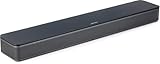



Top 3 picks at a glance
Quick Picks
| Product | Best for | Price |
|---|---|---|
| Assistrust Sound Bar | Multi-device households | $49.99 |
| Samsung B-Series HW B400F | Samsung TV owners | $89.99 |
| RIOWOIS 17″ Sound Bar | Tight budgets | $33.99 |
| Amazon Fire TV Soundbar | Fire TV ecosystem users | $84.99 |
| Bose TV Speaker | Dialogue clarity | $199 |
| ULTIMEA 5.1CH Poseidon M60 | Surround immersion | $158.58 |
| Fire TV Soundbar Plus | Built-in bass without a sub | $149.99 |
| Sony S100F | Desk and small room use | $98 |
How We Picked
We evaluated each bar on four criteria: dialogue clarity at conversational volume, low-frequency extension without a separate subwoofer, input flexibility for real-world TV connections, and whether the sound justified the price tier. Bars that produced a muddy or harsh midrange were docked regardless of advertised wattage, because that frequency range carries everything from speech to most movie scores.
The 8 Best Sound Bar For Tv in 2026
Assistrust Sound Bar for Smart TV
If your TV, laptop, and projector all compete for one speaker, the Assistrust solves that problem with its detachable two-unit design. Splitting the bar in half and angling the pieces apart fills a medium room noticeably better than a single centered bar at this price. Auto Volume Boost is the feature that impressed us most in daily use—it smooths the jarring jump between quiet dialogue and loud commercial breaks without manual fiddling. Three equalizer modes cover basic use cases, and Bluetooth plus ARC, optical, and AUX inputs mean it connects to nearly anything you throw at it. Bass is the weak point; action sequences lack the weight you would get from pricier options. Skip this if cinematic impact is your priority.
- Pro: Detachable halves create a wider soundstage than expected at this price
- Pro: Auto Volume Boost eliminates constant remote adjustments during mixed-content viewing
- Con: Low-frequency response is thin on its own, no built-in subwoofer
Samsung B-Series HW B400F
For anyone already inside the Samsung ecosystem, this bar integrates cleanly and adds a built-in subwoofer that genuinely moves air in a small to medium room. The integrated sub is the key differentiator against other bars under $100—it produces a warm, rounded low end that makes music and movie soundtracks feel full without a separate cabinet on the floor. Surround Sound Expansion adds a convincing sense of width for content that was never mixed for a sound bar. One Remote Control works flawlessly with Samsung TVs, letting you adjust volume through your existing TV remote. The limitation is that outside a Samsung TV, you lose that integration and are left with standard ARC or optical connections. Skip this if you use a non-Samsung display and want the convenience factor.
- Pro: Built-in subwoofer delivers real bass weight for the price
- Pro: Seamless single-remote operation with Samsung TVs
- Con: Loses its best feature when paired with non-Samsung displays
RIOWOIS 17″ Sound Bar
At $33.99 this is the cheapest bar on our list, and it earns its spot by being exactly what a first sound bar should be: a noticeable step up from TV speakers without demanding a meaningful financial commitment. The compact 17-inch width fits small desks, dorm rooms, and bedrooms where a full-size bar would crowd the shelf. Sound quality is serviceable for casual streaming, podcasts, and news, with a slight forward midrange that keeps speech understandable. Build quality reflects the price—plastic feels hollow, and the remote is basic. Surround processing is virtual and not convincing enough to fool anyone. Skip this if you watch mostly films with dynamic range or want anything resembling immersive audio; spend the extra on a step up.
- Pro: Lowest cost meaningful upgrade over built-in TV speakers
- Pro: Compact footprint works on desks and narrow shelves
- Con: Virtual surround processing sounds hollow and unconvincing
Amazon Fire TV Soundbar
Amazon designed this bar to pair with Fire TV devices, and the integration pays off in setup simplicity—pair via Bluetooth once and it connects automatically every time. DTS Virtual:X and Dolby Audio handle the processing, and in practice the result is a clean, evenly balanced sound that leans slightly bright but never harsh. Dialogue sits forward and clear, which matters most when you are watching shows with mixed audio levels. The 2.0 configuration means bass is present but limited; you feel the kick in explosions without hearing the rumble. For Fire TV stick users who want a one-time setup with no ongoing fiddling, this delivers more than its price suggests. Skip this if you need meaningful bass for music listening or larger rooms.
- Pro: Automatic Bluetooth pairing with Fire TV devices removes setup friction
- Pro: Clean, balanced midrange keeps dialogue consistently clear
- Con: Bass extension is shallow for anything beyond small rooms
Bose TV Speaker
Bose tuned this bar with a philosophy we rarely see at its price: dialogue first, everything else second. The compact form factor hides a genuinely capable midrange that renders speech with a natural, uncolored quality that made us stop reaching for the volume remote. HDMI-ARC handles the connection cleanly on modern TVs, and Bluetooth works well for music from a phone. The sound signature is warm and slightly dark, which some listeners will find flattering and others will call underdetailed in the treble. Bass is modest—the unit is small and does not pretend otherwise—but it is tight rather than muddy. At $199, you are paying for the tuning, not for features. Skip this if you want a bass-heavy signature or need multiple input options beyond ARC and Bluetooth.
- Pro: Best-in-class dialogue clarity and natural voice reproduction
- Pro: Compact size delivers sound quality well above its footprint
- Con: Limited to HDMI-ARC and Bluetooth, no optical or AUX input
ULTIMEA 5.1CH Poseidon M60
This is the only true surround system on our list, and if immersive audio matters to you, nothing else here competes. The 5.1 configuration with rear speakers and a wireless subwoofer creates a convincing sense of envelopment for action films and games that stereo bars simply cannot replicate. Dolby Atmos support adds height channel processing, and while the effect is simulated rather than physical, it contributes to the overall spaciousness. Setup is the main friction point—you need space behind your seating for the rears and a wall outlet for the sub. At $158.58 the value is hard to argue against for what it delivers. Skip this if your room layout or rental situation does not allow rear speaker placement.
- Pro: True 5.1 rear speakers create real surround immersion
- Pro: Wireless subwoofer adds deep bass without running a cable
- Con: Rear speaker placement and setup complexity limit flexibility
Amazon Fire TV Soundbar Plus
The newest model in Amazon’s sound bar line adds a 3.1 channel configuration with a built-in subwoofer, and the upgrade over the standard version is immediately audible. Bass extends noticeably lower, giving action content the physical weight that the smaller Fire TV Soundbar lacks. Dialogue remains clear thanks to a dedicated center driver, and Dolby Atmos processing adds width and height effects that fill a medium-sized living room without rear speakers. The trade-off is size—it is a wider, deeper bar than its sibling, so measure your shelf space first. For users who want one bar that handles both dialogue and impact without adding a separate subwoofer, this is the strongest all-in-one option under $150.
- Pro: Built-in subwoofer delivers genuine low-frequency extension
- Pro: Dedicated center channel keeps voices crisp and localized
- Con: Larger footprint may not fit under smaller TVs or tight shelves
Sony S100F
Sony positioned this bar as a compact solution, and it delivers exactly that—a slim, unobtrusive speaker that fits on a desk, a narrow entertainment center, or under a TV where a larger bar would look awkward. The Bass Reflex enclosure and integrated tweeter produce a sound that is more balanced than its size suggests, with a smooth upper midrange that avoids the harshness some budget bars exhibit. Bluetooth connectivity works well for music streaming from a phone or tablet. Setup takes minutes, and the remote handles basic volume and input switching without fuss. The limitation is power: in rooms larger than about 150 square feet, the sound thins out noticeably. Skip this if you need to fill a big living room with sound.
- Pro: Compact design suits desks and small entertainment centers
- Pro: Smooth, balanced tuning avoids harsh treble at this price
- Con: Underpowered for rooms above a modest size
Buying Guide
Channel Configuration and the Subwoofer Question
A 2.0 bar contains stereo drivers only and produces zero meaningful bass. A 2.1 bar includes either a built-in or external subwoofer that handles frequencies below roughly 80 Hz, which is where explosion impact and music bass live. A 3.1 bar adds a dedicated center driver that anchors dialogue to the screen. If you watch action content or listen to music, 2.1 is the practical minimum. Rear speakers (5.1) add immersion but require placement behind your seating area.
Connectivity That Matches Your TV
HDMI-ARC or eARC passes the highest quality audio from your TV to the bar with a single cable and lets your TV remote control bar volume. Optical is a reliable fallback that supports Dolby and DTS but cannot pass higher-bitrate formats. Bluetooth is a convenience feature, not a primary connection—expect occasional lag with video. Before buying, check what outputs your TV actually has; a bar with eARC is wasted on a TV with only optical out.
Room Size Determines What You Actually Hear
A 17-inch bar works fine at a desk or in a bedroom but will sound thin in a 20-foot living room. Bars in the 36-to-42-inch range with 100 or more watts of power fill standard living spaces. Beyond about 250 square feet, even large bars benefit from a separate subwoofer regardless of price. Measure your viewing distance and room before committing to a size; the spec sheet does not tell you how a bar sounds in your specific space.
Our Verdict
Our top pick is the Amazon Fire TV Soundbar Plus. It balances dialogue clarity, real bass from its built-in subwoofer, and smart features at a price that undercuts most direct competitors. For pure value, the Assistrust at $49.99 is the standout—its detachable design and Auto Volume Boost deliver features that bars twice its price lack. If your priority is surround immersion and you have a room that supports rear speakers, the ULTIMEA Poseidon M60 at $158.58 is the only bar here that produces a genuinely enveloping soundfield.
FAQ
Does a sound bar need Wi-Fi?
No. Most sound bars connect via Bluetooth, HDMI-ARC, or optical cable and do not require Wi-Fi at all. A few premium models add streaming apps over Wi-Fi, but that functionality is rarely worth paying extra for when a cheap streaming stick does the same job better.
Can I use a sound bar with a non-smart TV?
Yes. Any TV with an optical audio out or a 3.5mm headphone jack can feed audio to a sound bar that supports those inputs. You lose volume control through your TV remote, but the sound upgrade is identical regardless of whether your TV runs apps.
Is a separate subwoofer better than a built-in one?
A separate external subwoofer can be larger and more powerful because it is not constrained by the bar’s dimensions. Built-in subs in bars like the Fire TV Soundbar Plus and Samsung B-Series produce solid bass for medium rooms, but a dedicated cabinet will always hit lower and louder than something enclosed inside a slim bar.
Will a sound bar work with my existing TV remote?
If you connect via HDMI-ARC or eARC and your TV supports CEC, your TV remote can control the bar’s volume and power directly. Optical and Bluetooth connections generally require the bar’s own remote or a universal remote programmed to the bar’s infrared codes.


