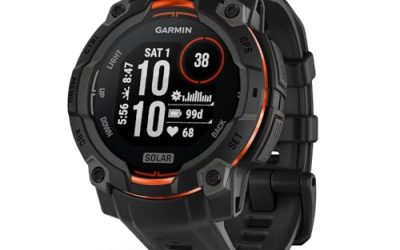
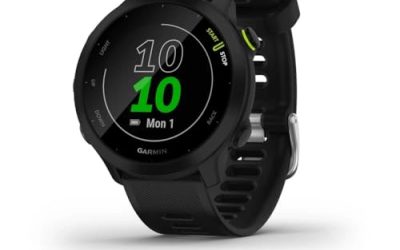
A triathlon watch has to do something a plain running watch cannot: switch from swimming to cycling to running in one continuous activity, without you fumbling for menus while wet and out of breath. That is the real decision behind this keyword. You are choosing a multisport mode, a battery that lasts through long race days, and a case that stays comfortable in the water and on the bike. Training metrics and map features come second, though they separate premium models from basic ones, and they are the reason some athletes pay for more watch than a single race requires.
This guide is for age-group triathletes, first-timers moving up from running-only watches, and anyone who wants a simple race-day timer for 2026 events. We cover five options: four Garmin Forerunner families and a Timex Ironman classic, with duplicate color or size listings grouped. Judgments rest on the listed specs, and some titles call a model a running watch, so confirm multisport support on the product page before buying.
Our Top Picks
Top 3 picks at a glance
Quick Picks
As an Amazon Associate we earn from qualifying purchases at no extra cost to you.


| Product | Best for | Key spec from the title |
|---|---|---|
| Garmin Forerunner 165 | First-timers on a tighter budget | 43mm, built-in GPS, training and recovery features |
| Garmin Forerunner 970 | Premium all-in-one race watch | 47mm titanium, GPS running and triathlon, AMOLED display |
| Timex Ironman Classic 30 | Simple race-day timing without GPS | 38mm, 100-hour chronograph, 30-lap memory |
| Garmin Forerunner 570 | Mid-range multisport with AMOLED | Advanced GPS running and triathlon, 47mm or 42mm |
| Garmin Forerunner 965 | Course maps and music | 47mm, maps, advanced training metrics, music |
How to Choose
Look for a true multisport mode
The words that matter are “triathlon” or “multisport” in the feature list, because that mode records swim, transitions, bike, and run as one event with separate splits. The Forerunner 970 and 570 titles both say “running and triathlon.” The 165 and 965 titles say “running smartwatch,” so verify triathlon support in the full specification list if it is a requirement. Transition behavior matters too: look for how easily you can press a single button to move from swim to bike without stopping the recording, since fumbling with wet fingers costs seconds.
Battery life and display type
AMOLED displays, listed on the 970 and 570, look vivid and are easy to read in sun, but they use more power than simple memory-in-pixel screens. For long events, look at the GPS-mode battery figure on the product page, not just the smartwatch-mode number, and remember that a half-distance race or a long brick workout can drain a watch faster than a casual run. A basic digital like the Timex runs on a conventional battery and avoids charging concerns entirely.
Case size and comfort in the water
Size matters over several hours. The 47mm models suit larger wrists, the 570 is also offered at 42mm, the 165 is 43mm, and the Timex is 38mm. A watch that rides high on a small wrist can rub, especially under a wetsuit sleeve, and a bulky case can catch on a sleeve during the swim-to-bike change. Look for a silicone strap and a smooth case back, and try the watch on if you can. If the watch will go under a wetsuit sleeve, a short, flat profile reduces chafing on long swims.
What to ignore, and where budget models cut corners
Ignore music storage and map features if you only race a few times a year. Entry-level watches tend to cut multisport depth, advanced training metrics, and sometimes lap pool options. The Timex has no GPS, so it cannot record pace or distance on a bike, and you would need a separate head unit or phone for that. Decide whether you want a recorder or just a timer. For many first-time racers, a simple timer plus a phone for post-race photos is all they need, and the savings can go toward a wetsuit or race entry fees.
The 5 Best Options
Garmin Forerunner 165
The entry point into the Garmin family here. The title lists a 43mm size, built-in GPS for distance, pace, and speed, essential training and recovery features, and Garmin Coach support. It is available in black and whitestone listings, which are the same watch in two colors. The title calls it a running smartwatch, so it suits runners who dabble in triathlon rather than committed multisport racers.
- Strength: Built-in GPS means you do not need a phone for pace and distance.
- Strength: A 43mm case is comfortable for medium wrists and open-water swims.
- Trade-off: The title does not say triathlon, so multisport support must be verified.
Skip it if triathlon mode is a must-have or you want advanced training metrics and maps.
Garmin Forerunner 970
The premium option in the group. The title lists a 47mm Carbon Gray DLC titanium case, a premium GPS running and triathlon smartwatch, and an AMOLED display, with a built-in feature that is cut off in the listing. Titanium and DLC coating point to durability, and the triathlon wording makes it the clearest multisport fit among these Garmin models. It is the pick for athletes who treat triathlon as a main sport and want a watch that matches that commitment.
- Strength: The title explicitly says running and triathlon, which settles the mode question.
- Strength: A titanium case with an AMOLED display is a premium build.
- Trade-off: It sits in the top price tier, which is hard to justify for a casual racer.
Skip it if you race once a year, have a small wrist, or prefer a lighter case. At the premium tier, the extra cost is hard to defend unless you use it all season.
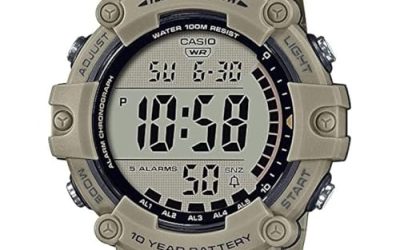
Timex Ironman Classic 30
A classic race-day timer in a 38mm case, listed in gray-and-black and all-gray versions. The title highlights a 100-hour chronograph, 30-lap memory, a 24-hour countdown timer, three alarms, and two time zones. It is ideal for people who want a durable stopwatch for splits and transition timing, or a backup watch for race morning, with no charging cable. Many athletes wear it as a spare on the bike or keep it in the transition bag so a dead battery never ends a race.
- Strength: A 30-lap memory and 100-hour chronograph cover long events.
- Strength: A 38mm case is light and comfortable under a wetsuit.
- Trade-off: There is no GPS in the title, so it cannot record pace or route.
Skip it if you want GPS distance, a heart rate readout, or data upload for training analysis. It is a timer first, and the title makes no claim beyond that, so treat it as a companion rather than a primary training device.
Garmin Forerunner 570
A mid-range multisport pick with advanced GPS, an AMOLED display, and training and recovery features. It is offered in a 47mm aluminum black version and a smaller 42mm whitestone and cloud blue version, which is useful for athletes with slim wrists. The title explicitly says running and triathlon, which makes it a cleaner multisport match than the 165. Athletes who race several times a year and want recovery data without the top tier will find the balance here appealing.
- Strength: Two sizes, 47mm and 42mm, fit a wider range of wrists.
- Strength: Triathlon wording and an AMOLED display sit together at a mid-range tier.
- Trade-off: An aluminum case is less premium than the titanium on the 970.
Skip it if you need maps and music, which the 965 title mentions, or if you want a titanium case. Check the title carefully when ordering, since the two sizes are sold in separate listings.
Garmin Forerunner 965
The title lists a running smartwatch with maps, advanced training metrics, recovery insights, and music on the wrist, in a 47mm black and powder gray version. It appeals to athletes who explore new bike or run courses and want maps on their wrist, and who like to leave the phone at home with a music playlist loaded. Long weekend rides and brick sessions are where the maps earn their keep, because you can follow a planned route without stopping to check a phone.
- Strength: Maps help on unfamiliar courses and long training rides.
- Strength: Music on the wrist frees you from carrying a phone on runs.
- Trade-off: The title says running smartwatch, so confirm triathlon mode.
Skip it if you want a smaller case or an explicit triathlon label in the title, since the 570 and 970 listings both spell out running and triathlon, and a short-race athlete may not need the extra map and music tools.
Which One Fits Your Situation
You are doing your first sprint triathlon
The Garmin Forerunner 165 gives built-in GPS and training support at a lower tier than the other Garmin watches, and the Timex Ironman Classic 30 is a sensible backup for splits. Together they let you train with GPS and keep a simple timer in the transition bag.
You race multiple events each year
The Garmin Forerunner 570 lists running and triathlon wording, AMOLED, and a choice of sizes, making it the best balanced pick. If your wrist is small, the 42mm version is easier to wear on both swim and bike.
You want the most capable option
The Garmin Forerunner 970 pairs a titanium case with triathlon wording and an AMOLED display, and suits athletes who train all year and plan to keep the watch for several seasons.
You like exploring new courses
The Garmin Forerunner 965 lists maps and music, which helps on unfamiliar routes and long rides.
Common Mistakes
- Assuming every running watch includes a true triathlon mode.
- Choosing a case size by feature list rather than by wrist comfort.
- Paying for maps and music that you will not use during races.
- Relying on a basic timer without GPS when you want pace and distance data.
- Skipping a full battery check for race day, which can be shorter in GPS mode.
Related guides
- When I Turn On Record Game In Background On Gamebar. Gamebar Crashes, What Do I Do?
- How To Reduce Background Noise On A Streaming Microphone
- Poly Computer Accessories Company Streaming Evaluation
Frequently Asked Questions
Do I need a triathlon watch to do a triathlon?
No. Many first-timers use a simple stopwatch. A multisport watch simply makes it easier to record each leg and review splits afterward. Practice using the lap button during training so it feels automatic on race day.
Is a Timex Ironman watch good enough for racing?
For timing laps and total elapsed time, yes. It lacks GPS, so you will not get pace, distance, or route data from it. Pair it with a bike computer or phone if you need those numbers.
Which size should I pick?
Choose the smallest size that still shows the display clearly. The 570 comes in 47mm and 42mm, while the Timex is 38mm and the 165 is 43mm. A watch that feels slightly small on dry land often feels about right once a wetsuit tightens around the forearm.
Are AMOLED screens worth it?
They are brighter and easier to read, but may drain the battery faster than other screen types. If long events matter most, check the GPS battery life before choosing. For sprint and Olympic distances, the difference rarely matters, but for longer events it can decide the purchase.