A travel monocular earns its place by solving small problems that a camera cannot do well: reading a distant departure sign across a station concourse, spotting the species a guide just pointed out on a ridge, checking the carving on a cathedral ceiling, or finding the trail marker on the far side of a valley. The real decision is a trade between reach and portability. Higher magnification and a bigger front lens pull in more detail and light, but they also add weight, shake, and bulk that you will feel at the end of a long walking day.
This guide is for hikers, bird watchers, cruise passengers, and city travelers who want one optical tool that slips into a jacket pocket or the lid of a daypack. Eight models are compared using the specifications in their listings, from a 6x close-focus pocket unit up to a 10×36 with a utility clip. Nothing is claimed beyond the titles, and the checklist below will help you read any spec sheet in 2026 without being swayed by oversized numbers.
Our Top Picks
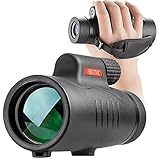
 Monocular Telescope High Power 8x42 Monoculars Scope Compact5.7 x 2 x 3 inches0.6 poundsCheck on Amazon
 Celestron UpClose G2 10x25 Monocular for Hiking10 x 255.5 x 1.5 x 1.5 inches0.2 poundsCheck on Amazon


Top 3 picks at a glance
Quick Picks
As an Amazon Associate we earn from qualifying purchases at no extra cost to you.




| Product | Best for | Key spec from the title |
|---|---|---|
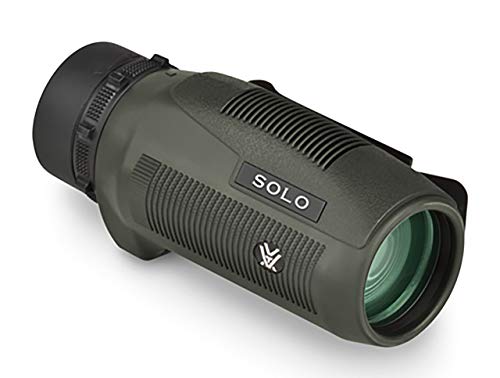
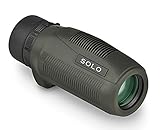
| Vortex Solo 10×36 | Wildlife and scenic overlooks | 10×36, adjustable eyecup, waterproof, fogproof |
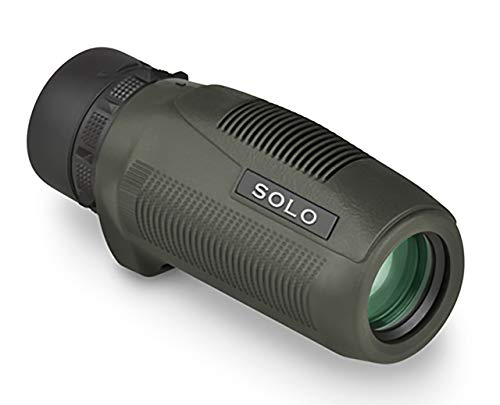
| Vortex Solo 10×25 | Pocket carry on city trips | 10×25, rubber armor, multi-coated lenses |
| Celestron UpClose G2 10×25 | Light hiking and birding | 10×25, compact, multi-coated optics |
| Celestron Nature 10×25 | Wildlife viewing on the trail | 10×25, BaK-4 prism, twist eyecup |
| Nocs Provisions Zoom Tube 8×32 | Backpacking with a wider view | 8×32, BaK-4 prism, wide field of view |
| 8×42 High Power Monocular | Family trips with a strap | 8×42, waterproof, fogproof, shockproof |
| Mini 25X Monocular | Long-range hobby viewing | 25X, green multilayer coating, waterproof |
| Carson CloseUp CF-618 | Tiny details at close range | 6x18mm, close-focus design |
How to Choose
Reading the magnification and lens numbers
A name like 10×25 means ten times magnification with a 25 millimeter front lens. Divide the lens size by the magnification to get exit pupil in millimeters, a rough hint at brightness: 10×25 gives 2.5, while 8×32 gives 4 and 10×36 gives 3.6. A larger exit pupil looks brighter in dusk or forest shade. For travel, 8x to 10x is the sweet spot, because above that, hand shake grows faster than detail.
Weatherproofing and handling
Look for waterproof and fogproof language, which suggests a sealed design rather than a simple tube. Rubber armor, as listed on the Vortex and Celestron models, protects against drops on stone steps. A hand strap, a utility clip, or a pouch matters more than you might guess when one hand holds a map or a child. Pocket depth counts too: measure your usual jacket or bag pocket before assuming a ‘compact’ tool will fit.
Glass, coatings, and field of view
Multi-coated lenses reduce glare and increase light transmission. BaK-4 prisms, named on the Celestron Nature and the Nocs, are the better prism glass type compared with cheaper BK-7. Field of view tells you how wide an area appears at a set distance; wider is easier to aim, which helps when following a moving bird or a distant bus.
What to ignore, and where budget models cut corners
Be wary of titles that promise 80x power from a small body, which cannot be held steady without a tripod and usually delivers dim, soft images. Also ignore bundled phone adapters if you already own a camera. Budget units often cut corners on eyecup mechanisms, focus smoothness, and the quality of the coatings, and they rarely come with a strong warranty.
The 8 Best Options
Vortex Solo 10×36
The Vortex Solo 10×36 pairs 10x magnification with a 36 millimeter front lens, an adjustable eyecup, multi-coated lenses, rubber armor, and fogproof and waterproof construction, along with a utility clip. A traveler who plans to watch wildlife at a safari lodge or scan a coastline from a ferry deck gets a brighter view than the pocket-size 25 millimeter models. The utility clip is a small touch that helps on a ferry rail or a bag strap, where you want the tool close but never dangling.
- Strength: the 36 millimeter lens gathers more light for dusk and shaded trails.
- Strength: an unconditional warranty is part of the listing, which reassures frequent travelers.
- Trade-off: it is bigger than the 25 millimeter pocket models.
Skip it if you want to forget it is in your pocket on city days.
Vortex Solo 10×25
The smaller Solo shares the adjustable eyecup, multi-coated lenses, rubber armor, and fogproof, waterproof build. It is meant for someone who wants a recognized brand in a lighter package, such as a museum-goer checking ceiling details or a day-trip hiker scanning for trail markers. Because the same family offers a larger sibling, you can decide purely on how much you value pocket space over light gathering.
- Strength: 10×25 sizing slips into a jacket pocket without a case.
- Strength: rubber armor and sealed construction suit damp weather.
- Trade-off: the 25 millimeter lens yields a dimmer view in low light.
Skip it if most of your viewing happens near sunrise or sunset.
Celestron UpClose G2 10×25
The UpClose G2 is pitched at hiking, travel, and birding, with a compact, lightweight body, multi-coated optics, and rubber armor. It suits the first-time monocular buyer who wants a sensible 10x tool for vacations and weekend walks without learning optical jargon. Think of a couple on a national park road trip who pull it out at every overlook and want something they will not worry about scuffing.
- Strength: the listing emphasizes a lightweight, compact design for carrying.
- Strength: multi-coated optics improve contrast against bright backgrounds.
- Trade-off: a 25 millimeter lens gathers less light than larger travel monoculars.
Skip it if you want a wide field of view.
Celestron Nature 10×25
The Celestron Nature lists a pocket-size body, a 25 millimeter objective, multi-coated optics, a BaK-4 prism, and a twist-style eyecup. It is aimed at a trail walker who might pull it out for a hawk overhead or a distant peak, and who values the better prism glass named in the title. A winter walker with gloves will also appreciate that a twist-style eyecup can be adjusted without fiddling.
- Strength: BaK-4 prism glass is a quality marker at this size.
- Strength: a twist eyecup is quick to adjust for glasses wearers.
- Trade-off: like other 10×25 units, it needs steady hands.
Skip it if you struggle to hold small optics still.
Nocs Provisions Zoom Tube 8×32
The Zoom Tube lists 8x magnification, a 32 millimeter lens, a BaK-4 prism, and a wide field of view, for bird watching and backpacking. Because 8x is easier to hold than 10x, it fits a traveler who wants a steady, forgiving image while hiking along switchbacks. Photographers who travel light sometimes carry one as a scouting tool, checking a distant ridge before deciding whether to hike toward it.
- Strength: 8x magnification is easier to steady than 10x.
- Strength: the wide field of view makes moving subjects simpler to find.
- Trade-off: the 32 millimeter lens is larger than pocket models.
Skip it if you need maximum reach for distant targets.
8×42 High Power Monocular
This unbranded 8×42 monocular is listed as compact, waterproof, fogproof, and shockproof, with a hand strap, and is pitched at adults and kids for bird watching, camping, and similar outings. The 42 millimeter lens is the largest in this lineup, so it fits a family trip where several people share one device. A grandparent, a teenager, and a toddler can each take a turn without anyone worrying about a scratch from a drop onto a picnic table.
- Strength: a 42 millimeter lens at 8x gives the largest exit pupil here.
- Strength: a hand strap and shockproof claim suit shared use.
- Trade-off: it is the bulkiest of the compact group.
Skip it if you need true pocket-size carry.
Mini 25X Monocular
The Mini 25X is listed with HD optics, green multilayer coating, a lightweight build, and waterproof construction for hiking, with a suggestion for adults and kids. It is a curiosity-driven pick for someone who wants high power at a tiny size and accepts the shake that goes with it. Bracing your elbows against a wall or a railing helps a great deal at this level of magnification.
- Strength: 25X offers a lot of reach for distant landmarks.
- Strength: lightweight and waterproof makes it easy to carry.
- Trade-off: high power in a small body is hard to hold steady.
Skip it if you want a bright, stable image at dusk.
Carson CloseUp CF-618
The Carson CloseUp is a 6×18 millimeter close-focus monocular. That is a small, low-power tool, best for studying textures, stamps, insects, or museum labels from short distances rather than scanning faraway hillsides. Collectors at a flea market or students on a nature field trip would reach for it first.
- Strength: the close-focus design reveals tiny details nearby.
- Strength: 6x magnification is easy to keep steady.
- Trade-off: low power limits long-distance viewing.
Skip it if you mostly look at distant landscapes.
Which One Fits Your Situation
You are heading on a safari or coastal cruise
The Vortex Solo 10×36 gives the brighter, bigger image that open landscapes and wildlife demand.
You are doing a city break with light packing
The Vortex Solo 10×25 or the Celestron Nature 10×25 disappears into a coat pocket and still lets you read distant architecture and street signs from across a plaza.
You are backpacking and want a calmer image
The Nocs Provisions Zoom Tube 8×32 gives a wide, steady view that is easier on tired arms after a full day of climbing.
You are sharing with children or exploring close details
The 8×42 High Power Monocular suits group use, while the Carson CloseUp CF-618 is delightful for museum labels and bugs.
Common Mistakes
- Assuming higher magnification always means a better view, when shake and dimness often follow.
- Skipping a strap or clip, then dropping the monocular on rocks.
- Buying an 80x model with a phone adapter and expecting sharp pictures without a tripod.
- Ignoring eyecup design when you wear glasses, which can cut the visible circle down to a keyhole.
- Choosing a model with no waterproof or fogproof wording for a rainy or humid destination, where lenses fog quickly.
Related guides
- When I Turn On Record Game In Background On Gamebar. Gamebar Crashes, What Do I Do?
- How To Reduce Background Noise On A Streaming Microphone
- Poly Computer Accessories Company Streaming Evaluation
Frequently Asked Questions
Is a monocular better than binoculars for travel?
It is lighter and cheaper to carry, but you lose the two-eyed depth and comfort. For quick looks, it wins; for long sessions, binoculars are kinder. Many travelers pack one of each on big trips.
Can I use it with glasses?
Yes, if the eyecup folds or twists down. Models with an adjustable eyecup are the easiest.
What magnification is best for hiking?
Most hikers like 8x to 10x. It balances reach with a steady image.
Do monoculars need a tripod?
Not at 8x to 10x. Beyond 20x, support becomes necessary for a clear image. If you do add a small tabletop tripod, it also helps with steady views from a hotel balcony.
Related guides
More from Amazon
Programs that pair well with the guide above. Offers and eligibility are set by Amazon and may change.
Free shipping on eligible items, Prime Video and more. Eligible new members can start with a free trial.
Start a Prime free trialAd-free music streaming. Eligible new subscribers can start with a free trial.
Try Music Unlimited freeA Prime membership for ages 18-24 with a trial period. Eligibility is set by Amazon.
See Prime for Young AdultsAudiobooks and podcasts to listen to on the go. Eligible new members can start with a free trial.
Try Audible freeAs an Amazon Associate we earn from qualifying purchases.