Choosing a 32-inch 4K monitor for photo editing usually comes down to one cable decision: whether a single USB-C lead can carry the picture, the peripherals, and enough wattage to keep your laptop charged through a long retouching session. A panel can have a beautiful gamut on paper and still frustrate you daily if its power delivery falls short and the battery drains mid-export.
This guide is for photographers who edit on a laptop and want that one-cable desk, whether the finished work goes to print or to a screen. Every pick below is a 32-inch class 4K panel with USB-C power delivery, selected from the names and specifications on its Amazon listing, then compared on PD wattage, listed gamut coverage, and calibration support.
Our Top Picks
 ASUS ProArt PA329CRV 32 Inch 4K DCI-P3 USB-C32 inches28.1 x 9.45 x 19.2 inches21.83 poundsCheck on Amazon
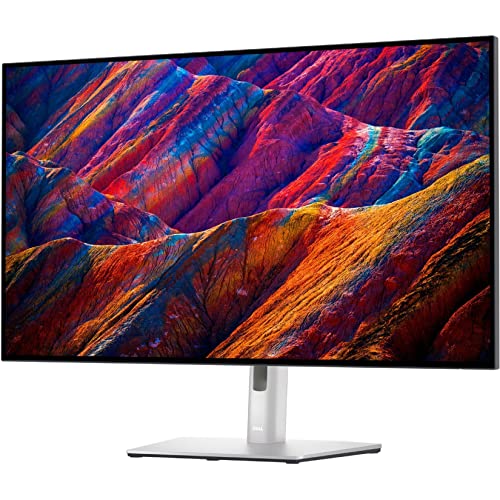 Dell UltraSharp U3223QE 31.5" 4K UHD WLED LCD75Hz18.5 x 28.1 x 9.2 inches22.84 poundsCheck on Amazon
Top 3 picks at a glance

Quick Picks
As an Amazon Associate we earn from qualifying purchases.
| Product | Best for | Key spec from title |
|---|---|---|
| BenQ SW321C | Print-first photographers who soft-proof | 99 percent Adobe RGB, USB-C 60W |
| ASUS ProArt PA329CRV | Laptop editors wanting the strongest charge | USB-C PD 96W, 98 percent DCI-P3 |
| BenQ PD3225U | Mac-based studios sharing one desk | Thunderbolt, USB-C 85W, IPS Black |
| Dell UltraSharp U3223QE | Editors who need a wired network at the desk | USB-C 90W, RJ45 Ethernet hub |
How to Choose
Match the PD wattage to your laptop’s actual draw
The wattage printed beside the USB-C port decides whether one cable truly replaces your charger. A 60W port keeps a thin ultrabook or a MacBook Air topped up while you edit, but a 16-inch workstation laptop under a heavy export load can draw more than that and slowly lose charge. Listings here range from 60W on the BenQ SW321C to 96W on the ASUS ProArt PA329CRV, so read the figure before anything else. Check it against the wattage of the adapter that shipped with your laptop; the monitor needs to meet or beat that number for the single-cable plan to hold during long sessions.
Decide whether AdobeRGB or DCI-P3 matters more
Gamut figures on a listing only help if they match your output. Photographers who soft-proof for print live in AdobeRGB, because that space covers the cyan and green range a good press or inkjet can reproduce; the SW321C lists 99 percent Adobe RGB coverage for exactly that work. If your finished images stay on screens, phones, and client galleries, DCI-P3 coverage is the more relevant yardstick, and all four monitors here list 98 or 99 percent of it. sRGB coverage sits at or near full on every pick, so the real question is which wide space your deliverables actually use.
Check the calibration path the listing describes
Factory calibration reports are a starting point, not a long-term plan, because panels drift as they age. Hardware calibration is the feature that separates dedicated photo monitors from general creator screens: it writes corrections into the monitor’s own lookup table instead of the graphics card, so colors stay consistent across computers. The SW321C lists hardware calibration with a 16-bit 3D LUT, while the ASUS and the BenQ PD line lean on factory verification such as Calman Verified status and Delta E figures of 2 or lower. If you already own a colorimeter, confirm the listing names support for hardware calibration before assuming it works.
Use the 32-inch size and 4K density for retouching
At 32 inches, 3840 by 2160 resolution works out to roughly 137 to 140 pixels per inch depending on the exact panel, which is a practical sweet spot for photo work. A full image fits on screen at a comfortable size while a 100 percent crop still shows clean pixel detail for dust spotting, masking edges, and sharpening checks. You also get room to park Lightroom or Capture One panels beside the image without shrinking it into a postage stamp. Matte coatings, listed on the photo-focused models here, keep window reflections from contaminating your judgment of shadow tones.
The 4 Best Options
BenQ SW321C

Print-minded photographers are the audience BenQ built this monitor for. Its listing leads with 99 percent Adobe RGB coverage and hardware calibration through a 16-bit 3D LUT, the combination that matters when a file is headed for paper rather than a feed. Paper Color Sync exists to preview how an image will land on a chosen stock, and the included shading hood keeps stray room light from skewing your read of deep tones. USB-C power delivery is the modest part of the package at 60W, enough for lighter laptops while you work through a proofing session.
Specs
- Screen: 31.5-inch IPS panel, 3840 x 2160 resolution
- Color gamut: 99 percent Adobe RGB, 100 percent sRGB, 95 percent DCI-P3
- Color depth: 10-bit with 16-bit 3D LUT
- Calibration: hardware calibration support, Delta E of 2 or lower
- USB-C: one cable with 60W power delivery
- Extras: shading hood included, HDR10 support
Best for: photographers who soft-proof and print, and want AdobeRGB coverage with hardware calibration.
Watch out for: the 60W ceiling is the lowest here, so a power-hungry workstation laptop may still need its own adapter.
ASIN: B08412P2GB
ASUS ProArt PA329CRV
If the single-cable promise is the whole point of your upgrade, this ASUS is the strongest charger in the group, with 96W of USB-C power delivery that keeps larger laptops fed while they drive the panel. The listing pairs that with 98 percent DCI-P3 coverage, factory accuracy of Delta E under 2, and Calman Verified status, which suits photographers whose work ships to screens and client devices. A built-in USB hub and daisy-chain support round out a desk that can grow a second screen later without another dock purchase.
Specs
- Screen: 31.5-inch IPS panel, 3840 x 2160 resolution
- Color gamut: 98 percent DCI-P3
- Accuracy: Delta E under 2, Calman Verified, factory calibration report included
- USB-C: 96W power delivery with DisplayPort Alt Mode
- HDR: VESA DisplayHDR 400
- Hub: built-in USB 3.2 hub, DisplayPort daisy-chain support
Best for: laptop-based editors who want one cable to charge, display, and connect peripherals.
Watch out for: there is no AdobeRGB figure in the listing, so print proofers should look at the BenQ SW321C instead.
ASIN: B0B8YSL9RD
BenQ PD3225U
BenQ’s PD line speaks directly to Mac-based photo studios, and the PD3225U listing backs that up with Thunderbolt connectivity, 85W USB-C power delivery, and an IPS Black panel whose 2000:1 contrast ratio doubles the depth you get from a standard IPS screen when judging shadow detail. Gamut coverage is listed at 98 percent P3 with full sRGB and Rec.709, and the factory calibration figure is Delta E of 2 or lower. A KVM switch and daisy-chain support make it easy for two computers, or two editors, to share the same desk.
Specs
- Screen: 31.5-inch IPS Black panel, 3840 x 2160 resolution, 2000:1 contrast ratio
- Color gamut: 98 percent DCI-P3, 100 percent sRGB and Rec.709
- Accuracy: Delta E of 2 or lower, factory calibration, AQCOLOR technology
- Connectivity: Thunderbolt with USB-C 85W power delivery, daisy chain
- Extras: KVM switch and built-in USB hub
Best for: Mac photographers who want deeper blacks for shadow work and a shared two-computer desk.
Watch out for: AdobeRGB coverage is not the headline here, so dedicated print proofing is better served by the SW321C.
ASIN: B0CT441B25
Dell UltraSharp U3223QE
Dell’s entry treats the monitor as the entire docking station. Alongside 90W USB-C power delivery, the listing builds in RJ45 Ethernet and a deep bank of USB ports, so a laptop that arrives with two bare ports leaves the desk with wired networking, card readers, and drives all attached. The IPS Black panel lists a 2000:1 contrast ratio and 98 percent DCI-P3 coverage with DisplayHDR 400, which keeps it credible for photo editing even though it was designed as an all-purpose hub first. Daisy-chaining a second 4K screen over USB-C is also on the spec sheet.
Specs
- Screen: 31.5-inch IPS Black panel, 3840 x 2160 resolution, 2000:1 contrast ratio
- Color gamut: 98 percent DCI-P3, VESA DisplayHDR 400
- USB-C: up to 90W power delivery with DisplayPort Alt Mode
- Hub: RJ45 Ethernet, USB 3.2 Gen 2 downstream ports, KVM switch
- Daisy chain: DisplayPort output and USB-C with Display Stream Compression
Best for: editors whose laptops lack ports and who want wired Ethernet and peripherals through the monitor.
Watch out for: calibration is factory-based rather than a hardware LUT workflow, so print specialists should compare the SW321C.
ASIN: B09TVZHV4W
Which One Fits Your Situation
You print your work and soft-proof at the desk
Pick the BenQ SW321C. It is the only monitor here whose listing leads with 99 percent Adobe RGB coverage, hardware calibration, and a print-preview workflow, and the included shading hood protects your judgment of subtle tones. Accept the 60W power delivery as the trade-off, or keep your laptop adapter nearby for long sessions.
Your laptop is your only computer and the battery matters
Pick the ASUS ProArt PA329CRV. Its 96W USB-C output is the highest in this group, so a single cable can realistically replace the charger on most editing laptops while also carrying the picture and your peripherals. The 98 percent DCI-P3 coverage suits screen-delivered work, and daisy-chaining leaves the door open to a second panel later.
You edit on a Mac and share the desk with a second machine
Pick the BenQ PD3225U. Thunderbolt connectivity, a KVM switch, and 85W of power delivery make swapping between a Mac and a second computer painless, while the IPS Black panel’s deeper contrast helps when you are grading shadow detail in portraits or night scenes. Its P3 coverage matches how Apple devices display your finished files.
Your desk has no dock and your laptop has almost no ports
Pick the Dell UltraSharp U3223QE. Ethernet, a full USB hub, and 90W charging all live inside the monitor, so one cable turns a bare laptop into a complete editing station. Photo credentials are solid rather than specialized, with 98 percent DCI-P3 coverage and an IPS Black panel for stronger contrast than ordinary IPS screens.
Common Mistakes
- Buying on screen size alone and never checking the USB-C wattage, then watching the laptop battery drain during long exports.
- Assuming every wide-gamut monitor covers AdobeRGB, when many creator panels list only DCI-P3 and sRGB figures.
- Treating a factory calibration report as permanent and never planning for a colorimeter as the panel ages.
- Plugging the USB-C cable into a charge-only port on the laptop, which delivers power but no picture.
- Editing beside a bright window on a glossy screen, then blaming the monitor for washed-out shadows.
Frequently Asked Questions
Is 60W of USB-C power delivery enough for photo editing?
For thin laptops and MacBook Air class machines, yes: 60W covers their draw while editing stills, and the battery holds or charges slowly. Larger 16-inch workstation laptops can pull more than 60W under export load, so those owners should choose the 85W, 90W, or 96W models in this guide or keep the original adapter connected.
Do I need AdobeRGB coverage if my photos only appear online?
No. Online galleries, social platforms, and client proofs are displayed in sRGB or, on many modern phones and Apple screens, DCI-P3. A monitor listing strong P3 coverage and full sRGB will show those files accurately. AdobeRGB coverage earns its keep when you soft-proof for print, where that wider space maps to what presses and inkjets can reproduce.
What does hardware calibration change in practice?
It stores the correction inside the monitor’s own lookup table rather than in your computer’s graphics output. That means the calibrated result follows the screen when you switch laptops, and the panel can use its full internal bit depth instead of banding-prone video card adjustments. Only the SW321C in this group lists true hardware calibration with a 16-bit 3D LUT.
Can one of these monitors charge a laptop and run a second screen?
Yes, several can. The ASUS PA329CRV and BenQ PD3225U both list daisy-chain support, and the Dell U3223QE can drive a second 4K panel over USB-C using Display Stream Compression. Your laptop still needs a port that supports video output and enough graphics headroom for two 4K displays, so check its specifications before planning a dual-screen desk.
Related guides
More from Amazon
Programs that pair well with the guide above. Offers and eligibility are set by Amazon and may change.
Free shipping on eligible items, Prime Video and more. Eligible new members can start with a free trial.
Start a Prime free trialAd-free music streaming. Eligible new subscribers can start with a free trial.
Try Music Unlimited freeA Prime membership for ages 18-24 with a trial period. Eligibility is set by Amazon.
See Prime for Young AdultsAudiobooks and podcasts to listen to on the go. Eligible new members can start with a free trial.
Try Audible freeAs an Amazon Associate we earn from qualifying purchases.