A mechanical gaming mouse is not bought for one number on a box. The real decision is how the click feels after a thousand presses, whether the sensor stays steady when a flick turns into a small correction, and whether the buttons sit where the thumb already rests. A mouse that looks strong in a specification list can still fight the hand that uses it, and a shape that suits a palm grip can feel awkward for a claw grip, so the choice has to start with the hand and the games, not with the loudest feature.
This article is for PC players who want a crisp mechanical click, for shooter players who need steady tracking, for MMO and MOBA players who want more buttons within thumb reach, and for players who switch between genres and want one mouse to cover them all. The five mice below were chosen from their Amazon titles and listing specifications, with attention to switch type, sensor range, button count, shape, and connection.
Our Top Picks


Top 3 picks at a glance

Quick Picks
As an Amazon Associate we earn from qualifying purchases
| Product | Best for | Key spec from title |
|---|---|---|
| Logitech G502 HERO | Shooter players who want tunable weight and many buttons | HERO 25K sensor, 25,600 DPI |
| Razer DeathAdder V2 X HyperSpeed | Wireless play with long battery life and a familiar ergonomic shape | Gen 2 mechanical switches, 14K DPI |
| SteelSeries Rival 5 | Multi-genre play with a nine-button layout and bright lighting zones | 18,000 CPI TrueMove Air sensor |
| HyperX Pulsefire Haste | Fast flicks with a light honeycomb shell and dust-proof switches | TTC Golden switches, 16,000 DPI |
| Corsair Scimitar RGB Elite | MMO and MOBA play with a large adjustable thumb grid | 18,000 DPI, 17 programmable buttons |
How to Choose
Start with the switch feel, not the sensor number
Mechanical switches decide how every click lands, and two mice with similar sensors can feel very different in play. A crisp, short-travel click suits rapid firing and fast ability presses, while a firmer click gives more deliberate feedback for players who rest a finger on the button. Look at the switch name and the click lifespan in the Amazon listing, then think about the games that fill most sessions. A shooter player who clicks constantly will notice a mushy or inconsistent button far sooner than a player who clicks in short bursts. Compare the switch description across mice before looking at anything else, because the switch is the part the finger meets on every action.
Match the sensor range to real sensitivity habits
A very high maximum DPI does not make a mouse more accurate, and most players settle far below the top of the range. What matters is whether the sensor holds steady at the sensitivity actually used, with no smoothing or acceleration changing the cursor path. Check the listed DPI or CPI range and the tracking speed in the listing, then consider the grip and the desk space available. Low-sensitivity players who move the whole arm need a sensor that stays clean through long sweeps, while high-sensitivity players need fine control for small wrist movements. Choose a range that covers the usual setting with room above it.
Count the buttons the thumb can actually reach
Extra buttons only help when they sit under the thumb without a stretch or a grip change. A twelve-button grid suits MMO rotations, while two well-placed side buttons suit shooters where the thumb must stay ready for movement. Count the programmable buttons in the Amazon title, then picture the layout in the hand: can the thumb find each button by feel, and can it return to a neutral rest without pressing something by accident? A mouse with fewer buttons in the right places often plays better than a mouse with many buttons crowded together. Think about the three actions used most often, and check that those three have a home.
Let shape and grip decide before lighting and extras
Shape decides comfort over a long session, and no lighting zone can fix a shell that cramps the hand. Ergonomic right-handed mice support the palm through long matches, while ambidextrous shapes suit fingertip and claw grips that lift and reposition often. Check the listed weight and the connection type, then think about how the mouse will move: a lighter shell suits fast flicks, a heavier shell suits steady aim, and a wired connection suits players who never want to think about charging. Lighting, onboard memory, and software extras matter after shape, because they are used far less often than the hand meets the shell.
The 5 Best Options
Logitech G502 HERO

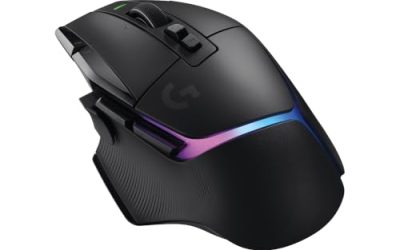
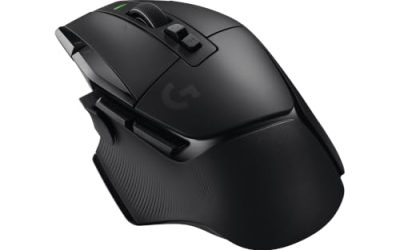
The Logitech G502 HERO suits players who want one wired mouse to cover shooters, strategy, and everyday PC use without changing hardware between games. Its eleven programmable buttons give room for weapon swaps, ability keys, and push-to-talk, while the dual-mode scroll wheel moves between precise steps and free spinning for long documents and inventories. The adjustable weight system lets the balance shift toward the front or the rear, so the same mouse can feel planted for steady aim or lighter for quick turns. Onboard memory keeps profiles on the mouse itself, which helps when moving between machines.
Specs
- Sensor: HERO 25K optical sensor, 100 to 25,600 DPI
- Switches: Mechanical switch button tensioning with metal spring system and pivot hinges
- Buttons: 11 programmable buttons
- Weight system: Five removable 3.6-gram weights for balance tuning
- Memory: Onboard memory for up to five profiles
- Lighting: LIGHTSYNC RGB lighting
- Connectivity: Wired USB
Best for: Shooter and strategy players who want many buttons and tunable balance in a wired mouse.
Watch out for: The sculpted right-handed shape and wider body may feel large for small hands or fingertip grips.
Razer DeathAdder V2 X HyperSpeed
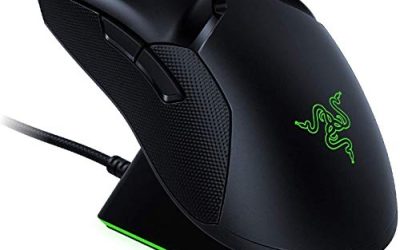
The Razer DeathAdder V2 X HyperSpeed suits players who want the familiar DeathAdder shape without a cable trailing across the desk. Its wireless connection keeps the desk clear during long sessions, and the long battery life means charging is an occasional task rather than a daily interruption. Seven programmable buttons cover the essentials for shooters and action games, with two side buttons placed where the thumb naturally rests. The Gen-2 mechanical switches give a crisp click with a long click lifespan, so repeated firing stays consistent through extended play. A single AA battery keeps the design simple and easy to keep running.
Specs
- Switches: Razer Mechanical Mouse Switches Gen-2, rated for up to 60 million clicks
- Sensor: 14K DPI optical sensor
- Buttons: 7 programmable buttons
- Battery life: Up to 235 hours
- Connectivity: HyperSpeed Wireless, with Bluetooth option in the listing family
- Shape: Ergonomic right-handed design
Best for: Players who want a wireless ergonomic mouse with long battery life for shooters and action games.
Watch out for: The seven-button layout offers fewer thumb controls than MMO-focused mice, so check the button count against the games played most.
SteelSeries Rival 5
The SteelSeries Rival 5 suits players who move between FPS, MOBA, MMO, and battle royale games and want one mouse that adapts to each genre. Nine programmable buttons include five quick-action side buttons, so abilities, items, and utility commands sit close to the thumb without reaching for the keyboard. The TrueMove Air sensor tracks with true one-to-one movement, which helps aim stay predictable when switching between fast and slow play. PrismSync lighting runs across ten zones, giving the shell a distinct look that can match the rest of a setup. At 85 grams, the mouse stays light enough for quick repositioning during long matches.
Specs
- Switches: SteelSeries Golden Micro IP54 Mechanical Switches, rated for 80 million clicks
- Sensor: TrueMove Air optical sensor, 18,000 CPI
- Buttons: 9 programmable buttons, including 5 quick-action side buttons
- Weight: 85 grams
- Lighting: PrismSync RGB lighting with 10 zones and 16.8 million colors
- Cable: Super mesh cable for reduced drag
- Grip: Ergonomic right-handed shape for claw, palm, and fingertip grips
Best for: Multi-genre players who want nine buttons, a light body, and a sensor that tracks one-to-one.
Watch out for: The right-handed ergonomic shape does not suit left-handed players, and the side-button cluster takes time to learn by feel.
HyperX Pulsefire Haste

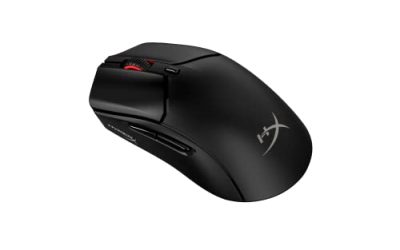
The HyperX Pulsefire Haste suits players who prize speed and light handling above all else, especially in fast shooters where every flick counts. Its honeycomb shell keeps the body light while the TTC Golden micro switches deliver a firm, dust-proof click rated for many millions of presses. Six programmable buttons cover the essentials without crowding the thumb, and the PixArt sensor tracks cleanly through quick sweeps and small corrections. Virgin-grade PTFE skates help the mouse glide with little resistance, and the flexible HyperFlex cable reduces drag during wide arm movements. Grip tape in the box adds hold for players whose hands run warm.
Specs
- Switches: TTC Golden micro dust-proof switches, rated for 60 million clicks
- Sensor: PixArt PAW3335 optical sensor, up to 16,000 DPI
- Buttons: 6 programmable buttons
- Skates: Pure virgin-grade PTFE skates
- Cable: HyperFlex USB cable in paracord style
- Shape: Ambidextrous honeycomb shell
Best for: Fast shooter players who want a very light mouse with a firm mechanical click and clean glide.
Watch out for: The open honeycomb shell lets dust reach the interior more easily than a solid shell, so keep the desk and the mouse clean.
Corsair Scimitar RGB Elite
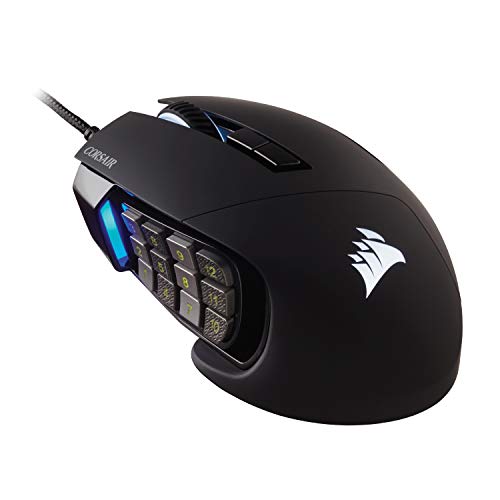
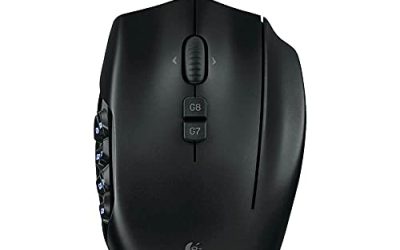
The Corsair Scimitar RGB Elite suits MMO and MOBA players whose games demand a dozen abilities within thumb reach. Its twelve-button side grid puts a full rotation under the thumb, so abilities, macros, and utility commands stay within easy reach during long sessions. Seventeen programmable buttons in total cover rotations, macros, and utility commands, while the PixArt PMW3391 sensor tracks at a native 18,000 DPI for precise targeting. Mechanical switches under the main buttons give the primary click a durable, consistent feel. Onboard storage keeps profiles ready when the mouse moves to another machine.
Specs
- Sensor: PixArt PMW3391 optical sensor, native 18,000 DPI
- Switches: Mechanical switches
- Buttons: 17 programmable buttons, including a 12-button side grid
- Lighting: Dynamic RGB backlighting, iCUE compatible
- Connectivity: Wired with braided USB cable
Best for: MMO and MOBA players who want a large adjustable thumb grid and many programmable buttons.
Watch out for: The wide body and heavy button grid suit right-handed MMO play far better than fast flick-heavy shooters, so match the mouse to the main genre first.
Which One Fits Your Situation
You play shooters most of the time
Pick the HyperX Pulsefire Haste when flicks and fast repositioning decide most fights, because its light honeycomb shell and firm TTC switches keep quick movements easy. Pick the Logitech G502 HERO instead when steady aim matters more than raw speed, since its tunable weights and eleven buttons give more control over balance and bindings.
You play MMO or MOBA games with many abilities
Pick the Corsair Scimitar RGB Elite, because its twelve-button grid and Key Slider put a full rotation under the thumb without reaching for the keyboard. The SteelSeries Rival 5 is the better fallback when the Scimitar feels too wide, since its five side buttons still cover the most-used abilities in a smaller body.
You want to cut the cable without losing the click
Pick the Razer DeathAdder V2 X HyperSpeed, because its Gen-2 mechanical switches keep the click crisp while wireless play and long battery life remove the cable from the desk. It suits players who already like the DeathAdder shape and want the same familiar feel with more freedom of movement in every session.
You switch genres every night
Pick the SteelSeries Rival 5, because its nine-button layout, one-to-one sensor, and light body adapt to shooters, MOBA, MMO, and battle royale play without a compromise in any one genre. The Logitech G502 HERO is the wired alternative for the same player, with more buttons and weight tuning for those who prefer a heavier, planted feel.
Common Mistakes
- Choosing the highest DPI number instead of the sensitivity actually used, then fighting a cursor that moves too far with every small wrist motion.
- Picking a twelve-button grid for shooters, where the thumb needs a simple rest rather than a cluster of keys it can press by accident.
- Ignoring grip style and buying an ergonomic right-handed shell for a fingertip grip that needs a smaller, symmetrical body.
- Judging a mechanical switch from its click lifespan alone, without considering travel, firmness, and how the click feels after an hour of play.
- Forgetting to check the button layout by feel, so the most-used ability ends up on a button the thumb cannot reach without shifting the whole hand.
Frequently Asked Questions
What makes a gaming mouse mechanical?
A mechanical gaming mouse uses physical mechanical switches under its main buttons, with a metal contact and spring that give a crisp, tactile click. The switch type and its click lifespan appear in the Amazon listing, and they decide how the click feels and how long it stays consistent. Optical switches use a light beam instead, so they belong in a different category even when the shell looks similar.
Is a higher DPI always better for gaming?
No, a higher maximum DPI is not always better, because most players use a setting far below the top of the range. What matters is steady tracking at the sensitivity actually used, with no smoothing or acceleration changing the cursor path. Choose a mouse whose sensor covers the usual setting comfortably, then set the DPI to match the grip, desk space, and game.
How many buttons does a gaming mouse need?
The right button count depends on the games played most. Shooters and action games usually need only two side buttons plus the main clicks and wheel, while MMO and MOBA games benefit from five or more thumb buttons for abilities and items. Count the actions used constantly, then choose a layout where those actions sit under the thumb without a stretch.
Can one mouse work for both shooters and MMO games?
Yes, one mouse can cover both genres when its layout balances speed and buttons. The SteelSeries Rival 5 and the Logitech G502 HERO both offer enough thumb buttons for ability-heavy games while staying light and steady enough for shooters. Players who lean heavily toward one genre will still get more from a mouse built for that genre first.
Related guides
More from Amazon
Programs that pair well with the guide above. Offers and eligibility are set by Amazon and may change.
Free shipping on eligible items, Prime Video and more. Eligible new members can start with a free trial.
Start a Prime free trialAd-free music streaming. Eligible new subscribers can start with a free trial.
Try Music Unlimited freeA Prime membership for ages 18-24 with a trial period. Eligibility is set by Amazon.
See Prime for Young AdultsAudiobooks and podcasts to listen to on the go. Eligible new members can start with a free trial.
Try Audible freeAs an Amazon Associate we earn from qualifying purchases.