Our Short List of 3

- Best for: Players who want a proven esports shape with long battery life and no distractions.
- Weight: 60 g
- Sensor: HERO 2 sensor, up to 44,000 DPI
- Polling rate: up to 8,000 Hz
- Connection: LIGHTSPEED wireless, USB-C charging

- Best for: Palm and claw grip players with larger hands who want an ergonomic FPS mouse.
- Weight: 63 g
- Sensor: Focus Pro 30K optical sensor, up to 30,000 DPI
- Connection: HyperSpeed wireless, wired USB-C
- Switches: Gen-3 optical mouse switches

- Best for: Players who want a light wireless FPS mouse with long battery life at a mid-range tier.
- Weight: 61 g
- Sensor: HyperX 26K sensor, up to 26,000 DPI, 650 IPS
- Connection: 2.4 GHz wireless and Bluetooth 5.1
- Buttons: 6 programmable buttons
All 4 Picks at a Glance
| Product | Specs | Action |
|---|---|---|
| Logitech G Pro X Superlight 2 |
| Check price on Amazon |
| Razer DeathAdder V3 Pro |
| Check price on Amazon |
| HyperX Pulsefire Haste 2 Wireless |
| Check price on Amazon |
 Logitech G502 HERO |
| Check price on Amazon |
In a first-person shooter, your mouse is the whole aiming system. A heavy shell drags on every flick, a sensor that spins out on a fast swipe costs you a duel, and a sluggish connection makes crosshair placement feel a beat behind your hand. The decision is not about the biggest DPI number on the box. It is about a light, well-shaped mouse that tracks cleanly at the sensitivity you actually play, with a polling rate and connection that keep up with your monitor.
This guide is for FPS players who want steadier aim in ranked matches, casual shooters moving up from an office mouse, and anyone building a setup around Valorant, Counter-Strike 2, Apex Legends, or Call of Duty. Every mouse below is a gaming mouse built for fast, precise FPS play, chosen from names and specifications on its Amazon product page, and each one is still selling on Amazon US. The five cover wireless flagships, an ergonomic pick, and a wired value option.
Our Top Picks
- Logitech G Pro X Superlight 2 Lightspeed WirelessClassic1.57 x 2.5 x 4.92 inches0.1 poundsCheck on Amazon

Top 3 picks at a glance
Quick Picks
As an Amazon Associate we earn from qualifying purchases
| Product | Best for | Key spec from title |
|---|---|---|
| Razer Viper V3 Pro | Competitive play at the highest level | 54 g, Focus Pro 35K sensor, 8,000 Hz polling |
| Logitech G Pro X Superlight 2 | All-round esports performance | 60 g, HERO 2 sensor, up to 44,000 DPI |
| Razer DeathAdder V3 Pro | Palm and claw grip with a larger hand | 63 g, Focus Pro 30K sensor, ergonomic shape |
| HyperX Pulsefire Haste 2 Wireless | Wireless FPS play on a mid-range budget | 61 g, HyperX 26K sensor, 100-hour battery |
| Logitech G502 HERO | Wired FPS play with extra buttons | HERO 25K sensor, 25,600 DPI, 11 buttons |
How to Choose
Start with weight and shape, not DPI
A lighter mouse changes how aiming feels more than any sensor number. At 54 to 63 grams, the flagship picks in this guide move with far less effort than a 100-gram mouse, so long sessions tire your wrist less and fast flicks stay controlled. Shape matters just as much. A symmetrical shell suits claw and fingertip grips, while an ergonomic hump supports a palm grip. Measure your hand from wrist to middle fingertip and compare it with the listed length before you buy, because a mouse that is too long or too short will fight your grip in every match.
Understand what the sensor numbers mean
Modern FPS sensors track flawlessly at the sensitivities most players use, so the headline DPI figure is rarely the deciding factor. What matters is native tracking without smoothing or acceleration, plus enough IPS and acceleration headroom that the sensor never loses the surface during a fast swipe. A sensor rated for 26,000 DPI or higher covers every realistic setting, since most FPS players use 400 to 1,600 DPI. Check the sensor name and the listed IPS figure, and ignore any claim that a bigger maximum DPI automatically means better aim.
Match polling rate and connection to your monitor
Polling rate is how often the mouse reports its position to the PC. At 1,000 Hz it reports every millisecond, which is enough for most players. At 8,000 Hz the reports come eight times as often, which can make tracking feel smoother on a 240 Hz or faster monitor, though the gain shrinks on a 60 or 144 Hz screen. Wireless is no longer a compromise for FPS play: the flagship wireless mice here use a dedicated 2.4 GHz receiver with latency on par with wired. Bluetooth is fine for desktop work but should not be your gaming connection.
Clicks, buttons, and battery life
FPS play needs crisp, consistent clicks with no double-clicking and no mushy feel, so look for optical or well-rated mechanical switches and a clean, short travel. Most FPS players need only five or six buttons: two main clicks, a scroll wheel click, and two side buttons for melee or utility. Extra buttons add weight and can get in the way. On a wireless mouse, check battery life at the polling rate you plan to use, because running at 8,000 Hz drains the battery far faster than the headline figure measured at 1,000 Hz.
The 5 Best Options
Razer Viper V3 Pro
The Viper V3 Pro is the lightest flagship in this guide and the closest thing to a standard esports FPS mouse. Its symmetrical shell suits claw and fingertip grips, the 54-gram body keeps flicks effortless across long sessions, and the Focus Pro 35K sensor tracks cleanly at any sensitivity a competitive player would use. The included HyperPolling dongle pushes polling to 8,000 Hz, which pairs well with a high-refresh monitor. Grip tape is included in the box for players who want extra hold during sweaty matches.
Specs
- Weight: 54 g
- Sensor: Focus Pro 35K optical sensor, up to 35,000 DPI
- Polling rate: up to 8,000 Hz with the included HyperPolling wireless dongle
- Switches: Gen-3 optical mouse switches
- Buttons: 8 programmable buttons
- Battery: up to 95 hours
- Model: RZ01-05120100-R3U1
Best for: Competitive FPS players who want the lightest wireless mouse with top-tier tracking.
Watch out for: Battery life drops sharply at 8,000 Hz polling, so check whether you actually need the fastest setting before enabling it.
ASIN: B0CW25XR5R
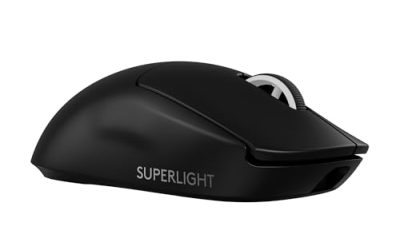
Logitech G Pro X Superlight 2
- Best for: Players who want a proven esports shape with long battery life and no distractions.
- Weight: 60 g
- Sensor: HERO 2 sensor, up to 44,000 DPI
- Polling rate: up to 8,000 Hz
- Connection: LIGHTSPEED wireless, USB-C charging
Players who want a proven esports shape with long battery life and no distractions.
There is no RGB lighting and no Bluetooth, so confirm the plain black design and the dongle-only wireless setup suit your desk.
The Superlight 2 is the most copied shape in competitive FPS, and for good reason. It weighs 60 grams, uses the HERO 2 sensor with up to 44,000 DPI, and runs on Logitech LIGHTSPEED wireless with polling up to 8,000 Hz. The symmetrical body works for claw and fingertip grips and for smaller palm grips, while the long battery life means you can play for days between charges at standard polling. It skips RGB and extra buttons entirely, keeping the shell clean and the weight down, which is exactly what most FPS players want.
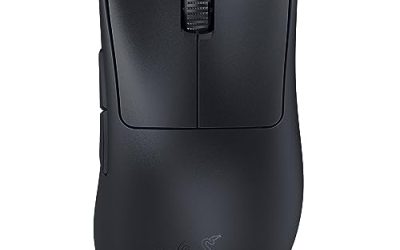
Razer DeathAdder V3 Pro
- Best for: Palm and claw grip players with larger hands who want an ergonomic FPS mouse.
- Weight: 63 g
- Sensor: Focus Pro 30K optical sensor, up to 30,000 DPI
- Connection: HyperSpeed wireless, wired USB-C
- Switches: Gen-3 optical mouse switches
Palm and claw grip players with larger hands who want an ergonomic FPS mouse.
The right-handed shape does not suit left-handed players, so check your dominant hand before buying.
The DeathAdder V3 Pro is the ergonomic option for FPS players with larger hands or a palm grip. Its right-handed shape fills the hand without adding bulk, and at 63 grams it stays light enough for fast flicks despite the bigger shell. The Focus Pro 30K sensor handles low-sensitivity arm aiming without spin-outs, and HyperSpeed wireless keeps latency on par with a wired connection. Grip tape comes in the box, which helps during long ranked sessions when your palm starts to sweat.
HyperX Pulsefire Haste 2 Wireless
- Best for: Players who want a light wireless FPS mouse with long battery life at a mid-range tier.
- Weight: 61 g
- Sensor: HyperX 26K sensor, up to 26,000 DPI, 650 IPS
- Connection: 2.4 GHz wireless and Bluetooth 5.1
- Buttons: 6 programmable buttons
Players who want a light wireless FPS mouse with long battery life at a mid-range tier.
DPI stages and lighting need NGENUITY software on a PC, so set them up before you play on another machine.
The Haste 2 Wireless is the value pick for players who want a light wireless FPS mouse without flagship pricing. It weighs 61 grams, uses the HyperX 26K sensor with up to 26,000 DPI and 650 IPS tracking, and connects over both 2.4 GHz wireless and Bluetooth 5.1. Battery life runs up to 100 hours, and the shell uses a solid design with no holes, so dust and sweat stay out of the body. DPI stages, macros, and lighting are set through HyperX NGENUITY software on a PC.
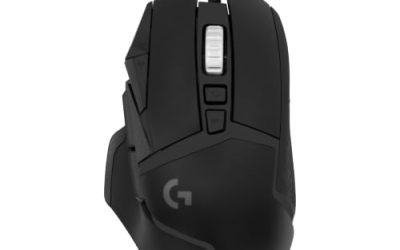
Logitech G502 HERO
- Best for: Wired FPS players who want extra buttons and a tuneable weight system.
- Sensor: HERO 25K sensor, up to 25,600 DPI
- Buttons: 11 programmable buttons
- Weights: 5 removable 3.6 g weights
- Weight: 121 g with all weights installed
Wired FPS players who want extra buttons and a tuneable weight system.
At 121 grams with all weights installed it is the heaviest mouse here, so remove weights first if you want a lighter feel.
The G502 HERO is the wired pick for FPS players who want extra buttons and a tuneable feel. The HERO 25K sensor tracks up to 25,600 DPI, and five removable 3.6-gram weights let you shift the balance toward the front or back of the shell. Eleven programmable buttons cover push-to-talk, melee, and utility binds, while on-board memory stores your settings so they travel with the mouse. A wired connection means no charging and no receiver to manage, which suits players who never want to think about battery life.
Which One Fits Your Situation
You play ranked FPS on a high-refresh monitor
Pick the Razer Viper V3 Pro. Its 54-gram shell, Focus Pro 35K sensor, and 8,000 Hz polling make the most of a 240 Hz or faster display, where the extra report rate actually shows up in smoother tracking. The symmetrical shape suits the claw and fingertip grips most competitive players use, and the long battery life at standard polling means it survives a full evening of matches.
You have larger hands and a palm grip
Pick the Razer DeathAdder V3 Pro. The ergonomic right-handed shell supports a full palm grip without forcing your fingers into a cramped claw, and at 63 grams it stays light for its size. The Focus Pro 30K sensor handles the wide arm movements low-sensitivity players rely on, and the included grip tape keeps the shell secure during long sessions.
You want wireless FPS play without a flagship budget
Pick the HyperX Pulsefire Haste 2 Wireless. It gives you a 61-gram shell, a 26,000 DPI sensor, and up to 100 hours of battery at a mid-range tier, with both 2.4 GHz and Bluetooth connections. It is the sensible choice if you play FPS several nights a week but do not need the absolute lightest shell or the fastest polling rate.
You want a wired mouse with room to grow
Pick the Logitech G502 HERO. The wired connection removes battery worries entirely, the eleven buttons cover every bind an FPS player needs, and the removable weights let you tune the balance as your grip settles. It is also the easiest pick to live with if you share one mouse between gaming and everyday work.
Common Mistakes
- Buying the highest DPI number instead of checking weight, shape, and sensor quality first.
- Choosing a mouse that is too long or too short for your hand, which makes every grip feel wrong.
- Enabling 8,000 Hz polling on a 60 Hz monitor, where the extra reports add battery drain without visible benefit.
- Picking a heavy MMO-style mouse with a dozen side buttons for FPS play, where the extra weight slows flicks.
- Ignoring battery life at your real polling rate and running out of charge mid-match.
Frequently Asked Questions
What DPI should I use for FPS games?
Most FPS players use 400 to 1,600 DPI, because that range gives fine control without making small hand movements jump across the screen. Set your mouse to 800 DPI as a starting point, then adjust the in-game sensitivity until a full sweep of your mousepad turns your character about 180 degrees. The sensor maximum matters far less than finding a setting your arm can repeat.
Is a wireless mouse as fast as a wired mouse for FPS?
Yes, with the right connection. The wireless mice in this guide use a dedicated 2.4 GHz receiver, and their latency matches wired mice in normal play. Bluetooth is a different story: it adds lag and is meant for desktop work, not competitive shooting. Always play over the included 2.4 GHz dongle or a wired cable, and keep the receiver close to the mouse with a clear line of sight.
Does 8,000 Hz polling make a real difference?
It can, but only on a fast monitor. On a 240 Hz or 360 Hz display, 8,000 Hz polling feels smoother and more immediate. On a 60 Hz or 144 Hz display, the difference is hard to notice, and the higher polling rate drains the battery faster. If your monitor runs at 144 Hz or below, 1,000 Hz polling is enough; spend the money on shape and weight instead.
How light should an FPS mouse be?
Most competitive FPS players prefer 50 to 70 grams, because a lighter mouse needs less effort to start and stop, keeping flicks fast and easing wrist fatigue. Below 50 grams the shell can feel flimsy or too small for larger hands. With a palm grip or very low sensitivity and big arm movements, a 60 to 70 gram mouse often feels more stable than the lightest option.
Related guides
More from Amazon
Programs that pair well with the guide above. Offers and eligibility are set by Amazon and may change.
Free shipping on eligible items, Prime Video and more. Eligible new members can start with a free trial.
Start a Prime free trialAd-free music streaming. Eligible new subscribers can start with a free trial.
Try Music Unlimited freeA Prime membership for ages 18-24 with a trial period. Eligibility is set by Amazon.
See Prime for Young AdultsAudiobooks and podcasts to listen to on the go. Eligible new members can start with a free trial.
Try Audible freeAs an Amazon Associate we earn from qualifying purchases.