
When designing a home office that doubles as a broadcasting studio, every square inch of surface space counts. Streaming on Twitch requires rapid scene transitions, audio adjustments, and chat management, but building a functional workspace shouldn’t turn your desk into an unsightly tangle of industrial electronics. Twitch creators frequently find themselves torn between two main input devices: a mechanical macro pad or a dedicated software-integrated stream controller. Choosing between a macro pad vs stream deck for twitch streaming comes down to how you balance physical ergonomics, visual aesthetics, tactile feedback, and desktop real estate.
A standard mechanical macro pad gives you physical, tactile switches that can be mapped to hotkeys, offering a satisfying click and seamless integration with mechanical keycap sets. Conversely, a stream deck utilizes customizable LCD keys or dedicated visual software layers to display dynamic icons that change based on your active application. While both devices serve to streamline your workflow, their physical footprints, cable management needs, and visual presence in a residential setting differ dramatically. As we evaluate streaming desk designs for 2026, finding the right hardware means assessing not just what these devices do on screen, but how they feel and look inside your living space.
As an Amazon Associate we earn from qualifying purchases at no extra cost to you.


Top 3 picks at a glance
Quick Verdict
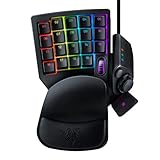
If your priority is visual clarity, seamless OBS integration, and instantly recognizable status icons without memorizing key bindings, a stream deck like the 15-key Elgato Stream Deck MK.2 Studio Controller (priced around $129.99) is the ultimate streaming command center. However, if you prefer tactile typing feedback, deep hardware durability, quiet whisper-silent switches for shared living spaces, or physical keycap customization that matches your interior aesthetic, a mechanical macro pad—or a hybrid board like the VSD M18 Macro Pad ($54.99) or the ergonomic Razer Tartarus V2 ($74.95)—delivers superior physical control at a lower long-term cost.
Side by Side
| Metric | Mechanical Macro Pad | Stream Deck Controller |
|---|---|---|
| Comfort & Ergonomics | ||
| Build Durability | ||
| Price Range | ||
| Maintenance & Cleaning | ||
| Space Needed | ||
| Look & Aesthetic | ||
| Resale Value | ||
| Best For |
Where Macro Pad Wins
Mechanical macro pads excel in tactile responsiveness and long-term durability. When you are live on Twitch, being able to mute your microphone or switch audio channels by feel alone—without looking down from your main monitor—is a huge operational advantage. Mechanical switches offer distinct physical travel (typically 3.5mm to 4.0mm) and high keycap profile options like OEM or Cherry profiles, allowing your fingers to locate buttons instinctively through muscle memory.
From a home design perspective, macro pads integrate seamlessly into residential office aesthetics. Available in anodized aluminum cases, matte polycarbonate, or warm frosted finishes, macro pads allow you to swap keycaps to match your room’s color palette. If your desk features warm wood tones, brass accents, or Scandinavian minimalism, you can install custom artisan keycaps or neutral-toned profile sets. Furthermore, hot-swappable PCB boards let you install silent linear switches (such as Cherry MX Silent Reds or Gateron Clears) to prevent distracting key clicks from picking up on high-sensitivity condenser microphones during quiet late-night streams.
Macro pads are also remarkably cost-effective and low-power. Units drawing power via standard USB-A or USB-C cables consume minimal wattage (around 0.5W for non-RGB models, up to 1.5W for fully backlit variants), leaving your computer’s USB bus unburdened. Options range from budget numeric keypads to specialized streaming boards like the VSD M18 Macro Pad Programmable Keypad ($54.99) or broad ergonomic controllers like the Razer Tartarus V2 Left-Handed Gaming Keypad ($74.95), giving buyers flexible entry points without requiring subscription software or proprietary display drivers.
Where Stream Deck for Twitch Streaming Wins
While mechanical macro pads rely on muscle memory, a stream deck relies on absolute visual feedback. The primary advantage when evaluating a macro pad vs stream deck for twitch streaming is the dynamic LCD key interface. Each key standardly houses a tiny color display capable of rendering custom icons, animated GIFs, or live data feeds. You do not need to memorize whether Key 4 triggers your “BRB” scene or lowers Spotify volume; the icon explicitly displays your current scene or dynamic status.
The software ecosystem surrounding stream decks is purpose-built for broadcasting software like OBS Studio, Streamlabs, Twitch Dashboard, and VoiceMeeter. Rather than binding a macro pad to complex multi-key keyboard shortcuts (like Ctrl+Shift+Alt+F12) and assigning those shortcuts in OBS, a stream deck communicates directly with software APIs. Pressing a single key can execute nested multi-actions: muting Discord, launching an overlay, switching scene collection, and posting an automated tweet simultaneously.
Devices like the Elgato Stream Deck MK.2 Studio Controller ($129.99) feature a compact footprint (4.6 x 3.3 x 1.0 inches, weighing roughly 0.32 lbs) that sits neatly beneath a monitor riser. The angled desk stand positions the display grid at an optimal viewing angle (45 degrees), minimizing reflective glare from overhead ambient lighting. For creators managing complex interactive broadcasts with dozens of commands, folders and page-swapping abilities give a 15-key stream deck virtually infinite operational depth on a small physical footprint.
Cost Over 5 Years
When assessing total cost of ownership over a five-year period, hardware longevity, switch wear, and software support play critical roles. Mechanical macro pads possess exceptional structural lifespan. Because mechanical switches are rated for 50 to 80 million actuations, a well-built macro pad rarely suffers hardware failure. If a single switch fails after three years, a hot-swappable replacement switch costs under $1.00 and takes thirty seconds to replace, yielding a typical 5-year total expenditure equal to its initial purchase price ($50 to $90).
Stream decks carry a higher initial purchase price ($130 to $250) and incorporate integrated LCD screens, ribbon cables, and rubber dome contact pads. While built to high manufacturing standards, liquid spills or wear on rubber membrane layers cannot be repaired as easily as modular keyboard switches. Furthermore, stream decks consume slightly more power (up to 2.5W via USB 2.0/3.0 connections to power internal LCD matrixes), though electricity costs remain negligible (under $0.50 annually). Over five years, account for potential upgrades as software integration grows, bringing estimated 5-year costs closer to $130 to $200.
Which One for Your Home
Small Apartment Desk Setup
In a micro-apartment or bedroom nook where your desk width is limited to 36 to 42 inches, minimizing visual clutter is paramount. A 15-key stream deck or compact macro pad measuring under 5 inches wide will keep your primary mousepad area clear. A stream deck excels here because its folder navigation lets you stack dozens of functions into a single 4.6-inch footprint, eliminating the need for a secondary full-size keyboard or wide macro board.
Shared Family Room or Space with Kids/Pets
If your streaming setup sits in a living room or shared family home, physical durability and low ambient noise are essential. Mechanical macro pads configured with silent linear switches prevent clicky switch noise from disturbing family members watching TV nearby. Furthermore, macro pads lack delicate LCD glass screens that could be damaged by pets jumping onto desks or young children playing nearby.
Rental Home or Flexible Workspace
Renters who frequently adjust their furniture layouts or work from dual-purpose hot desks need gear that connects swiftly without deep software reconfiguration. A plug-and-play mechanical macro pad with onboard memory saves your hotkeys directly to the device hardware. You can unplug it from your streaming PC, plug it into a work laptop, and retain basic shortcut functionality without installing background control software on a employer-managed computer.
Dedicated Long-Term Home Office/Studio
For home owners with a permanent, dedicated studio room, custom lighting, and fixed cable passthrough channels, a stream deck serves as the ultimate media control center. Mounted to a monitor arm or recessed into a custom desktop riser, its illuminated icons complement accent lighting, Philips Hue integrations, and professional audio interface controls, creating a cohesive, professional broadcast environment.
FAQ
Can I use a macro pad and a Stream Deck together on the same setup?
Yes. Many veteran Twitch streamers use a stream deck for visual scene transitions, Twitch chat commands, and lighting control, while keeping a small 4-key or 6-key mechanical macro pad nearby specifically for silent microphone mutes, push-to-talk, or instant audio adjustments that require blind tactile feedback.
Do mechanical macro pads pick up click noise on broadcast microphones?
Standard mechanical switches (especially tactile “brown” or clicky “blue” switches) produce audible sounds that cardoid condenser microphones can pick up. To keep your broadcast audio clean in a home setup, choose macro pads equipped with linear silent switches or dampening O-rings inside the keycaps.
Does a Stream Deck slow down PC performance on home computers?
Stream deck software runs as a lightweight background process, consuming approximately 50 to 150 MB of RAM and negligible CPU cycles (under 1%). On modern multi-core gaming systems, performance impact during live gaming and streaming is imperceptible.
Are macro pads harder to program for Twitch than a Stream Deck?
Setting up a macro pad requires manually mapping key combinations in software (such as VIA, QMK, or device-specific utilities) and then binding those key combinations inside OBS or Twitch. A stream deck simplifies this process with pre-built drag-and-drop actions, making initial setup considerably faster for non-technical users.


