
Designing a home workspace or broadcast corner requires balancing electronic performance with residential aesthetics. As remote meetings, creative content creation, and live broadcasts become permanent fixtures in modern interior design, desk lighting has evolved beyond basic task lamps. When weighing a bi color vs rgb key light for streaming, home setup enthusiasts face a decision that affects not just visual camera quality, but also room ambiance, spatial organization, and cable clutter.
A key light serves as your primary illumination source, dictating how clearly your camera captures human skin tones and how well your face separates from the background. Bi-color key lights focus purely on white light, allowing you to fine-tune color temperature across a warm-to-cool spectrum. RGB key lights incorporate full red, green, and blue light-emitting diodes (LEDs) to offer 360-degree color customization alongside traditional white light. Choosing the right option for your home depends on whether you value maximum lumen efficiency and clean architectural simplicity or versatile atmospheric control.
As an Amazon Associate we earn from qualifying purchases at no extra cost to you.


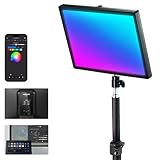
Top 3 picks at a glance
Quick Verdict
Bi-color key lights are ideal for remote corporate workers, minimalist interior designs, and dedicated studio spaces where raw illumination power, natural skin-tone rendering (CRI 95+), and simple physical dial controls take priority. They deliver superior brightness per dollar and blend effortlessly into classic home office furniture layouts.
RGB key lights excel in multi-purpose residential spaces, gaming setups, and creative home studios. Their ability to switch from natural daytime lighting to vibrant background accents—or cast color on rear walls using dual-sided designs—eliminates the need for separate accent fixtures, making them the superior space-saving solution for modern, compact desks in 2026.
Side by Side
| Feature | Bi-Color Key Light | RGB Key Light for Streaming |
|---|---|---|
| Visual Comfort & Eye Strain | Soft, diffused natural white; broad panels reduce glare during long work sessions. | Highly customizable; colored modes can cause eye fatigue if used as direct key lighting without diffusion. |
| Durability & Thermals | Extremely high; simple LED diode configurations with passive aluminum heatsinks. | High; additional diode channels generate slightly more heat at full RGB saturation; silent active/passive cooling. |
| Price Range | $30 – $190+ (e.g., standard panels to full dual-stand kits). | $60 – $220+ (varies by wattage, app control, and edge-lit diffusion quality). |
| Maintenance & Cable Management | Simple power adapter; minimal software setup; physical dial control. | Requires Wi-Fi/Bluetooth or desktop software synchronization; tidier desk if replacing ambient lamps. |
| Space Needed | Requires 1.5″–2.5″ desk clamp depth or dedicated floor/tripod stand footprint (20″–24″ base spread). | Compact desk clamps; thin edge-lit panels (0.5″ to 1″ profile) save rear desktop depth. |
| Interior Look & Aesthetic | Neutral, professional, corporate; mimics high-end executive architectural lighting. | Modern, expressive, atmospheric; adds customizable color washes to empty wall space. |
| Resale & Universal Appeal | High universal appeal for home buyers, photographers, and video calls. | Moderate-to-high appeal, primarily favored by younger creators, streamers, and gamers. |
| Best For | Executive video calls, beauty streaming, simple minimal offices, large studio spaces. | Interactive live streams, multi-use bedroom/offices, mood-focused background setups. |
Where Bi Color Wins
Bi-color key lights prioritize raw light quality, high lumen output, and visual clarity. By dedicating 100% of their panel array to alternating warm (typically 2700K to 3200K) and cool (5000K to 6500K) white LEDs, these fixtures deliver exceptional brightness without consuming excessive power. For home users who sit in rooms with varying daylight exposure, a bi-color light easily matches changing ambient sun light throughout the day.
The primary advantage of bi-color units lies in color rendering index (CRI) consistency and cost efficiency. High-CRI panels (CRI 95+ and TLCI 97+) prevent skin tones from looking washed out, muddy, or green on camera. Large-format bi-color arrays—such as the classic NEEWER 2 Pack Bi Color 660 LED Video Light and Stand Kit, 3200-5600K ($186.19)—offer spacious diffusion surfaces that cast broad, gentle shadows, which is flattering for camera presentation and softer on the eyes during eight-hour workdays. Even retrofitted home fixtures using straightforward components like a Bi-Color Corn bulb ($0.33) rely on this fundamental principle: efficient, pure white temperature tuning.
- Higher Lux Output per Watt: Densely packed white LED arrays yield stronger illumination, easily pushing past 2,500 lux at 0.5 meters to overpower bright windows behind your desk.
- Foolproof Physical Controls: Tactile physical knobs allow instant adjustment of brightness (0–100%) and color temperature without needing phone apps or Wi-Fi pairing.
- Architectural Harmony: Blends seamlessly into traditional residential furniture without glowing uncomfortably when turned off; looks like modern office equipment rather than a gaming peripheral.
Where Rgb Key Light for Streaming Wins
While bi-color panels focus on clear, natural white light, RGB key lights excel at spatial transformation and creative flexibility. Equipped with full Red-Green-Blue spectrum control alongside warm/cool white diodes, an RGB panel can shift from an executive meeting setting at 4000K to a cinematic 360-degree HSL (Hue, Saturation, Lightness) ambient light source at the touch of a button.
For home environments where the desk sits in a open living room or guest bedroom, multi-functional lighting fixtures save valuable physical space. Modern edge-lit designs like the NEEWER GL25C LED RGB Streaming Key Light, APP/PC Control 25W 2500Lux/0.5m 2900K-7000K CRI95+/TLCI97+ Full RGB Dimmable Edge Emitting Silent Webcam Video Light with Desk Stand ($104.49) pack high output into ultra-thin panel profiles that clamp flush to the rear of a desk, running silently without internal cooling fans. Furthermore, innovative hybrid designs like the NEEWER NG01 Dual Sided RGB LED Streaming Key Light, Smart Lamp for Desk ($63.99) illuminate your face with clear white light on the front side while projecting rich RGB color onto the back wall, acting as both key light and accent lamp in a single footprint.
- Multi-Purpose Atmosphere: Functions as a high-CRI video light by day and transforms into a mood-enhancing background lamp or soft room accent in the evening.
- Branding and Visual Depth: Allows streamers to match background wall washes to their personal channel branding, overlaying rich blues, purples, or warm ambers without buying additional lighting fixtures.
- Integrated Smart Controls: Native desktop software and smartphone app integration enable hotkey switching between lighting scenes directly from your keyboard or stream controller.
Cost Over 5 Years
Evaluating the true cost of streaming lights involves initial hardware investment, electricity consumption, and secondary accessory requirements (such as desk clamps, softboxes, or ambient background lights).
A standard 25W to 45W key light operating 4 hours per day consumes roughly 36 to 65 kilowatt-hours (kWh) annually. At an average US residential power rate of $0.16 per kWh, running a key light costs less than $10 per year in electricity. Both bi-color and RGB solid-state LED panels feature long operational lifespans—typically rated for 30,000 to 50,000 hours—meaning the primary panel hardware will easily last over 5 to 10 years of daily home use.
The financial difference comes down to initial hardware purchase and setup consolidation:
- Bi-Color 5-Year Ownership Cost: $50–$190 initial cost + $30 annual electricity ($30–$40 total over 5 years) = $80 to $230 total. However, if your video setup requires colored ambient background light to add visual depth against a plain home wall, you will need to spend an extra $40–$100 on secondary background accent fixtures.
- RGB Key Light 5-Year Ownership Cost: $65–$130 initial cost + $30 annual electricity ($30–$40 total over 5 years) = $95 to $170 total. Because RGB key lights (especially dual-sided models) can double as mood lighting and room accents, they frequently reduce overall equipment spending for budget-conscious home creators.
Which One for Your Home
Small Apartment Desk Setup
In compact living spaces or studio apartments, minimizing visual clutter and footprint is paramount. An RGB key light featuring an edge-lit panel and a tight C-clamp mount (requiring less than 2 inches of desk edge clearance) is the optimal choice. Its thin profile lets you push your desk flat against a wall, while the soft diffusion prevents harsh reflections in tight quarters. Off-stream, the light can face the wall to serve as a space-saving ambient floor or desk lamp.
Shared Living Room or Family Space
When your streaming desk shares real estate with a family room, visual subtlety matters. A compact bi-color panel with physical dial controls fits quietly into shared spaces without adding distracting colored ambient glows during general off-hours. Its immediate operation means family members can easily switch it on for a quick video call without navigating mobile apps or Wi-Fi menus.
Rental Property or Temporary Setup
Renters who cannot mount wall sconces or paint accent walls benefit immensely from an RGB key light. Casting saturated colored light onto neutral white or beige rental walls creates a custom, professional broadcast backdrop without risking lease deposits. Look for desktop-clamp models that adjust vertically from 18 to 30 inches to adapt to varied rental desk heights.
Dedicated Home Studio or Long-Term Home
If you have a dedicated room with space for floor-standing light positions and dedicated background fixtures, traditional bi-color panels are ideal. Paired with sturdy stands, large bi-color key lights offer maximum soft light coverage across your entire desk layout, ensuring perfectly consistent skin tones for professional video production, webinars, and long broadcasting sessions.
FAQ
Does an RGB key light render natural skin tones as accurately as a bi-color panel?
Yes, provided the RGB key light includes dedicated warm and cool white LED chips alongside its RGB diodes (often labeled as RGBWW). High-quality RGB key lights offer CRI ratings of 95+ and TLCI ratings of 97+, ensuring that skin tones look natural when operating in standard white temperature modes (2900K–7000K).
Can I use an RGB key light as standard room lighting when not streaming?
Absolutley. When set to warm white color temperatures (2700K–3200K) at reduced brightness, an RGB key light functions as an elegant desk lamp or ambient corner lamp. Swiveling dual-sided panels toward a wall also allows you to bounce soft light into the room for indirect evening illumination.
Do key lights require heavy C-stands, or can they clamp directly to my desk?
Most modern desktop streaming key lights weigh between 1.5 and 3.5 pounds and come with low-profile, adjustable aluminum C-clamps. These clamps attach directly to desk edges between 0.5 inches and 2.5 inches thick, eliminating the need for heavy, space-consuming floor tripods in a residential office.
What wattage and lux rating do I need for a home streaming setup?
For a typical desk depth of 24 to 30 inches, a key light rated between 20W and 45W that outputs 1,500 to 2,500 Lux at 0.5 meters provides more than enough brightness. This allows you to dim the light to a comfortable 30%–50% intensity for daily use, preventing eye strain while keeping camera ISO settings clean and noise-free.


