
Top 3 picks at a glance

The Short Answer
For most streamers, the short answer is that you need one or two key lights depending on your room’s ambient lighting and the layout of your desk. If you stream in a room with a consistent, diffused ambient light source (such as a large window with sheer curtains or soft overhead fixtures), a single high-quality key light placed at a 45-degree angle to your face is usually sufficient. However, if you stream in a dark room, a basement, or late at night, you will need two key lights—or one primary key light paired with a secondary fill light—to eliminate harsh shadows on the side of your face opposite the main light source.
As streaming setups evolve in 2026, the focus has shifted from simply buying the brightest light to choosing the correct physical size and form factor that integrates seamlessly with your existing furniture. A massive studio panel clamped to a shallow desk will cause severe eye strain and clutter your workspace, while a tiny monitor-mounted light will fail to illuminate a wide-angle camera setup in a spacious home office.
As an Amazon Associate we earn from qualifying purchases at no extra cost to you.


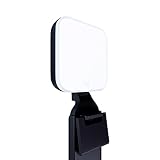
Standard Sizes
Choosing the right physical size for your key light prevents your streaming setup from looking cluttered and ensures the light source is large enough to cast a soft, flattering glow over your features. Small, concentrated light sources create harsh, specular highlights and deep shadows, whereas larger panels diffuse the light naturally across your skin.
Below is a breakdown of standard streaming key light sizes, physical footprints, and typical price ranges to help you plan your desk space:
| Light Category | Panel Dimensions (Inches) | Panel Dimensions (cm) | Wattage / Output Range | Ideal Desk Depth | Price Range (USD) |
|---|---|---|---|---|---|
| Compact Monitor Mount (e.g., Logitech Litra Glow style) | 3.6″ x 3.6″ x 1.2″ | 9.1 x 9.1 x 3.0 cm | 5W – 10W (Up to 250 Lumens) | 18″ to 24″ (45 – 60 cm) | $40 – $70 |
| Desk Ring Light (e.g., Weilisi 10.2″ style) | 10.2″ Diameter | 26.0 cm Diameter | 10W – 15W (Up to 800 Lumens) | 20″ to 28″ (50 – 70 cm) | $25 – $50 |
| Medium Desktop Panel (e.g., NEEWER GL25B style) | 12.9″ x 8.5″ x 1.1″ | 32.9 x 21.6 x 2.8 cm | 20W – 25W (Up to 1,500 Lumens) | 24″ to 30″ (60 – 75 cm) | $75 – $120 |
| Professional Studio Panel (e.g., Elgato Key Light style) | 13.7″ x 9.8″ x 1.1″ | 35.0 x 25.0 x 3.0 cm | 30W – 45W (Up to 2,800 Lumens) | 30″ to 36″+ (75 – 90+ cm) | $150 – $250 |
How to Measure Your Space
Before purchasing any lighting equipment, you must measure your physical workspace to ensure the mounting hardware and light panels can actually fit. Follow these steps to map out your setup:
- Measure Your Desk Depth: Use a tape measure to determine the distance from the front edge of your desk (where you sit) to the back edge (where the monitor sits). If your desk is less than 24 inches (60 cm) deep, avoid large panels; they will sit too close to your eyes, causing discomfort. Opt for compact monitor-top lights or a slim, flexible arm ring light instead.
- Check Under-Desk Clearance for C-Clamps: Most professional key lights use a metal C-clamp to attach to the back of your desk, saving valuable surface space. Measure the thickness of your desktop. Standard C-clamps require a flat surface thickness of 0.5 inches to 3 inches (1.2 to 7.6 cm). Ensure your desk does not have a metal support beam or a privacy backboard running directly along the rear edge that would block the clamp from tightening.
- Calculate Vertical Clearance: Measure the distance from the surface of your desk to the ceiling or any overhead shelving. A standard key light stand extends from 20 inches to 48 inches (50 to 120 cm). You want the center of your light panel to sit roughly 8 to 12 inches (20 to 30 cm) above your eye level, angled downward at 45 degrees. Make sure you have enough overhead clearance to raise the light without hitting shelves or ceiling fans.
- Map the “45-Degree Triangle”: Sit comfortably at your desk and look directly at your webcam. Visualize two lines extending outward from your nose at 45-degree angles to your left and right. This is where your key lights should ideally be clamped. Measure these spots to ensure you have enough desk edge real estate to mount the stands without interfering with your computer tower, speakers, or acoustic panels.
By Room or Use Case
Every streaming environment is unique. The size of your room, the height of your ceilings, and your physical desk style dictate how many lights you need and where they should be placed.
The Minimalist Bedroom Desk Setup
If you stream from a small bedroom desk (typically 40 to 48 inches wide and 20 to 24 inches deep), physical space is at a premium. In this scenario, one compact key light is your best option. A monitor-mounted light or a single 10-inch ring light with a slim C-clamp stand will keep your workspace clear of clutter. Because bedroom setups often feature light-colored walls, the light from a single source will bounce off the walls and naturally fill in the shadows on the opposite side of your face, eliminating the need for a secondary light.
The Dedicated Home Studio / Office
For a medium-sized room (roughly 10×10 feet to 12×12 feet) with a standard 60-inch executive or standing desk, you should opt for two medium-to-large panel key lights. Mount them on the left and right sides of your desk, angled inward at 45 degrees. Set the primary light (your “key”) to 100% brightness to define your facial structure, and set the secondary light (your “fill”) to 40% to 50% brightness to gently soften the shadows. This configuration creates a professional, cinematic depth of field that separates you from your background.
The Multi-Camera or Creative Workshop Space
If you stream crafts, cooking, tabletop gaming, or physical product reviews, your camera angles will change constantly. For these wide-angle spaces, you will need three lights. This setup includes two large, high-wattage panel lights (30W to 45W) mounted on tall stands to illuminate you and your immediate workspace, plus a third overhead “down-light” or “boom-arm light” pointing directly down at your hands or desk surface. This ensures that even when you lean over your desk to assemble a model or draw, your body does not cast a shadow over your work.
Common Sizing Mistakes
Avoid these frequent layout and purchasing errors when designing your streaming setup:
- Using a Stand That Is Too Short: A very common mistake is buying a key light with a stand that only extends to 18 inches (45 cm). If the light is positioned at eye level or lower, it will blind you while you look at your monitor, and it will cast long, unflattering shadows upward onto your ceiling, making your chin and nose look disproportionately large.
- Clamping Heavy Panels to Glass or MDF Desks: Standard professional key lights can weigh 2.5 to 4 pounds (1.1 to 1.8 kg) per panel, not including the heavy steel mounting stand. Clamping this concentrated weight onto a hollow-core MDF desk (like cheap flat-pack furniture) or a glass-top desk can warp, crack, or completely shatter the surface over time. Use a wooden block spacer to distribute the clamp’s pressure, or opt for a weighted desktop base instead.
- Mixing Brands with Mismatched Color Temperatures: If you buy a cheap ring light for one side of your desk and a premium panel for the other, you will likely struggle with mismatched color rendering. Ensure both lights have adjustable color temperatures (ranging from a warm 2900K to a cool 7000K) so your camera can balance the colors accurately without making one side of your face look orange and the other blue.
- Over-Sizing the Light for a Dual-Monitor Setup: If you use two 27-inch monitors side-by-side, your screens will block any small key lights placed directly behind them. Measure your total monitor width first; you may need extra-tall desk mounts or wall-mounted arms to elevate the key lights completely clear of your screens.
FAQ
Can I use one key light instead of two?
Yes, you can absolutely use a single key light. To make a single-light setup work, place the light slightly off-center (about 30 degrees to one side of your camera) and elevate it so it shines downward. To prevent the non-illuminated side of your face from falling into complete darkness, you can place a white foam board or a photographic reflector on your desk opposite the light to bounce some of the illumination back onto your cheek.
How far away should my key light be from my face?
Your key light should ideally be positioned between 24 and 36 inches (60 to 90 cm) away from your face. If the light is closer than 24 inches, it will feel uncomfortably hot, cause eye strain, and overexpose your skin on camera. If it is further than 36 inches, the light will lose its soft quality, requiring you to crank the brightness to maximum, which can wash out your background.
What is the difference between a key light and a fill light?
The key light is your primary light source; it is the brightest light in your setup and defines the shape and contours of your face. The fill light is a secondary, dimmer light placed on the opposite side of your face. Its sole purpose is to “fill” in the deep shadows created by the key light, ensuring your camera can capture clear detail across your entire face without losing contrast.
Are ring lights better than panel key lights for streaming?
Ring lights are excellent for beauty, makeup, and single-camera portrait streaming because they provide even, circular illumination directly around the camera lens. However, for general gaming or office streaming, flat panel key lights are superior. Panels distribute a wider, softer beam of light, are easier to mount behind large computer monitors, and do not create the distinct, distracting circular “halo” reflections in your eyes or glasses that ring lights do.


