The best 13th Gen Intel CPU for gaming is the Core i5-13600K for most people: it delivers strong frame rates without the cost, heat, and power draw of the top Core i9 models. Choose the i5-13400F for a tighter budget, the i7-13700K for high-refresh gaming plus heavy multitasking, or the i9-13900K when demanding work matters as much as games.
These recommendations assume a current, properly updated motherboard BIOS. Intel’s 13th Gen desktop CPUs use the LGA1700 socket, but socket fit alone does not guarantee compatibility: check the motherboard’s CPU support list and BIOS requirements before buying.
As an Amazon Associate we earn from qualifying purchases at no extra cost to you.
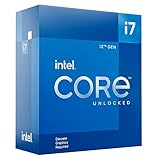


Top 3 picks at a glance
Quick comparison: which 13th Gen CPU fits?
| CPU | Cores (P+E) | Max turbo power | Gaming fit | Typical price range |
|---|---|---|---|---|
| Core i5-13400F | 10 (6P+4E) | 148 W | Value builds with a discrete GPU | Usually $150–$220 |
| Core i5-13600K | 14 (6P+8E) | 181 W | Best balance for high-refresh gaming | Usually $250–$350 |
| Core i7-13700K | 16 (8P+8E) | 253 W | Gaming and demanding background workloads | Usually $350–$500 |
| Core i9-13900K | 24 (8P+16E) | 253 W | Top-tier gaming plus heavy productivity | Usually $450–$650 |
Prices are broad market ranges, not fixed current quotes; local availability, condition, and sales can change them. Max turbo power is a manufacturer rating, not a prediction that the CPU will draw that amount constantly. Actual consumption depends on the game, motherboard power settings, cooling, and workload.
How the tiers compare in games
Core i5-13400F: the sensible budget choice
The 13400F’s six Performance-cores and four Efficient-cores are enough for many gaming systems, especially when the graphics card is the main limit. It can be a good match for midrange GPUs and 1080p or 1440p gaming when you want to spend more of the budget on graphics.
The “F” means there is no integrated graphics. You need a discrete GPU to get a display output, and the CPU cannot provide a fallback display if that card fails. If you find the non-F Core i5-13400 at a small premium, its integrated graphics can be useful for troubleshooting or basic display use.
Core i5-13600K: the best all-rounder
The 13600K is the strongest general-purpose pick here. Its six P-cores provide high gaming performance, while eight E-cores help with streaming, voice chat, and other background tasks. It makes particular sense for high-refresh 1080p gaming, where the CPU is more likely to limit frame rates than at higher resolutions.
It can also be paired with a B-series motherboard if you do not plan to overclock; buying a K-series processor does not require overclocking. You will still need a capable cooler, and the processor does not include one.
Core i7-13700K: more headroom, more heat
The 13700K adds two P-cores and keeps eight E-cores. That extra capacity can help when gaming overlaps with CPU-heavy work, such as compiling, rendering, or running demanding applications in the background. In games alone, it is often a smaller step up from the 13600K than the price and cooling requirements might suggest.
Core i9-13900K: only worth it for a broader workload
The 13900K’s 24 cores are useful for heavily threaded work, but most games do not turn all of them into proportionally higher frame rates. For a gaming-only PC, the extra money is usually better spent on a faster GPU, a larger SSD, or a higher-quality monitor. Buy it when you have a clear use for its productivity capacity and can cool it properly.
Exact frame rates vary too much by game, graphics card, memory, and test settings for one benchmark number to be universal. As a practical comparison, expect the gap between these CPUs to show most at low resolutions and low graphics settings with a powerful GPU. At 1440p and especially 4K with demanding settings, the GPU more often sets the limit, so moving from an i5 to an i7 or i9 may make little visible difference.
Power, cooling, and the rest of the build
Power ratings help explain why the higher tiers need more cooling. The 13400F is easier to cool in a well-ventilated case. The 13600K can reach high power under sustained heavy loads, while the 13700K and 13900K can sustain up to 253 W under Intel’s maximum turbo-power specification. A game may draw less than a stress test, but an unrestricted motherboard can still make temperatures and fan noise rise.
A quick power-budget calculation
For a 13600K system, estimate the CPU at its 181 W maximum turbo power and a GPU at 300 W. Add roughly 100 W for the motherboard, memory, drives, and fans:
181 W + 300 W + 100 W = 581 W estimated peak system load.
A quality 750 W power supply gives useful headroom for transient GPU spikes and avoids running continuously near its limit. This is a planning example, not a guarantee: check your particular GPU’s power recommendation, connectors, and transient behavior. For an i7 or i9 paired with a high-power GPU, a quality 850 W or larger unit may be more appropriate.
Choose cooling and case airflow for sustained workloads, not just the CPU’s advertised base power. A strong air cooler or 240 mm-class liquid cooler is a reasonable starting point for a 13600K, while long, heavy loads on a 13700K or 13900K may call for a top-tier air cooler or a larger liquid cooler. Actual results depend on the cooler, room temperature, case airflow, and motherboard power limits.
LGA1700 compatibility: what to check before buying
- Motherboard socket: The 13th Gen desktop CPUs listed here fit LGA1700 boards. Many 600- and 700-series boards use this socket, but check the exact model’s CPU support list.
- BIOS version: Some 600-series boards need a BIOS update to recognize a 13th Gen chip. Confirm the required version and whether the board can update without a previously supported CPU.
- Memory type: The platform supports DDR4 or DDR5 depending on the motherboard. A board made for DDR4 cannot use DDR5, or vice versa. Reuse existing memory only if the board supports that exact type.
- Overclocking: K-series chips are unlocked, but CPU multiplier overclocking requires a suitable Z-series motherboard. On a B-series board, the CPU can still run at stock settings and use supported memory profiles.
- Cooler mounting: Verify LGA1700 mounting hardware. Some older coolers need a separate bracket, and K-series processors do not include a stock cooler.
Match the CPU to your situation
| Your situation | Best fit | Why |
|---|---|---|
| Low-cost gaming build with a discrete GPU | Core i5-13400F | Leaves more budget for the graphics card; no integrated graphics |
| High-refresh gaming and general use | Core i5-13600K | Strong gaming performance with room for background applications |
| Gaming plus frequent rendering or other heavy CPU work | Core i7-13700K | More P-cores without paying for the top i9 tier |
| Gaming is secondary to heavy productivity workloads | Core i9-13900K | Highest core count among these options, with substantial cooling needs |
| Existing LGA1700 system upgrade | 13600K or 13700K, if supported | Check BIOS, cooler, board power delivery, and total upgrade cost first |
For most gaming builds, the Core i5-13600K is the best 13th gen intel cpu to buy if its price fits the budget and you can accommodate its cooling. Pick the 13400F when saving money for a stronger GPU matters more, and move up to an i7 or i9 only when your games or non-gaming workloads can use the additional CPU capacity.
Frequently asked questions
Do I need a graphics card with the Core i5-13400F?
Yes, the Core i5-13400F requires a discrete GPU because the “F” model has no integrated graphics. Without a graphics card, it cannot provide display output, and it cannot serve as a fallback display if that card fails. The non-F Core i5-13400 may be worth considering if its integrated graphics would help with troubleshooting or basic display use.
Can I use a B-series motherboard with the Core i5-13600K?
Yes, you can use the Core i5-13600K with a B-series motherboard if you do not plan to overclock. A K-series processor does not require overclocking, and the CPU can run at stock settings while using supported memory profiles. CPU multiplier overclocking requires a suitable Z-series motherboard, so choose the board based on your intended features and settings.
Will upgrading from an i5 to an i7 or i9 improve gaming noticeably?
Not necessarily, especially at higher resolutions. The difference between these CPUs is most visible at low resolutions and low graphics settings with a powerful GPU. At 1440p and especially 4K with demanding settings, the GPU more often sets the limit, so moving from an i5 to an i7 or i9 may make little visible difference.
Does the Core i5-13600K include a cooler?
No, the Core i5-13600K does not include a cooler, so you must provide one. A strong air cooler or 240 mm-class liquid cooler is a reasonable starting point for this processor. Actual cooling results depend on the cooler, room temperature, case airflow, and motherboard power limits, particularly during sustained heavy workloads.
What should I check before upgrading an existing LGA1700 system?
Check the motherboard’s exact CPU support list, required BIOS version, cooler mounting hardware, board power delivery, memory type, and total upgrade cost. Some 600-series boards need a BIOS update for a 13th Gen chip, and the board must support DDR4 or DDR5 according to its design. Also confirm whether the cooler has suitable LGA1700 mounting hardware.