
The best jiu jitsu gis for competition are the Fuji All-Around for dependable value, Kingz Comp 450 V2 for a lighter competition cut, and Tatami Estilo Black Label for athletes who want a premium, trim-fitting gi—provided the exact color, patches, and fit meet the tournament’s rules.
As an Amazon Associate we earn from qualifying purchases at no extra cost to you.

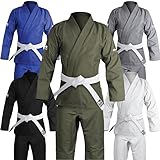


Top 3 picks at a glance
What makes a gi competition-ready?
A competition gi is not simply the lightest gi you can find. It needs to pass an equipment check, remain comfortable during a long match, and survive repeated gripping, washing, and pulling. The important criteria are:
- Legal color: IBJJF events generally accept white, royal blue, and black gis. Some tournaments apply stricter rules to shades, contrast stitching, patches, and pants, so check the event’s current regulations.
- Correct construction: A cotton or cotton-like jacket, reinforced seams, secure sleeves, and durable trousers matter more than decorative branding.
- Appropriate weight: Lightweight gis dry faster and feel less tiring; heavier gis can resist wear but may be hotter and more difficult to weigh in.
- Competition fit: Sleeves and trouser legs must fall within the permitted measurement range while still allowing full movement.
- Low shrinkage: A gi that fits before washing but becomes too short after two hot washes is not competition-ready.
Best jiu jitsu gis for competition: head-to-head comparison
| Gi | Best for | Typical construction | Approximate market range | Potential drawback |
|---|---|---|---|---|
| Fuji All-Around | First competition gi and reliable value | Pearl-weave jacket, reinforced trousers | Usually $100–$150 | Less tailored than premium slim cuts |
| Kingz Comp 450 V2 | Athletes who want a light, competition-focused gi | Lightweight pearl-weave jacket with reinforced pants | Usually $120–$170 | Light fabric needs more careful washing |
| Tatami Estilo Black Label | Premium fit and a lighter competition feel | Lightweight jacket, tapered competition cut | Usually $150–$220 | Trim sizing can be less forgiving between sizes |
| Shoyoroll Competition Series | Buyers prioritizing a premium, limited-run design | Model-dependent pearl or hybrid weave construction | Usually $180–$300 | Availability and exact specifications vary by release |
| Sanabul Essential V2 | Low-cost backup or occasional competitor | Light-to-medium-weight pearl-weave style jacket | Usually $70–$110 | Fit and long-term finishing can be less refined |
Best overall: Fuji All-Around
The Fuji All-Around is the safest general recommendation when you need one legal-looking gi for training and tournaments. Its pearl-weave jacket offers a useful middle ground: lighter and easier to dry than a thick traditional weave, but substantial enough for regular gripping. Reinforced knees and a straightforward design also make it a sensible choice for athletes who do not want to maintain a separate “competition-only” uniform.
Choose it if you value predictable durability and forgiving sizing over the most athletic cut. Before entering, confirm that the version you buy has an approved color and tournament-appropriate patches.
Best lightweight option: Kingz Comp 450 V2
The Kingz Comp 450 V2 is aimed more directly at competition than a basic training gi. Its lighter construction can reduce heat and make it easier to stay under the event’s weight limit. That advantage is particularly useful for lighter athletes who compete near the top of their division’s allowance.
The trade-off is less material between your opponent’s grips and your skin, plus potentially faster wear at high-stress areas. Wash it gently, avoid unnecessary dryer heat, and inspect the armpit, skirt, sleeve cuff, and trouser-knee stitching regularly.
Best premium fit: Tatami Estilo Black Label
The Tatami Estilo Black Label is a strong choice for competitors who prefer a more tailored silhouette. A closer cut can reduce excess fabric around the waist and limbs, but it also makes sizing less tolerant. If you are between sizes, compare the garment’s actual measurements rather than automatically choosing the smaller option.
Its premium positioning does not remove the need for inspection. A stylish gi can still be rejected for an incorrect shade, non-compliant patches, or sleeves and trousers outside the permitted range.
Weave weight: light versus durable
Gi weight labels are not perfectly standardized, but the following ranges are useful for comparing models:
| Approximate jacket weight class | Advantages | Disadvantages | Best use |
|---|---|---|---|
| Lightweight: about 300–450 GSM | Cooler, dries quickly, easier for weigh-in | More vulnerable to abrasion and hard gripping | Hot venues, frequent travel, weight-sensitive competitors |
| Medium: about 450–550 GSM | Balanced comfort, durability, and mobility | Not the coolest or lightest option | Most athletes and mixed training/competition use |
| Heavy: about 550 GSM and above | Robust fabric and a substantial feel | Hotter, slower to dry, heavier at weigh-in | Hard-wearing training rather than weight-sensitive competition |
GSM describes fabric density, not the finished gi’s total weight. A large gi with thick trousers, reinforced panels, and a heavy belt can weigh considerably more than a smaller gi using the same jacket fabric. Treat the listed GSM as one input, not a guarantee of weigh-in weight.
How to choose between the finalists
| Your situation | Most sensible choice | Why |
|---|---|---|
| You need one gi for training and tournaments | Fuji All-Around | Balanced weight and durable, uncomplicated construction |
| You regularly compete in hot venues | Kingz Comp 450 V2 or another lightweight legal gi | Less heat and faster drying |
| You prefer a close, athletic fit | Tatami Estilo Black Label | More tailored proportions, subject to careful sizing |
| You need a low-cost backup | Sanabul Essential V2 | Lower purchase cost while retaining a competition-style build |
| You are close to the division weight limit | Lightweight model, weighed after washing | Leaves more margin for belt and clothing requirements |
Fit and shrinkage: the calculation competitors overlook
Do not judge competition fit straight from the packaging. Cotton can shrink, especially when exposed to hot water or high dryer temperatures. A useful planning estimate is:
Post-wash length = original length × (1 − expected shrinkage rate)
For example, if a trouser leg measures 40 inches and you allow for 3% shrinkage:
40 × 0.97 = 38.8 inches
That 1.2-inch loss may be acceptable in the waist but problematic at the ankle or sleeve. Measure the jacket sleeve, jacket skirt, trouser waist, and trouser outseam before washing, then repeat after the first and second washes. If the result is already close to the tournament’s limits, do not intentionally shrink the gi further.
For the first few washes, use cold or cool water, a mild detergent, and air drying or low heat. This reduces shrinkage and protects stitching. A competition gi should be washed after every hard session; leaving sweat in cotton accelerates odor and fabric breakdown.
Stitching and durability checks
Look closely at the areas that experience repeated tension:
- Armpit gussets: Check for reinforced stitching and no loose thread ends.
- Sleeve cuffs: Dense stitching helps prevent cuffs from splitting during sleeve grips.
- Jacket skirt and side vents: These receive strong pulling forces during passing and guard work.
- Knee panels: Double-layer reinforcement is preferable for frequent kneeling, wrestling, and guard retention.
- Trouser drawstring area: The channel should not twist or separate when tightened.
A lightweight gi can still be durable if these zones are well reinforced. Conversely, a heavy gi with weak seam finishing can fail sooner than a lighter model.
Competition inspection checklist
- Confirm the event’s current uniform rules, not just the manufacturer’s product description.
- Choose white, royal blue, or black unless the tournament explicitly permits other colors.
- Keep jacket and trousers in the same approved color unless the rules clearly allow the combination.
- Remove unauthorized patches and place permitted patches only in approved zones.
- Wash the gi at least once before competition and recheck sleeve and trouser length.
- Weigh the complete competition setup, including belt, before leaving for the event.
- Pack a second legal gi if the rules require a change or if the first becomes excessively wet or damaged.
For most athletes, the Fuji All-Around is the best jiu jitsu gi for competition when durability and value matter most. Pick the Kingz Comp 450 V2 when lower weight and cooler performance are priorities, or the Tatami Estilo Black Label when a premium fitted cut matters more. Whichever model you select, the final decision should be based on washed measurements, legal color and patches, and the specific tournament’s inspection standard.

