
The best lenses for portraits are usually 85mm f/1.4 or f/1.8 lenses on full-frame cameras, but the right choice depends on your sensor size, working distance, autofocus needs, and whether you want maximum background blur or a more practical all-purpose range.
As an Amazon Associate we earn from qualifying purchases at no extra cost to you.


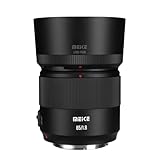

Top 3 picks at a glance
Quick picks by portrait situation
| Portrait situation | Best focal-length class | Useful aperture | Why it works |
|---|---|---|---|
| Headshots and strong background blur | 85mm or 105mm full-frame | f/1.4–f/1.8 | Flattering perspective, subject separation, comfortable distance |
| Environmental portraits | 50mm full-frame | f/1.4–f/2 | Shows surroundings without forcing you too far from the subject |
| Outdoor portraits from a distance | 70–135mm full-frame | f/2–f/2.8 | Compresses backgrounds and gives flexible framing |
| Small studios or tight rooms | 50mm full-frame or 35mm APS-C | f/1.4–f/2.8 | Provides enough room to move without excessive facial distortion |
| Micro Four Thirds portraits | 42.5mm or 45mm | f/1.2–f/1.8 | Matches an approximately 85–90mm full-frame field of view |
Why 85mm remains the portrait standard
An 85mm lens on full frame gives a flattering balance between facial proportions and working distance. At typical upper-body framing, you can stand roughly 1.5–2.5 meters from the subject instead of placing the camera uncomfortably close to the face. This reduces the exaggerated nose and forehead appearance that can occur with wide lenses used at short distances.
The classic choices include the Sony FE 85mm F1.4 GM II, Nikon NIKKOR Z 85mm f/1.2 S, Canon RF 85mm F1.2 L USM, and Sigma 85mm f/1.4 DG DN Art for Sony E and Leica L. More affordable f/1.8 alternatives such as the Sony FE 85mm F1.8, Nikon NIKKOR Z 85mm f/1.8 S, and Canon RF 85mm F2 Macro IS STM trade some light-gathering ability for lower weight, lower cost, and often easier handling.
85mm f/1.4 versus 85mm f/1.8
The difference is one stop: f/1.4 admits twice as much light as f/2, and approximately 1.65 times as much light as f/1.8. In dim conditions, that can mean using a faster shutter speed or a lower ISO. The wider aperture also produces a shallower depth of field, although the visible difference is less dramatic than marketing images may suggest.
For a head-and-shoulders portrait, f/1.4 can make the nearest eye sharp while the far eye becomes noticeably softer. That can be attractive when the subject is positioned carefully, but f/2 or f/2.8 is often more reliable for two people, three-quarter poses, or subjects who move. An f/1.8 lens is therefore not simply a cheaper version; it can be the more practical choice for consistently sharp faces.
50mm, 85mm, and 135mm compared
50mm: the flexible environmental option
A 50mm lens shows more of the surroundings and is easier to use indoors. The Sony FE 50mm F1.4 GM, Nikon NIKKOR Z 50mm f/1.8 S, Canon RF 50mm F1.2 L USM, and Sigma 50mm f/1.4 DG DN Art are strong examples across different systems.
However, perspective is controlled by camera distance, not focal length itself. If you move a 50mm closer to fill the frame, facial features can look more prominent. Keep the camera around 1–1.5 meters away for a natural portrait, and use the environment as part of the composition rather than cropping tightly into the face.
85mm: the balanced choice
85mm is the safest recommendation for a dedicated portrait lens. It is long enough to flatter facial proportions, yet short enough for indoor use and conversation. It also offers a wide range of autofocus and optical designs, from compact f/1.8 models to large professional f/1.2 lenses.
135mm: compression and separation
A 135mm lens creates more apparent background compression and gives excellent subject isolation. The Sony FE 135mm F1.8 GM and Canon RF 135mm F1.8 L IS USM are notable examples. Their working distance is a major advantage when photographing shy subjects, performances, or candid portraits.
The drawback is space. For a full-body portrait, you may need to stand several meters away. In a small room, a 135mm lens can be unusable, regardless of its optical quality. It also magnifies camera shake and makes framing moving subjects less forgiving.
Aperture, bokeh, and edge sharpness
Aperture affects three separate things: exposure, depth of field, and background rendering. A fast aperture is useful, but it does not automatically produce better bokeh. Smooth bokeh depends on the shape of the aperture blades, the correction of spherical aberration, the distance between subject and background, and the design of the out-of-focus highlights.
For softer backgrounds, place the subject farther from the background before simply opening the aperture. For example, moving a subject from 1 meter to 3 meters in front of a wall usually creates a larger visual improvement than changing from f/2 to f/1.8. A longer lens also makes background details appear larger and less visually separated, which is why 135mm portraits often look more compressed than 50mm portraits.
Edge sharpness matters most for group portraits, full-body compositions, and environmental images. Many portrait lenses are extremely sharp in the center at maximum aperture but softer in the corners. That is often acceptable for a single face positioned centrally, but less desirable when two people stand near opposite edges of the frame. Stopping down to f/2.8 or f/4 commonly improves corners, contrast, and depth-of-field margin.
Autofocus behavior matters more than peak sharpness
Modern mirrorless portrait lenses generally focus quickly enough for static subjects, but their behavior differs when the subject is walking, turning, or moving unpredictably. Linear motors and multiple focus groups usually provide faster, quieter focusing than older screw-drive or adapted DSLR designs.
- For eye-detection portraits: prioritize a lens with quiet, responsive linear autofocus motors.
- For video: look for low focus breathing, smooth transitions, and minimal motor noise.
- For posed studio work: maximum autofocus speed matters less than optical sharpness and rendering.
- For children or events: an f/1.8 lens with reliable tracking can outperform a heavier f/1.2 lens that is harder to hold steady.
At f/1.2 or f/1.4, focus accuracy becomes critical because the usable depth of field may be only a few centimeters. Use eye autofocus, keep the selected eye nearest the camera, and consider f/2 or f/2.8 when the subject is angled or moving.
System compatibility and crop-sensor equivalents
Always match the lens mount first: Sony E, Canon RF, Nikon Z, Fujifilm X, Leica L, and Micro Four Thirds lenses are not interchangeable without considering electronic and optical limitations. An adapter may preserve autofocus, but performance depends on the specific lens, camera, and adapter combination.
Sensor size changes the field of view. A 56mm lens on Fujifilm X has a field of view similar to an 85mm lens on full frame because the APS-C crop factor is approximately 1.5x. A 56mm lens multiplied by 1.5 gives 84mm. On Micro Four Thirds, a 42.5mm or 45mm lens provides an approximately 85–90mm equivalent field of view because the crop factor is about 2x.
| Camera system | Portrait lens examples | Approximate full-frame equivalent | Important consideration |
|---|---|---|---|
| Sony E full frame | FE 85mm F1.8; FE 85mm F1.4 GM II | 85mm | Wide third-party selection and strong eye autofocus support |
| Canon RF full frame | RF 85mm F2 Macro IS STM; RF 85mm F1.2 L USM | 85mm | Check mount compatibility before considering adapted EF lenses |
| Nikon Z full frame | NIKKOR Z 85mm f/1.8 S; NIKKOR Z 85mm f/1.2 S | 85mm | Native Z lenses provide the most predictable autofocus behavior |
| Fujifilm X | XF 56mmF1.2 R WR; XF 50mmF1.0 R WR | 84mm and 75mm | APS-C depth of field is not identical to full frame at the same f-number |
| Micro Four Thirds | Olympus M.Zuiko Digital ED 45mm f/1.2 PRO; Leica DG Nocticron 42.5mm f/1.2 | 90mm and 85mm | Excellent reach, but less background blur than full frame at the same aperture |
Decision guide: choose by your actual shooting conditions
- Buy an 85mm f/1.8 if you want the best balance of price, weight, autofocus, and sharpness.
- Buy an 85mm f/1.4 if you regularly shoot in low light and want stronger subject separation without moving to 135mm.
- Buy an 85mm f/1.2 if maximum blur, distinctive rendering, and low-light performance justify a large, expensive lens.
- Buy a 50mm f/1.4 or f/1.8 if your portraits include architecture, interiors, workplaces, or travel surroundings.
- Buy a 70–200mm f/2.8 if you photograph events and need multiple portrait framings without changing lenses.
- Buy a 135mm f/1.8 if you have outdoor space and want exceptional separation, compression, and subject distance.
Practical portrait settings
Start at f/2, 1/250 second, and Auto ISO for a moving subject in daylight. Use eye autofocus with continuous autofocus, then raise the shutter speed to 1/500 second for active children or movement. For a posed adult, 1/125–1/200 second may be sufficient, but image stabilization cannot freeze subject motion; it only helps reduce camera movement.
Use f/2.8–f/4 for groups or angled faces so more than one eye remains sharp. Use f/1.4–f/1.8 for a single subject when the nearest eye is aligned with the camera. If the image looks soft, check focus position and shutter speed before blaming edge sharpness. A portrait lens can be optically excellent while producing blur from a missed eye-detection lock or subject movement.
Frequently asked questions
How far should I stand from my subject for a natural portrait?
For an upper-body portrait with an 85mm lens on a full-frame camera, stand roughly 1.5–2.5 meters away. With a 50mm lens, keep the camera around 1–1.5 meters away for a natural portrait. The camera’s distance affects perspective, so moving closer with a 50mm lens can make facial features look more prominent.
Is a 135mm lens suitable for portraits in a small room?
A 135mm lens can be difficult or unusable in a small room because it requires substantial working distance. For a full-body portrait, you may need to stand several meters away. Although it provides strong subject isolation and apparent background compression, it also magnifies camera shake and makes framing moving subjects less forgiving.
Should I always use the widest aperture for portraits?
No, the widest aperture is not always the most practical choice. At f/1.4, the nearest eye may be sharp while the far eye becomes noticeably softer. For two people, three-quarter poses, or moving subjects, f/2 or f/2.8 often provides a more reliable depth-of-field margin and consistently sharp faces.
What should I check before buying a portrait lens for my camera?
Check the lens mount first, because Sony E, Canon RF, Nikon Z, Fujifilm X, Leica L, and Micro Four Thirds lenses are not interchangeable without considering electronic and optical limitations. Adapters may preserve autofocus, but performance depends on the specific lens, camera, and adapter combination. Also account for your sensor size and its field of view.
How can I make the background look softer without changing lenses?
Place the subject farther from the background before simply opening the aperture. Moving a subject from 1 meter to 3 meters in front of a wall usually creates a larger visual improvement than changing from f/2 to f/1.8. A longer lens can also make background details appear larger and less visually separated, contributing to a more compressed-looking portrait.
Final recommendation
For most photographers, the best lenses for portraits are native 85mm f/1.8 models because they combine flattering perspective, manageable size, reliable autofocus, and strong center sharpness. Choose an 85mm f/1.4 or f/1.2 when shallow depth of field and low-light work are central to your photography; choose 50mm for environmental portraits, 135mm for outdoor separation, and a crop-sensor equivalent when your camera system makes that focal length more practical.


