
The best wide angle lenses for landscapes and interiors are the Sony FE 12-24mm F2.8 GM, Nikon NIKKOR Z 14-24mm f/2.8 S, Canon RF 10-20mm F4 L IS STM, and Sigma 14-24mm F2.8 DG DN Art, but the right choice depends more on corner performance, distortion control, filter compatibility, and your camera mount than on the widest number printed on the barrel.
As an Amazon Associate we earn from qualifying purchases at no extra cost to you.

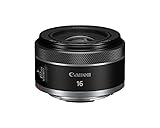


Top 3 picks at a glance
Quick comparison: the best wide angle lenses by use
| Lens | Mounts | Maximum aperture | Approx. diagonal field of view | Filter support | Best suited to |
|---|---|---|---|---|---|
| Sony FE 12-24mm F2.8 GM | Sony E, full frame | f/2.8 | 122° at 12mm | Rear gel filters; no normal front screw-in filter | Night landscapes, interiors, demanding architecture |
| NIKKOR Z 14-24mm f/2.8 S | Nikon Z, full frame | f/2.8 | 114° at 14mm | Standard 112mm screw-in filters and rear filters with hood system | Nikon landscape and architectural work |
| Canon RF 10-20mm F4 L IS STM | Canon RF, full frame | f/4 | 130° at 10mm | Rear gel filters; no conventional front filter thread | Ultra-wide architecture, video, lightweight travel |
| Sigma 14-24mm F2.8 DG DN Art | Sony E and L-Mount, full frame | f/2.8 | 114° at 14mm | Rear gel filters; no front screw-in filter | Value-focused stills and low-light interiors |
| Sony FE 16-35mm F2.8 GM II | Sony E, full frame | f/2.8 | 107° at 16mm | 82mm screw-in filters | One-lens landscape, architecture, and video kits |
| NIKKOR Z 14-30mm f/4 S | Nikon Z, full frame | f/4 | 114° at 14mm | 82mm screw-in filters | Landscape photographers using tripod and filters |
Field-of-view figures are approximate diagonal values for full-frame cameras. Actual coverage changes with the camera’s aspect ratio and sensor format. A 12mm lens on full frame is substantially wider than a 12mm lens on APS-C.
Head-to-head: which lens wins each category?
Widest field of view: Canon RF 10-20mm F4 L IS STM
Canon’s RF 10-20mm reaches about 130 degrees diagonally at 10mm, making it exceptionally useful in narrow rooms, large buildings, and foreground-heavy landscapes. Its built-in electronic distortion correction is important: an ultra-wide rectilinear lens must stretch the edges to keep straight lines straight, so composition near the borders can look enlarged even when barrel distortion is corrected.
The trade-off is the f/4 aperture and the lack of a conventional front filter thread. It is a strong choice for a Canon full-frame body when maximum coverage, low weight, and stabilized video matter more than shallow depth of field or easy polarizer use.
Best low-light and night-sky option: Sony FE 12-24mm F2.8 GM
The Sony 12-24mm F2.8 GM combines a 12mm view with a constant f/2.8 aperture. That extra stop over an f/4 lens can allow a shorter shutter speed or lower ISO for interiors and stars. At 12mm, however, foreground objects become very prominent, and people near the edges can look stretched. It rewards careful placement rather than simply pointing at the widest setting.
Its bulbous front element means ordinary screw-in filters are not supported. Square filter systems or rear gel solutions add cost and setup time, so landscape photographers who regularly use graduated neutral-density filters should account for the complete filter system rather than comparing lens prices alone.
Best Nikon balance: NIKKOR Z 14-24mm f/2.8 S
The Nikon Z 14-24mm f/2.8 S is a versatile professional option with strong edge detail, a constant f/2.8 aperture, and useful compatibility with both its dedicated hood/filter arrangement and rear filters. At 14mm it is wide enough for most interiors while remaining easier to compose than a 10mm or 12mm lens.
For architecture, stop down to about f/5.6 or f/8 and keep the camera level. This preserves corner detail while reducing the appearance of converging vertical lines. Tilting the camera upward creates keystoning; no lens can optically remove that perspective effect.
Best value among fast ultra-wides: Sigma 14-24mm F2.8 DG DN Art
The Sigma 14-24mm F2.8 DG DN Art is available for Sony E and L-Mount full-frame cameras. It offers the same constant f/2.8 class as more expensive professional lenses and is well suited to interiors, real-estate-style room photography, and night landscapes.
The main compromises are size, weight, and filter inconvenience. Its fixed hood and protruding front element require a dedicated holder or rear filters. Software profiles are also part of the intended workflow, especially for distortion and vignetting correction at the widest setting.
Best all-rounder with normal filters: Sony FE 16-35mm F2.8 GM II
If 16mm is wide enough, the Sony FE 16-35mm F2.8 GM II is easier to live with than a 12-24mm lens. Its 82mm filter thread accepts common circular polarizers and variable or fixed neutral-density filters, and the 35mm end is more useful for environmental details and medium-wide video shots.
It does not produce the same dramatic coverage in a tiny bathroom or narrow hallway, but its wider zoom range, constant f/2.8 aperture, and manageable filter setup make it one of the strongest one-lens choices for mixed landscape, architecture, and video work.
How field of view changes your composition
A useful full-frame approximation for horizontal field of view is:
Horizontal angle = 2 × arctangent(sensor width ÷ (2 × focal length))
Using a 36mm-wide full-frame sensor, a 14mm lens covers approximately 104 degrees horizontally, while a 20mm lens covers approximately 84 degrees. That difference sounds modest, but it can determine whether both side walls of a room fit in the frame.
For an APS-C camera, multiply the focal length by the crop factor before comparing it with full-frame lenses. On a 1.5x APS-C sensor, a 10mm lens gives a full-frame-equivalent view of roughly 15mm. This is why an APS-C 10-20mm zoom can be an excellent interior lens even though its actual focal-length numbers look less extreme.
Decision matrix: choose by shooting situation
| Your situation | Recommended class | Why | Watch for |
|---|---|---|---|
| Tripod landscape photography | 14-30mm or 14-24mm, f/4 or f/2.8 | Useful width, strong corners when stopped down, easy filter access on many models | Weight matters less; filter thread matters more |
| Stars and aurora | 12-24mm or 14-24mm at f/2.8 | Wide coverage and more light than f/4 | Coma, corner brightness, and front-filter limitations |
| Small interiors | 10-14mm full-frame equivalent | Fits more of the room without moving through a wall | Stretching near edges and exaggerated foregrounds |
| Architecture with filters | 14-30mm or 16-35mm with 77mm or 82mm thread | Polarizers and graduated filters are simpler to mount | Do not tilt the camera if vertical lines must remain straight |
| Handheld video | 16-35mm with stabilization or 10-20mm APS-C power zoom | Moderate wide angles hide small camera movements better | Focus breathing, motor noise, and electronic distortion correction |
Aperture, sharpness, and distortion: what matters in practice
Aperture: f/2.8 is valuable for stars, dim interiors, and subject separation, but landscape scenes usually gain more from depth of field and corner performance than from maximum aperture. At f/5.6 to f/8, many modern wide lenses become visibly more consistent across the frame.
Edge sharpness: Inspect corners separately from the center. A lens can look excellent in the middle while losing fine detail at the edges wide open. For architecture, corner sharpness is especially important because bricks, window frames, and furniture often reach the borders.
Distortion: Barrel distortion bows straight lines outward; pincushion distortion bends them inward. Modern mirrorless lenses often rely on an in-camera or software profile. Turn correction on for architecture, but check the resulting crop: correcting distortion can reduce the final angle of view and remove stretched edge areas.
Filter support: A filter thread can be worth more than a small sharpness advantage if you regularly use a polarizer or neutral-density filter. A polarizer is useful for foliage and reflections, but it can produce uneven skies at very wide angles. For video, a variable ND is often more practical than changing shutter speed.
Practical setup for sharp interiors and landscapes
- Set the camera level before composing. This keeps verticals more natural and reduces software correction.
- Use a single focus point near the important foreground-to-middle distance, then check the far corner at magnified view.
- Start around f/5.6 for interiors and f/8 for static landscapes. Stop down further only when needed; very small apertures can soften detail through diffraction.
- For a moving handheld subject, use at least 1/ focal length as a starting point, then increase the shutter speed for people or video movement. Stabilization reduces camera shake but does not freeze a moving person.
- Enable the lens profile for distortion and vignetting, then review the cropped corners before delivering the image.
If you photograph mostly landscapes and want straightforward filters, choose a 14-30mm or 16-35mm lens with a front thread. If you photograph very tight interiors or dramatic foregrounds, choose 10-14mm coverage and accept more perspective exaggeration. For night work, prioritize f/2.8 and corner coma. For video, prioritize quiet autofocus, stabilization, consistent balance, and a focal-length range that does not force constant lens changes.
Bottom line
Choose the Sony FE 12-24mm F2.8 GM for maximum wide-angle capability and low light, the NIKKOR Z 14-24mm f/2.8 S for a high-end Nikon system, the Canon RF 10-20mm F4 L IS STM for extreme interior coverage and lightweight video, and the Sigma 14-24mm F2.8 DG DN Art when you want fast full-frame performance for Sony E or L-Mount without moving into the highest price tier. For the most convenient mixed-purpose setup, a 16-35mm f/2.8 lens with a standard filter thread is often the better everyday decision.


