
The best moissanite rings for lasting everyday sparkle combine a near-colorless stone, a well-proportioned cut, durable metal, and a setting that protects the girdle without making resizing impossible.
As an Amazon Associate we earn from qualifying purchases at no extra cost to you.


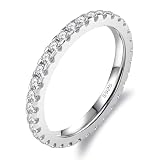

Top 3 picks at a glance
Quick comparison: which moissanite ring suits you?
| Priority | Best specification | Why it works | Trade-off |
|---|---|---|---|
| Maximum white appearance | D–F color, round brilliant cut | Looks bright and icy in most lighting | Can show more rainbow flashes than diamond |
| Balanced everyday value | G–H color, excellent round or oval cut | Appears white while reducing cost | Slight warmth may appear beside very white metals |
| Large visual presence | 1.5–2.0 moissanite carat equivalent, oval or elongated cushion | Longer outline covers more finger surface | Needs a secure setting and careful proportioning |
| Active lifestyle | 14K gold or platinum, six-prong or bezel setting | Good balance of strength and repairability | Platinum and custom bezels usually cost more |
| Future resizing | Plain 14K gold band with separate prongs | Often easier for a jeweler to adjust | Less decorative than an eternity or pavé band |
1. Choose stone color for the metal and the lighting
Moissanite color is commonly described with diamond-style grades. D–F is considered colorless, while G–H is usually near-colorless. The grade is only part of the visual result: a large stone, warm lighting, yellow gold, and the cut’s optical behavior can all change how the ring appears.
- For platinum or white gold: choose D–F if you want the stone and metal to blend into one bright, cool-looking surface. G–H can still work, but warmth may be more visible in a larger stone.
- For yellow gold: G–H can look intentional and harmonious because the band already supplies warmth. D–F creates a stronger white-versus-gold contrast.
- For rose gold: near-colorless stones generally pair well, although a colorless stone can make the pink metal more noticeable.
- For antique or champagne styling: a warmer stone may be desirable, but do not pay a premium for a “color grade” unless the seller explains how it was assessed.
Color matters more as the stone gets larger. A 1-carat-equivalent round may hide mild warmth better than a 3-carat-equivalent oval viewed from the side. If you want a large center stone, compare the face-up appearance and side profile rather than relying only on a letter grade.
2. Prioritize cut quality over a larger carat label
Cut quality controls brightness, contrast, fire, and whether the stone looks lively across the entire face. Moissanite already has strong fire, so a poorly proportioned stone can appear overly flashy in one area while looking dull or glassy in another.
For a round brilliant, look for even facet patterning, a centered reflection, and no obvious dark “bow-tie” effect. In ovals, pears, and marquise shapes, some bow-tie contrast is normal, but it should not form a broad dead band across the center. Emerald cuts and other step cuts usually produce broader flashes and a calmer appearance than brilliant cuts.
Matching shape to the desired sparkle
- Round brilliant: the safest choice for maximum brightness and classic proportions.
- Oval: elongates the finger and offers strong sparkle, but requires careful inspection for bow-tie darkness.
- Cushion: gives a softer outline; crushed-ice styles create many small flashes, while antique-style cushions show larger broad flashes.
- Emerald or elongated step cut: emphasizes clarity and clean geometric reflections rather than constant scintillation.
- Pear or marquise: creates a long, slender silhouette, but the pointed ends need secure prongs or protective design.
3. Understand carat appearance before choosing size
Moissanite is less dense than diamond, so a stone with the same carat weight may look physically larger. Sellers often use “carat equivalent,” or an approximate diamond-size comparison, instead of presenting moissanite’s actual weight. Compare millimeter dimensions whenever possible.
Here is a useful planning calculation: if a round center stone measures about 6.5 mm across, its visible face area is approximately:
3.14 × (6.5 ÷ 2)² = about 33.2 square millimeters.
A 7.5 mm round stone measures approximately:
3.14 × (7.5 ÷ 2)² = about 44.2 square millimeters.
That is roughly 33% more face-up area, even though the diameter increased by only 1 mm. The larger stone may therefore need a wider band or a more substantial setting to look proportionate. For an everyday ring, a 6.5–7.5 mm round or an oval around 8 × 6 mm often provides visible presence without making the ring excessively top-heavy.
4. Select metal for durability and maintenance
14K gold is a practical everyday choice because its alloy content makes it harder and generally more resistant to deformation than higher-karat gold. Yellow, white, and rose gold are all suitable, but white gold may need periodic rhodium replating as its surface color changes with wear.
18K gold has a richer color and higher gold content, but it is softer than 14K gold. It can be an excellent choice for careful wear, though thin shanks and delicate prongs deserve extra attention.
Platinum is dense, naturally white, and well suited to secure settings. It tends to develop a patina rather than losing a plated surface. Its higher material and labor cost can make it less economical, but it is compelling if you want a white metal with long-term serviceability.
Silver and gold-plated fashion metals are better for occasional wear than for a ring intended to stay on during daily work, handwashing, and repeated contact with hard surfaces. Plating can wear through, and softer metals can bend more readily around the setting.
5. Check setting security, not just appearance
The most attractive stone is not a good everyday choice if the setting leaves its vulnerable edges exposed. Prongs should meet the stone cleanly, without catching on fabric, and the stone should not visibly shift when the ring is gently moved. A jeweler should inspect prongs periodically because normal wear can thin or bend them.
- Four prongs: lets more of the stone show and is easy to clean, but losing one prong can make the stone less secure.
- Six prongs: distributes protection more evenly and is a strong default for round centers.
- Bezel setting: surrounds the stone’s edge and offers excellent protection for active wear, although it can slightly reduce side light and make resizing or replacement more specialized.
- Halo setting: increases apparent size, but the small surrounding stones add more points that can loosen or collect debris.
- Pavé or channel-set band: provides continuous sparkle, but has more small stones and requires closer inspection than a plain band.
For pear, marquise, and some elongated cushion stones, insist on protection at the pointed ends. V-shaped or well-positioned prongs reduce the chance of a tip being struck during ordinary use.
6. Treat certification as documentation, not a quality guarantee
A certificate or grading report can document the stone’s stated shape, measurements, color description, and whether it is lab-created moissanite. However, reports vary in independence and detail. A branded authenticity card, a retailer-issued document, and an independent gemological report should not be treated as equivalent.
Before buying, check that the paperwork matches the ring: stone shape, dimensions, color description, and any laser inscription or report number should be consistent with the listing. Ask who issued the report, whether the report is verifiable, and what return process applies if the stone does not match the description. Certification cannot replace inspecting the cut, setting, workmanship, or seller’s warranty.
7. Plan for resizing before selecting the band
A plain shank with a center setting is usually the most flexible design. Many rings can be adjusted by roughly one or two sizes, but the feasible range depends on the metal, thickness, stone arrangement, and location of the sizing area.
- Easier to resize: plain bands, solitaire rings, and designs with an uninterrupted lower shank.
- More difficult to resize: full eternity bands, continuous pavé, engraved designs that must be realigned, and rigid bezel constructions.
- Potentially unsuitable for major changes: very thin bands, tension-style settings, and rings with stones extending around the entire circumference.
If your finger size may change, choose a half-eternity band or a plain lower shank rather than a full eternity design. Also confirm whether resizing is included, how many adjustments are covered, and whether resizing affects the warranty.
Best overall buying formula
For most buyers seeking lasting everyday sparkle, the strongest specification is a well-cut round, oval, or cushion moissanite in D–F or G–H color, set in 14K gold or platinum with six prongs or a protective bezel. Choose millimeter dimensions over a carat-equivalent headline, verify the documentation, and favor a band that leaves room for future resizing.
Choose the larger, more decorative design only when you are comfortable with additional maintenance. More stones, sharper corners, thinner bands, and exposed halo details can create more visual impact, but they also add more points that may require cleaning, tightening, or repair.
Frequently asked questions
How do I compare moissanite sizes from different sellers?
Compare millimeter dimensions rather than relying only on carat-equivalent labels. Moissanite is less dense than diamond, so the same carat weight may look physically larger. A larger face-up area can make a ring appear more substantial and may require a wider band or more supportive setting. Compare both the stone’s visible dimensions and its side profile before choosing.
Which moissanite shape is easiest to choose for everyday sparkle?
A round brilliant is usually the safest choice for maximum brightness and classic proportions. Ovals, pears, and marquise shapes can create a longer, more slender silhouette, but they require careful inspection for bow-tie contrast and secure protection at pointed ends. Emerald and other step cuts produce broader, calmer flashes rather than constant scintillation.
Will white gold stay the same color over time?
White gold may need periodic rhodium replating as its surface color changes with wear. Platinum is naturally white and tends to develop a patina rather than losing a plated surface. Yellow and rose gold do not require that particular surface treatment, while gold-plated fashion metals can wear through with repeated contact and daily use.
How should I care for a moissanite ring during everyday wear?
Inspect the prongs periodically and avoid treating a delicate setting as maintenance-free. The stone should not visibly shift when the ring is gently moved, and prongs should meet it cleanly without catching on fabric. Silver and gold-plated fashion metals are better suited to occasional wear than to daily handwashing, work, and contact with hard surfaces.
What should I do if the ring feels loose or the stone moves?
Have the setting inspected because visible movement can indicate that the stone is not secure. Prongs can thin or bend through normal wear, and pointed stones need especially careful protection. A jeweler can assess the prongs, setting, and feasible adjustment options. Bezel, pavé, and other specialized constructions may require more specialized repair or resizing.


