
As a reviewer testing streaming gear for 2026 setups, I often get asked how to route multiple video signals or push feeds to complex servers versus handling overlay layering. When you are sitting at your desk trying to configure an advanced hardware-based streaming workflow—perhaps bridging local console gameplay with secondary analysis or pushing low-latency IP streams to platforms like YouTube and Facebook—the choice between a dedicated encoding box and an overlay synthesizer becomes critical. Having spent the last few weeks bench-testing both the HEVC Video Encoder and the Zunate DMA Fuser side-by-side, I found that these two devices solve fundamentally different problems in a modern broadcast pipeline.
The confusion usually arises because both boxes deal heavily with HDMI handling, but their core architectures point toward entirely opposite tasks. One is built for pure, versatile IP streaming across a massive array of protocols, while the other focuses tightly on hardware-level overlay combination and lossless display mixing for specialized gaming and conferencing setups. Choosing the wrong unit means either lacking the protocol support you need for remote distribution or missing the hardware-level synthesis required for zero-latency visual overlay work. Let us break down exactly how they perform when you put them to work.
As an Amazon Associate we earn from qualifying purchases at no extra cost to you.
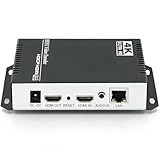

Quick Verdict
The HEVC Video Encoder is the ideal choice for content creators and system integrators who need robust, multi-protocol hardware streaming to platforms like YouTube, Facebook, or custom OBS servers over Ethernet. Conversely, the Zunate DMA Fuser suits power users and gamers requiring a seamless HDMI overlayer synthesizer and display combiner for lossless video conferencing and hardware-level monitoring.
HEVC Video Encoder vs Zunate DMA Fuser: Specs Side by Side
| Feature | HEVC Video Encoder | Zunate DMA Fuser |
|---|---|---|
| Price | $199 | $272.97 |
| Core Function | HDMI to Ethernet IP Video Audio Encoder | HDMI Overlayer Synthesizer / DMA Combiner |
| Supported Codecs | HEVC, H.265, H.264, AVC | Not stated |
| Resolution Support | 4K, 1080P | Not stated (Lossless) |
| Protocol Support | RTSP, RTMPS, HLS, UDP, SRT, HTTP, FLV, MP4, WebRTC, TRTC, ICECAST | Not stated |
| Target Platforms | YouTube, Facebook, OBS, other servers | Video conferencing, gaming, display mixing |
| Power Configuration | Not stated | US Plug included |
| Form Factor | Standalone hardware encoder box | Display fuser overlayer box |
Where A Wins
- Extensive protocol versatility: It natively handles an exhaustive list of streaming protocols including SRT, WebRTC, RTMPS, and RTSP, giving you unmatched flexibility for pushing feeds to YouTube, Facebook, and custom servers.
- True hardware encoding: By converting HDMI inputs directly into Ethernet IP video and audio streams, it offloads heavy processing from your main computer rig.
- High-definition compatibility: It explicitly supports both 4K and 1080P resolutions across modern HEVC, H.265, H.264, and AVC codecs, ensuring future-proof clarity for your audience.
Where B Wins
- Lossless display synthesis: It excels at combining and overlaying HDMI signals without degrading visual quality, making it a powerful tool for high-end conferencing and gaming setups.
- Specialized hardware combination: As a dedicated DMA combiner and HDMI overlayer, it bridges secondary hardware feeds directly into your primary display pipeline seamlessly.
- Plug-and-play US power configuration: It arrives ready for standard North American setups with an included US plug, minimizing power compatibility headaches right out of the box.
Real-World Use: Which One Fits You
The Multi-Platform Live Streamer
If you run a community channel that simultaneously pushes high-bitrate feeds to YouTube, Facebook, and a private ICECAST or SRT server, the HEVC Video Encoder is your go-to hardware. It takes your camera’s HDMI output and translates it smoothly over Ethernet without bogging down your encoding computer.
The Competitive Gamer Using DMA Cards
For enthusiasts integrating Direct Memory Access hardware for advanced gaming diagnostics or dual-PC monitoring, the Zunate DMA Fuser is essential. It cleanly synthesizes the secondary overlay onto your main gaming monitor with a lossless signal path.
The Advanced Video Conferencing Setup Builder
When you need to overlay multiple HDMI video streams or custom graphics feeds in real-time during a professional conference room presentation, the Zunate unit’s combiner architecture provides the hardware-level muscle required.
Price and Value
The HEVC Video Encoder comes in at $199, while the Zunate DMA Fuser is priced at $272.97, creating a price difference of $73.97. Whether that premium is justified depends entirely on your technical requirements. If you need a broad suite of network streaming protocols and robust hardware encoding for web broadcasting, the encoder offers exceptional value under two hundred dollars. However, if your setup demands specialized HDMI display overlay synthesis and lossless hardware combining, the extra cost for the Zunate unit is well spent on its niche capabilities.
Final Recommendation
For general live streaming, remote contribution, and pushing feeds to platforms like YouTube and OBS, the HEVC Video Encoder is our primary recommendation due to its sheer protocol flexibility and competitive price point. The only condition under which you should pick the Zunate DMA Fuser instead is if your workflow specifically revolves around hardware-level HDMI overlayer synthesis, gaming display combination, or specialized conferencing setups that require lossless visual mixing.
FAQ
Can the HEVC Encoder stream to multiple servers at once?
Yes, its extensive protocol support including RTMPS, SRT, and RTSP allows you to route your encoded Ethernet stream to various destination servers and platforms simultaneously. Hardware limits will depend on your network bandwidth.
Does the Zunate DMA Fuser require a special power supply?
The unit includes a standard US plug out of the box, making it simple to integrate into typical North American power strips without extra adapters. Always verify local voltage requirements before powering on.
What is the main functional difference between these two devices?
The HEVC unit is an active IP video encoder designed to broadcast HDMI over Ethernet using various streaming codecs. Conversely, the Zunate device functions as an HDMI overlayer synthesizer and display combiner.
Are both devices suitable for beginner streamers?
Neither unit is tailored for absolute beginners, as both require a solid understanding of hardware signal routing, IP networking, or advanced display management to operate effectively.
See also: our full roundup Best Hardware Video Encoders for Dual PC Setups.
Related guides
- How Many Gigabytes of Backup Storage do Creators Need? Size Guide With Measurements
- What to Look for in Creator Storage Backup Systems: What Actually Matters
- Best Battery Powered Lights for Outdoor Creators: Compared and Ranked: 8 Compared (2026)
- Best Raid Enclosures for Creator Backups: Compared and Ranked: 8 Compared (2026)


