
The best outdoor sound systems are the ones that match amplifier power, listening area, speaker placement, weather protection, wireless range, and installation effort to your space—not simply the system with the biggest wattage.
As an Amazon Associate we earn from qualifying purchases at no extra cost to you.

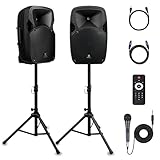


Top 3 picks at a glance
Quick recommendations by outdoor space
| Outdoor situation | Best-fit system type | Useful specification target | Installation effort |
|---|---|---|---|
| Small balcony or compact patio | Portable battery speaker | 20–80 W continuous output, IPX4 or better, 8–12 hours of battery life | None |
| Medium patio or deck up to 500 square feet | Pair of weather-resistant bookshelf or surface-mount speakers | 50–100 W per channel, stereo placement 8–15 feet apart | Low to moderate |
| Pool area up to 1,000 square feet | Two to four outdoor speakers with a network or Bluetooth amplifier | 60–100 W per speaker, IP-rated enclosures, separate volume zones | Moderate |
| Large yard or frequent parties | High-output party speaker or distributed speaker system | 100 W or more continuous output, multiple speakers, strong wireless coverage | Low for portable; high for installed |
1. Choose portable or permanently installed audio
A portable speaker is the simplest choice when you want music in different locations, do not want to run cable, or only host occasional gatherings. Models such as the JBL PartyBox Stage 320, Bose SoundLink Max, and Sonos Move 2 represent different points in this category: the JBL emphasizes party volume and bass, the Bose favors a compact premium design, and the Sonos adds multi-room control through Wi-Fi as well as Bluetooth.
Portable systems are convenient, but they have limitations. A single speaker produces uneven coverage: music may sound loud directly in front of it and thin around the sides. Battery life also falls when the speaker is played loudly, with bass boost, lighting, or wireless features enabled. For a small patio, that tradeoff is usually worthwhile. For a pool deck or large lawn, two speakers or a wired distributed system will sound more consistent.
Permanent outdoor speakers make more sense when the listening area stays in one place. Weather-resistant models such as the Polk Atrium 6, Yamaha NS-AW294, and Klipsch AW-650 are designed for fixed installation, but they still need an amplifier and speaker cable. They can deliver better stereo separation and avoid battery management, at the cost of drilling, cable routing, and weatherproof connections.
2. Match power and coverage to the area
Manufacturers do not always use the same definition of “watts,” so compare continuous or RMS power when possible rather than relying on a peak number. Outdoor spaces also absorb less sound than furnished indoor rooms, while wind, traffic, pool pumps, and conversation raise the required volume.
For background music, plan roughly 1–3 watts of amplifier power per square foot for a conventional pair of outdoor speakers. For clear music at a party, 3–6 watts per square foot is a more useful planning range. This is only a starting estimate: speaker sensitivity, impedance, bass content, distance, and the number of speakers all affect the result.
Worked power example
Suppose a rectangular patio measures 20 by 25 feet, or 500 square feet. At a moderate party level, using a planning figure of 4 watts per square foot would suggest 2,000 watts—but that figure should not be interpreted as a literal amplifier requirement for a single listening position. It represents the difficulty of filling an open area evenly with loud sound.
A more practical design would use four speakers, each covering about 125 square feet, powered at approximately 50–75 watts per channel. That distributes sound instead of forcing two speakers to play at extreme volume. If the goal is mainly background music, two speakers at 50–75 watts each may be sufficient. If the patio opens onto a lawn or includes a pool area, four lower-volume speakers will usually sound clearer and reduce loud spots near the speakers.
3. Use speaker placement to improve sound before adding power
- For stereo listening: place two speakers 8–15 feet apart, angled toward the main seating position. Keep them at roughly ear height or slightly above.
- For even background coverage: use four speakers around the perimeter, each aimed toward the center. Run them at a lower level rather than using two speakers at maximum volume.
- For a pool: place speakers away from the water’s edge and aim them across the deck, not directly at swimmers. This reduces harsh reflections and keeps cable connections farther from splashes.
- For a wall-mounted pair: mount speakers under an overhang when possible. The overhang protects against direct rain and can improve bass by reinforcing the wall.
- For a large yard: avoid placing every speaker beside the house. Spread them through the listening zone so the nearest speaker does not dominate the sound.
Do not put speakers in sealed boxes or behind dense landscaping. They need airflow and a clear acoustic path. Hard surfaces such as concrete and brick can create reflections, so slight downward or inward aiming often sounds smoother than pointing speakers straight across a wall.
4. Check weather resistance, not just the word “outdoor”
Look for an IP rating on portable equipment. IPX4 protects against splashing water, IPX5 is rated for water jets, and IPX7 covers temporary immersion under defined test conditions. A higher water rating does not automatically mean the speaker tolerates sun, salt air, freezing temperatures, or permanent exposure.
For installed speakers, look for explicit outdoor construction: UV-resistant plastics, rust-resistant grilles, sealed terminals, drainage, and a manufacturer rating for outdoor use. Even weather-resistant speakers last longer beneath an eave. Use outdoor-rated cable, drip loops, and connectors protected inside weatherproof junction boxes. Never leave an indoor power adapter or extension connection exposed beside a pool.
Saltwater environments require extra care. Rinse exposed grilles and mounts with fresh water periodically, inspect screws for corrosion, and avoid mixing ordinary indoor cable hardware with outdoor speaker terminals.
5. Select wireless range and connection type
Bluetooth is convenient, but its practical range depends on walls, metal structures, nearby wireless traffic, and the phone’s position. A nominal 30-foot range can shrink substantially through a house or across a crowded patio. Keep the source device in the same general area as the speaker for reliable playback.
Wi-Fi speakers usually provide better range and multi-room synchronization when the outdoor area has strong network coverage. Before choosing a Wi-Fi system, check signal strength at the intended speaker location. A router inside a house may not reliably reach a detached patio through brick, foil-backed insulation, or low-emissivity windows. A wired access point or outdoor-rated mesh node can solve the network problem, but it adds installation cost.
For a party speaker, check whether it supports stereo pairing or a manufacturer-specific multi-speaker mode. Bluetooth multipoint is not the same as synchronized multi-speaker playback. If several people need to control music, Wi-Fi systems often provide more convenient shared control than repeatedly disconnecting and reconnecting Bluetooth devices.
6. Compare the main system types
Portable party speakers
Choose this type when loudness, bass, karaoke features, and easy setup matter more than discreet appearance. The JBL PartyBox Stage 320 is an example of the large party-speaker format, with a built-in battery, wheels, lighting, and high output. These systems are excellent for occasional events but can be excessive for quiet evening listening.
Premium portable speakers
The Bose SoundLink Max and Sonos Move 2 suit patios where portability and sound quality matter more than maximum party volume. They work well for small gatherings and everyday listening. Check whether the model has a replaceable battery, charging dock, Wi-Fi support, or only Bluetooth before buying.
Installed outdoor speakers
Surface-mount speakers such as the Polk Atrium 6, Yamaha NS-AW294, or Klipsch AW-650 provide more consistent placement and no battery anxiety. They require an amplifier matched to the speakers’ impedance and power handling. A stereo amplifier is adequate for two speakers; a multi-zone amplifier is preferable when patio, pool, and garden areas need separate volume control.
7. Keep installation safe and easy to service
For low-voltage speaker cable, route wires away from lawn equipment, sharp roof edges, and standing water. Leave a small service loop behind each speaker so it can be removed without cutting the cable. Label both ends of every cable before connecting the amplifier. If cable runs are long, use thicker cable to reduce power loss; 16-gauge cable is suitable for many short runs, while 14- or 12-gauge cable is safer for longer runs or higher power.
Set the amplifier’s maximum volume conservatively during initial setup. Increase the source volume until the system is comfortably loud, then stop before audible distortion. Clipping from an underpowered amplifier can damage speakers more readily than clean power at a higher rated wattage.
Best outdoor sound systems: final buying decision
Choose a battery Bluetooth speaker for a balcony, a pair of weather-resistant speakers for a fixed medium patio, and a four-speaker distributed system for a pool deck or large entertainment area. Prioritize placement and even coverage before chasing higher wattage. For frequent parties, choose a large portable party speaker; for permanent convenience and better coverage, install outdoor speakers with a properly matched amplifier and weatherproof wiring.
The right system should remain clear at the volume you actually need, survive the climate where it will be installed, and let you control music from the places where people will use the space.
Frequently asked questions
Can I use outdoor speakers for background music without buying a high-power system?
Yes. For background music, the article suggests roughly 1–3 watts of amplifier power per square foot as a starting point. On a 500-square-foot patio, it says two speakers at 50–75 watts each may be sufficient. Speaker sensitivity, distance, bass content, and placement also affect the result.
What should I check before using Wi-Fi speakers on a patio?
Check that your Wi-Fi signal reaches the intended speaker location. A router inside the house may not reliably cover a detached patio, particularly through brick, foil-backed insulation, or low-emissivity windows. The article notes that a wired access point or outdoor-rated mesh node can address coverage, but adds installation cost.
Is a Bluetooth speaker’s advertised range enough to choose where to put it?
Not by itself. The article says practical Bluetooth range depends on walls, metal structures, nearby wireless traffic, and the phone’s position; a nominal 30-foot range can shrink substantially across a house or crowded patio. Keeping the source device in the same general area as the speaker can help playback stay reliable.
Does a high water-resistance rating mean a speaker can stay outside all year?
No. The article explains that a higher water rating does not automatically protect a speaker from sun, salt air, freezing temperatures, or permanent exposure. For installed speakers, it recommends looking for outdoor construction features such as UV-resistant plastics, rust-resistant grilles, sealed terminals, and drainage. An eave can also help them last longer.
How can I make outdoor speakers last longer near saltwater?
Rinse exposed grilles and mounts with fresh water periodically, inspect screws for corrosion, and avoid using ordinary indoor cable hardware with outdoor speaker terminals. The article also recommends outdoor-rated cable, drip loops, and connectors protected inside weatherproof junction boxes for outdoor installations.


